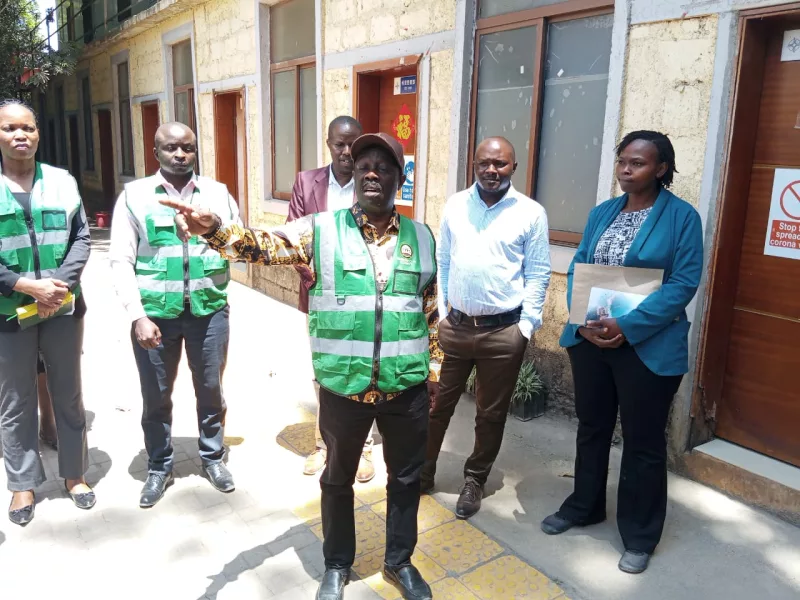
When veteran activist Irungu Houghton looks back at the day he joined about 300 children, parents and teachers to reclaim the Lang’ata Road Primary School playground, he sees more than a protest.
It was a defining moment in the long struggle to make the Constitution more than a document on paper.
In January 2015, Houghton was arrested after joining the
group in opposing the takeover of the school playground by a hotel owned by
then Deputy President William Ruto. Police confronted the protesters.
The charges against Houghton were
later dropped.
Within days, then President Uhuru Kenyatta directed that all 29,000 public primary and secondary schools be issued with title deeds and protected against land-grabbing.
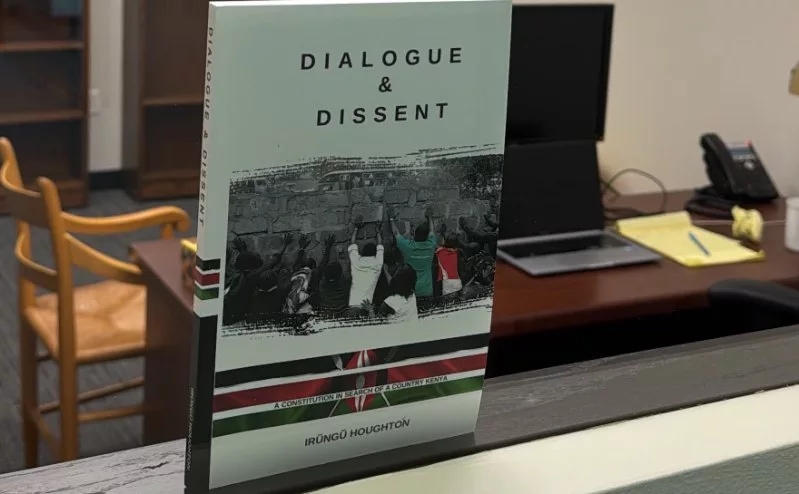
“For me, it was a defining moment,” Houghton writes in
his book, Dialogue and Dissent. The book reflects on his decades of
activism and the struggle to turn Kenya’s constitutional promises into reality.
“With my eyes wide open, I walked into my personal
crisis,” he writes. “In pushing over the walls trespassing that playground, I
also pushed over the walls within me. I found that the biggest obstacles are
always the ones within us.”
As Kenya marks 16 years since the promulgation of the 2010 Constitution, Houghton’s account raises the question of how far the country has lived up to its constitutional values.
Forged in the wake of the 2007–08 post-election violence — which claimed more than 1,000 lives — the Constitution was hailed as one of Africa’s most progressive. It promised to curb the imperial presidency, devolve power across 47 counties, and establish an expansive Bill of Rights guaranteeing healthcare, housing, and civil liberties.
Yet implementation has been painfully uneven. In June 2014, President Kenyatta declared during a summit in Washington that “the constitution is an obstacle in the fight against terrorism.” For Houghton, that remark captured the defining tension of the post-2010 era: a clash between constitutional protections and a state prone to aggressive over-securitisation.
That tension erupted during April 2014’s "Operation Sanitisation Eastleigh," which Houghton likens to colonial-era tactics such as 1952's Operation Anvil. Around 4,000 people were arrested in a sweep targeting the Somali-Kenyan community. One witness, 26-year-old Ahmed, told Amnesty International that police raided his home in the middle of the night, assaulted him over an expired identity card, and detained him at Kasarani Stadium for four days without charge. His friends eventually paid Sh20,000 for his release. Ultimately, zero civilians were charged with terrorism, and zero officers were held accountable for extortion.
Beyond civil liberties, Dialogue and Dissent examines the harsh economic realities confronting everyday Kenyans. Houghton outlines a nation where 47 per cent of the population lives below the poverty line, public debt consumes over 65 per cent of GDP and only 16 per cent of adults work in the formal sector. Inequality remains stark as the richest 10 per cent own 40 per cent of national wealth, while the poorest 10 per cent survive on just two per cent.
Nowhere is the gap between legal promise and human reality more fatal than in healthcare. Article 43 guarantees the right to emergency medical care, yet in October 2015, 37-year-old security guard Alex Madaga spent 18 hours in an ambulance while his wife, Jessica Moraa, and paramedic Brian Odhiambo pleaded with four Nairobi hospitals for admission. Madaga died waiting. His death catalysed the Health Act of 2017, which explicitly criminalised the refusal of emergency stabilisation care.
Compounding these failures is systemic corruption. Dr Ouma Oluga, former secretary-general of the Kenya Medical Practitioners and Dentists Union (KMPDU), notes that public procurement fraud creates a direct health crisis, draining up to Sh1.1 billion annually. A joint study by the Society for International Development and Transparency International revealed that government procurement prices for essential drugs and medical equipment were routinely inflated by between 30 and 300 per cent.
Dialogue and Dissent is not simply an indictment of the state. It is also a tribute to activists who have continued to challenge it.
Photographer-turned-organiser Boniface Mwangi says he distrusts politicians because protesters are often left to face police tear gas after politicians are whisked away by their bodyguards.
Eric Gitari, the director of the National Gay and Lesbian
Human Rights Commission, has fought since 2012 to secure registration of his
organisation. After six rejections by the NGO Coordination Board, he went to
court and won, although the board remains in contempt.
“The constitution has given the community the spirit and backbone to reject discrimination and stigma,” Gitari says.
In Mathare, community activist Gibson Maina describes a different struggle, where police shootings and alleged executions have become part of life for poor residents.
“Shoot outs are a weekly occurrence for us,” he says, describing reports of police killing youths after they have surrendered.
The Missing Voices Alliance recorded 157 people killed and 10 disappeared while in police custody in 2020, with more than 90 per cent of those killed being jobless young men.
Sixteen years after its adoption, the constitution remains firmly in place. But Houghton’s book argues that its survival alone is not enough.
Its promises require citizens willing to demand accountability and institutions willing to respect the rights they are constitutionally bound to protect.
“Constitutions and laws have no force of power or influence in the absence of an informed and active demand for compliance,"he says.
The book is available free at www.irunguhoughton.org
Instant analysis
Sixteen years after the 2010 Constitution, Houghton’s book exposes the uncomfortable gap between Kenya’s progressive legal framework and citizens’ lived experiences. Its strongest argument is that constitutional rights remain fragile when institutions disregard them and citizens fail to demand accountability. From security operations and police abuses to healthcare and inequality, the cases show that constitutional transformation requires more than laws—it requires vigilant citizens and institutions willing to uphold them.