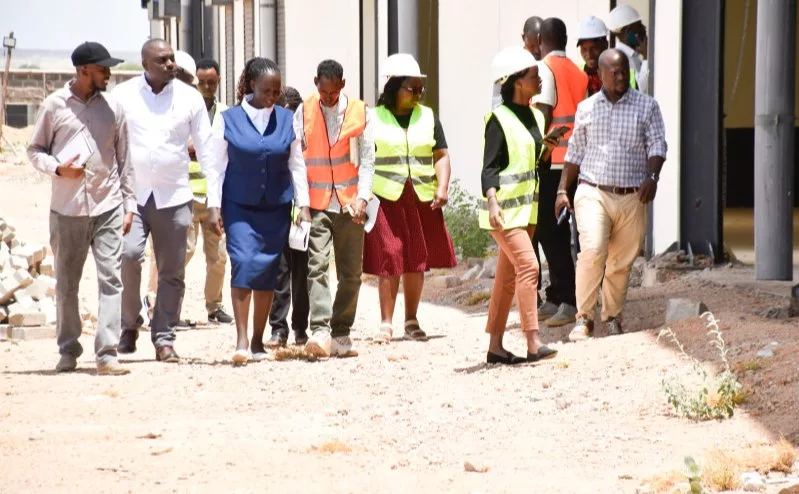
National and county government officials during the site visit /STEPHEN ASTARIKO
The Garissa County Aggregation and Industrial Park has reached 90 per cent completion, raising hopes that the facility will soon begin transforming the county’s pastoral and agricultural products into finished goods.
National and county government officials who visited the project site on Monday said the remaining works were expected to be completed within three months.
Located on the outskirts of Garissa town, the park is expected to provide a platform for processing products such as camel milk, hides and skins and agricultural produce, helping farmers and pastoralists move away from selling their products in raw form.
Once operational, the facility is expected to create new opportunities for farmers, pastoralists, traders and investors.
County quantity surveyor Michael Maputo confirmed that the project had reached the 90 per cent completion mark, describing it as an important investment for a region whose economy is heavily dependent on agriculture and livestock.
He commended the collaboration between the national government and Garissa county, saying the partnership had made it possible to develop infrastructure that could have a significant impact on the local economy.
Maputo expressed optimism that the facility would be ready for commissioning once the remaining works are completed.
Assistant county commissioner Muriuki Mweti said the park would play a major role in adding value to products produced in Garissa while improving livelihoods by linking production, processing and markets.
The facility is expected to support value addition in key value chains, including camel milk, tomatoes, hides and skins and sunflower. Camel milk and other pastoralism-related products are among the major areas of focus.
Mweti said the emphasis on agricultural value addition was particularly important as Garissa continues to experience improvements in farming, especially among farmers operating along the Tana River.
“Recently, Garissa county has focused on improvement in farming. That is why part of the focus is on crops, but the dominant economic activity is pastoralism-related products like camel milk, which is our main focus,” he said.
The official said the park would help shift the county away from the traditional practice of selling raw agricultural and livestock products by promoting local processing and manufacturing.
“Our focus is agribusiness because our economy is basically or majorly founded on agricultural practices. Therefore, we need to focus on how to convert our products from the agriculture sector to finished products or to industrially produced products,” Mweti said.
He urged investors, particularly those in agribusiness, to take advantage of the infrastructure and establish enterprises that would process locally produced commodities into finished products.
Mweti linked the project to the country’s broader industrialisation agenda, saying county-based industrial parks were intended to turn counties into centres of production and economic activity.
Jael Ouma, the Garissa chief officer for industrialisation and enterprise development,said the park would be critical in strengthening the county’s economy, increasing revenue and creating opportunities for local businesses and communities.
“Industrial park is very important for Garissa county and actually it boosts the economy of this location. Even the revenue will go up,” Ouma said.
She said the county was working closely with the national government to ensure the infrastructure was put to productive use once construction was completed.
However, Ouma cautioned that completing the physical infrastructure would not be enough, saying the success of the project would ultimately depend on attracting investors to establish businesses and process products generated within the region.
“We are still appealing for the investors so that they can show up to invest in this place so that it can come to reality, to the community at large,” she said.
Ouma identified camel milk powder as one of the key value chains the county hopes to develop through the park, given Garissa’s large pastoralist population and established camel-keeping economy.
“The value chain that we are focusing on mostly is camel milk powder. So, let any investor who is interested to invest in camel milk come up and come to our offices,” she said.
She said the county had already advertised investment opportunities at the facility and received considerable interest from potential investors, but more investors were needed to ensure the park becomes fully operational.
The county will intensify awareness among local residents and prospective investors while also planning investment and trade forums to showcase opportunities available at the park.
“We want to create more awareness to the residents. Most of all, we are appealing to the investors to come on board,” Ouma said.
The officials’ call for investment comes against the backdrop of the broader County Aggregation and Industrial Parks programme, one of the government’s initiatives aimed at transforming counties from producers and sellers of largely raw agricultural and livestock products into centres of value addition, agro-processing, manufacturing and trade.
Under the programme, industrial parks are being established at county level to enable farmers, pastoralists and other producers to aggregate their products, process them and access wider markets.
The initiative is also intended to reduce post-harvest losses, create employment and ensure that a greater share of the economic value generated from agricultural and livestock products remains within local communities.
However, the programme has faced challenges, including funding, completion of infrastructure, operationalisation and the ability to attract private investors.
For Garissa, the completion of the physical structure is therefore only the beginning. The bigger test will be whether the county can attract enough investors to turn its camel milk, agricultural produce, hides and skins and other commodities into commercially viable products — and translate the park into jobs, revenue and better returns for producers.
Instant analysis
Garissa’s industrial park marks an important shift from simply producing agricultural and livestock commodities to adding value locally. At 90 per cent completion, the infrastructure is nearly ready, but attracting investors will determine whether the project delivers jobs, revenue and better returns for producers. The focus on camel milk, agriculture, hides and skins offers Garissa an opportunity to commercialise its traditional economic strengths, provided operationalisation does not stall after construction.
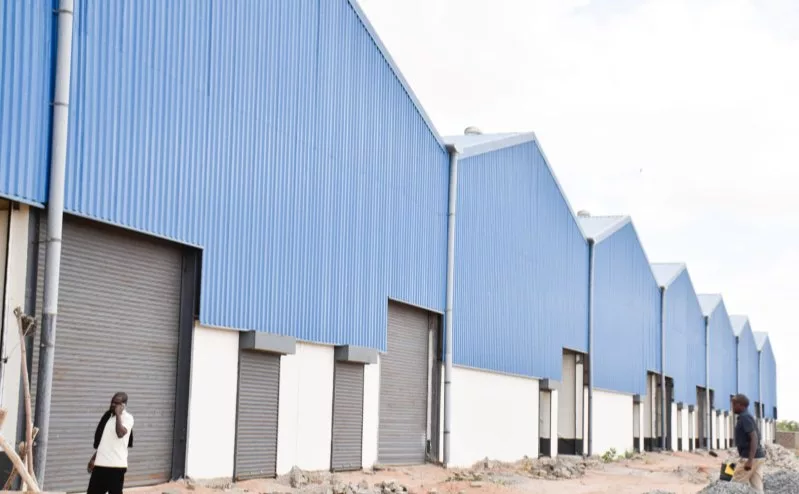
The Garissa County Aggregation and Industrial Park /STEPHEN ASTARIKO
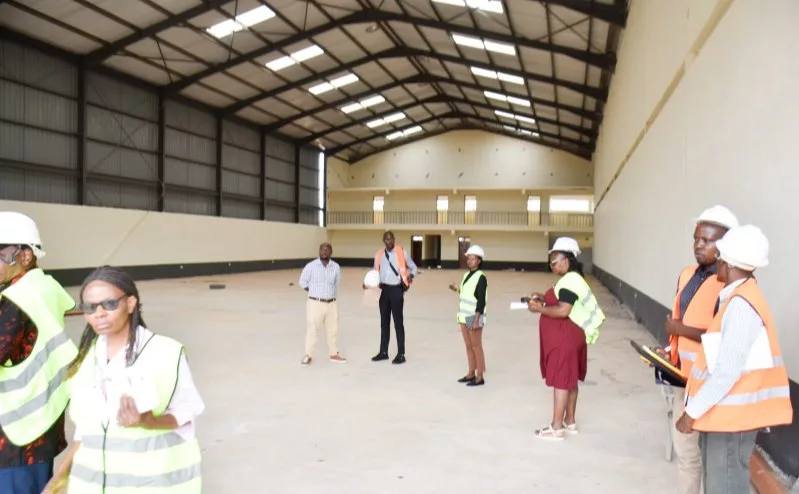
National and county government officials inside the park during the site visit /STEPHEN ASTARIKO

County quantity surveyor Michael Maputo speaking to the press /STEPHEN ASTARIKO

Assistant county commissioner Muriuki Mweti /STEPHEN ASTARIKO

Jael Ouma, Garissa chief officer for industrialisation and enterprise development /STEPHEN ASTARIKO