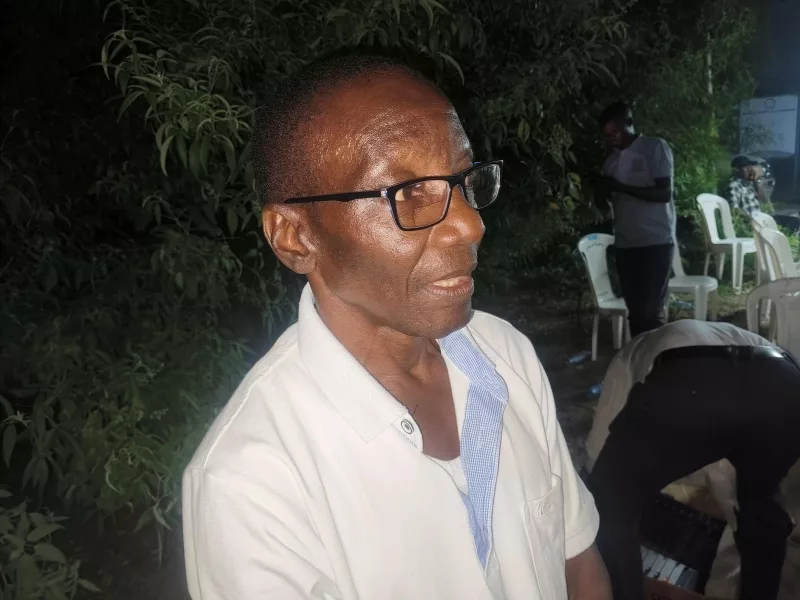
 Rabak’s Godfrey Njoroge at Mama Ngina Waterfront Park in Mombasa on Friday / BRIAN OTIENO
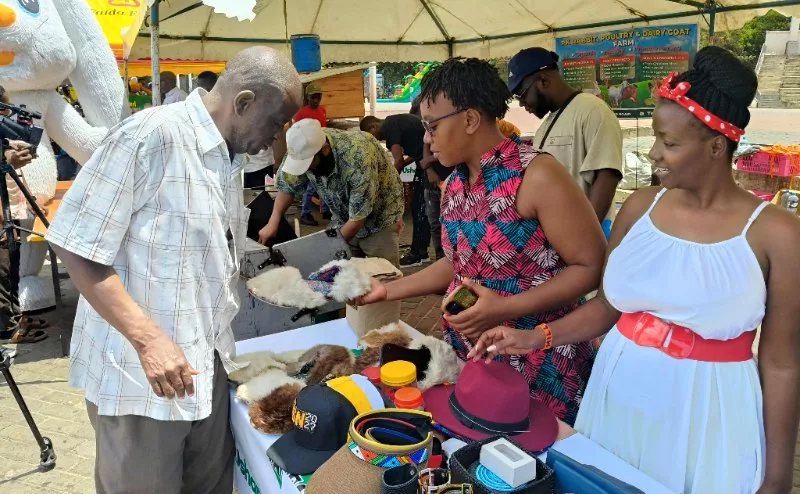 Tobby Otum samples rabbit products at Mama Ngina Waterfront Park in Mombasa on Friday / BRIAN OTIENO
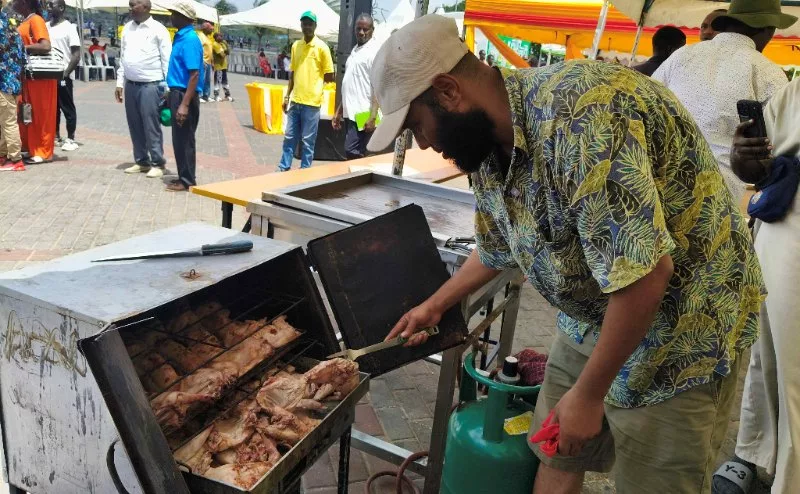 Hamza Mboko at Mama Ngina Waterfront Park in Mombasa on Friday / BRIAN OTIENO
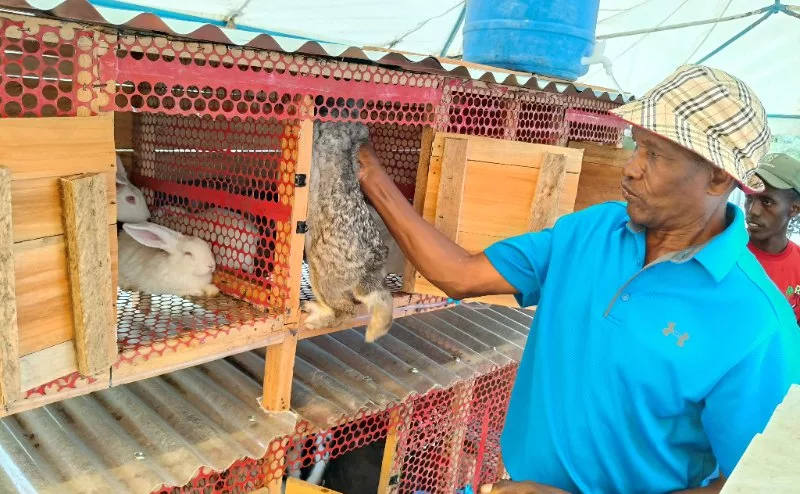 Rabak’s Godfrey Njoroge at Mama Ngina Waterfront Park in Mombasa on Friday / BRIAN OTIENO
Rabbit farming remains one of Kenya’s most underrated commercial activities, with farmers saying a significant portion of the animals’ potential value is lost because of limited equipment, skills and government support.
The Rabbit Breeders Association of Kenya (Rabak) says rabbit skin, urine, faeces and meat all have commercial value, but much of this potential remains untapped.
Rabbit breeder, trainer and Rabak official Godfrey Njoroge said rabbit skins could be used to make shoes, clothes, sandals, hats and beauty products, but inadequate knowledge on handling and processing means much of it is discarded.
“We lack that intricate knowledge on how to handle the rabbit skin, which can make very good products. The government has not trained its eyes on rabbit farming, which has a huge potential in this country,” Njoroge said.
He said rabbit urine and faeces are also rich sources of manure, although few farmers utilise them.
Njoroge said rabbit meat was healthy and had medicinal value, including benefits for people suffering from arthritis and stroke.
“People associate the rabbit with young people and they don’t venture into its farming, yet we have a huge potential market for its meat and other products,” he said.
He urged the government to explore ways of supporting exports of rabbit meat, noting that a kilogramme can fetch up to Sh1,500 locally.
The call for greater support was echoed by Stephen Msechu of Millimag Rabbit Farm, an eco-friendly rabbit breeding and training hub in Mombasa.
Msechu urged young people in Mombasa to consider rabbit farming, saying it requires little land and is relatively easy to manage.
He spoke during the three-day Sungura Festival, which brought together more than 40 rabbit breeders from over 20 counties at Mama Ngina Waterfront Park.
The breeders came from areas including Kajiado, Meru, Mombasa, Nairobi and the Western region.
MRF has partnered with the Mombasa county government to sensitise residents on rabbit farming.
Over the past two years, the organisation has trained more than 588 youth, women and persons with disabilities in Mombasa. They received graduation certificates during the festival.
“More than 100 others have started rearing rabbits in Mombasa after the training,” Msechu said.
The organisation works with partners including MasterCard Foundation, KCB Foundation and SwahiliPot Foundation to provide trainees with start-up kits containing feeds, rabbit hutches and rabbit kittens.
The farmers say the animals offer several opportunities beyond meat, including skin for leather products and urine and faeces for use as fertiliser.
Njoroge said Rabak mainly targets Form 4 leavers through its training programmes, giving them an opportunity to venture into farming after secondary school.
The association also operates a rabbit slaughterhouse in Thika.
“The beauty of rabbits is they thrive anywhere, regardless of the weather or climate. They adapt anywhere and they will have more or less fur, depending on where they are,” Njoroge said.
For some farmers, the benefits are already visible.
Caroline Adisi of Jomvu started rearing rabbits about three months ago, after undergoing training with the MRF.
“I liked the idea after training, and now I see the benefits because the rabbit gives birth to many offspring at a go, meaning you multiply your rabbits very fast,” Adisi said.
She started with two rabbits and now has more than 50.
“We have a kitchen garden behind the house and we use the rabbit urine on our greens that we have planted, and it does well,” she said.
Farida Tall, another new farmer, urged the government to prioritise rabbit farming and increase funding for the sector.
Youth leader Hamza Kombo called on the Mombasa county government to allocate space for rabbit farmers at the planned Mombasa County Integrated Industrial Park in Jomvu Kuu ward to support value addition and exports.
Kombo, who is also a Mombasa County Revolving Fund board member, said young people could access interest-free loans of between Sh8,000 and Sh15,000 to start rabbit farming.
“In future, as rabbit farming grows, we would also urge the county government to establish an abattoir for our rabbits,” Kombo said.