KENYA's ambition to make healthcare a right for every citizen is increasingly confronting a less visible challenge: whether hospitals have the equipment and infrastructure needed to deliver the care patients need.
The issue took centre stage at the Kenya Health Summit 2026, held at the Kenyatta International Convention Centre in Nairobi on August 18–19, where stakeholders examined the progress of health reforms under the theme “Reform Delivered, Health as a Right”.
While much of the Universal Health Coverage debate has focused on financing access to healthcare, expanding insurance coverage and improving how patients are funded, the capacity of health facilities to actually provide specialized treatment is equally critical.
A patient requiring dialysis, cancer treatment, an MRI scan or advanced laboratory testing still needs a facility with the right equipment, regardless of how healthcare is financed.
For hospitals, however, acquiring such technology can involve investments running into millions of shillings, creating a growing need for financing as providers seek to expand specialised services and reduce the need for patients to travel long distances or seek treatment outside the country.
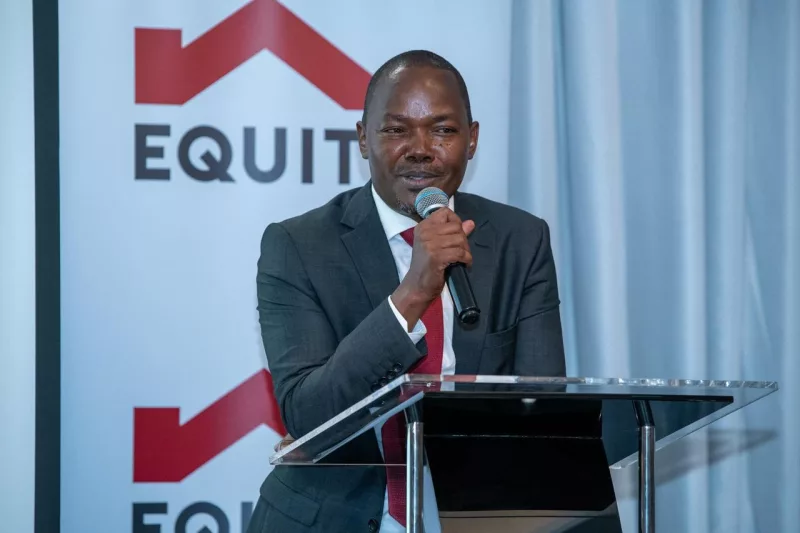
Dr Joseph Mbai, general manager and team leader, health sector at Equity Bank Kenya, spoke to the Star on the investment challenge facing healthcare providers and what it will take to build the capacity required to support Kenya’s UHC ambition.
Excerpts:
As Kenya pursues Universal Health Coverage, what is the biggest issue facing hospitals that is often overlooked?
One of the important issues is the capacity of healthcare facilities to provide the services that Kenyans increasingly need. There has been significant growth in demand for specialised care, and providers have to invest in the infrastructure, equipment and expertise required to meet that demand.We are seeing investment in oncology, renal care, cardiology, imaging, laboratory diagnostics, fertility, ENT, orthopaedics and other specialized areas.
Kenya has also developed a strong pool of medical professionals, which has strengthened its position as a healthcare and medical-tourism hub in East and Central Africa. Patients are increasingly seeking specialised treatment locally rather than travelling abroad. That creates an opportunity, but it also places a responsibility on healthcare providers to keep investing in the technology and infrastructure needed to support those services.
What does this mean in practical terms for an ordinary Kenyan seeking specialised care?
It means that access is not only about whether a patient can pay for treatment. The facility must also have the capacity to provide that treatment. If you need an MRI, dialysis, cancer treatment or specialised diagnostic services, the machine has to be available and properly maintained. Healthcare providers therefore have to continually expand their capacity as demand grows. This is why investment in medical technology is becoming increasingly important.
What kind of equipment is driving this expansion?
There is strong demand for diagnostic equipment such as X-ray, CT scan and MRI machines, as well as laboratory and theatre equipment. There is also increasing demand for highly specialised equipment. Recently, we have financed 30 renal dialysis units, two MRI machines, cardiology equipment, two linear accelerators, a genetic sequencer and a mammogram. These are investments in the capacity of the health system.
Why is financing becoming such an important part of this conversation?
Medical equipment is capital-intensive, and many healthcare providers cannot necessarily fund the entire investment from their own resources. At the same time, the demand for specialised services continues to grow. This means providers need financing that enables them to acquire equipment while preserving working capital for their other operations.
Over the past five years, we have extended approximately Sh33 billion to the healthcare sector, of which Sh11.5 billion has gone towards medical equipment acquisitions. The broader point is that financing is helping providers build capacity at a time when the health sector is undergoing significant change.
But healthcare providers themselves are facing cash-flow pressures. How does that affect their ability to invest?
Cash flow is one of the major considerations. Healthcare providers can experience long payment cycles from private insurers and even the public insurer. When payments take longer, liquidity is affected, and that can influence the ability of a provider to make new investments or qualify for financing.Other challenges include creditworthiness and eligibility requirements, raising the upfront contribution and, in some cases, lack of collateral.
Does that mean the cost of equipment is only one part of the investment challenge?
Yes. The price of the equipment is important, but what matters is whether the investment can be sustained. Before financing expensive equipment, we look at the existing business cash flows, the expected utilisation of the equipment, its lifecycle, projected revenue and the overall feasibility of the business.
We also consider insurance, warranty, maintenance and service arrangements, as well as the strength of the supplier or original equipment manufacturer. The objective is to ensure that the equipment will be properly utilised and generate sufficient income to support repayment.
Kenya also relies on imported technology for some specialised services. How does that affect providers?
That reliance creates a significant barrier. Some of the most specialised technology required for advanced diagnostics and treatment - like genomics sequencers, cancer screening platforms, and molecular lab equipment has to be sourced internationally, often from Europe, the US or China.
This exposes providers to high upfront costs, long lead times, supplier risk, and forex pressure. They have to pay the foreign supplier before the equipment ships, which strains cash flow. That is where we come in. We provide trade finance solutions like Letters of Credit, import collections and foreign currency facilities to de-risk that process.
For example, we supported Nextgen Molecular Lab, a Kenyan company pioneering genomics research, precision oncology and advanced cancer diagnostics. They needed to import specialised laboratory equipment to expand their testing capacity locally. We structured a Letter of Credit facility for them, which guaranteed payment to their overseas supplier while allowing them to import the equipment without tying up all their working capital upfront.
It is a model that ensures critical medical technology can reach Kenya faster, while the provider remains financially stable.
Is the investment in specialised healthcare concentrated in Nairobi and other major cities?
We are financing healthcare investments across all counties, although areas with high population density are seeing significant activity. These include Nairobi, Kiambu, Kisumu, Nakuru and Eldoret. The opportunity is to continue expanding healthcare capacity across the country so that specialised services are not concentrated in only a few locations.
What needs to happen if Kenya is to translate its UHC ambition into actual access to specialised care?
There needs to be continued investment across the healthcare ecosystem. That includes equipment, infrastructure, technical expertise, maintenance and sustainable financing. Partnerships between healthcare providers, equipment manufacturers, original equipment manufacturers, suppliers, distributors, leasing companies and financing institutions can also help reduce the capital burden.
Such arrangements can provide supplier support, buy-back arrangements and other risk-sharing mechanisms that may reduce upfront costs and, where appropriate, ease traditional collateral requirements.
By fostering innovative partnerships and financing models that strengthen health infrastructure, expand access to essential medical equipment, and improve service delivery, we move closer to a future where quality healthcare is within reach for every citizen.
While the journey toward Universal Health Coverage is ongoing, these collective efforts represent important steps toward building healthier, more resilient communities and ensuring that no one is left behind.