THIRTY-two Kenyan families who lost relatives in the Ethiopian Airlines Flight 302 disaster are set to receive a share of Sh11.3 billion in compensation.
This comes as Boeing begins paying victims of the two deadly 737 MAX crashes under a multibillion-shilling settlement that also compels the American aircraft manufacturer to strengthen its safety and compliance systems.
Ethiopian Airlines Flight 302 was a scheduled international flight from Addis Ababa to Nairobi that tragically crashed on March 10, 2019, six minutes after takeoff, killing all 157 people on board.
Each of the 32 Kenyan families whose kin died in the crash of the Ethiopian Airlines Boeing 737 Max will receive an average $2.73 million (Sh353.4 million) from criminal case settlement.
The payments mark a major milestone in the long-running fight for accountability following the crashes of Lion Air Flight 610 in Indonesia in October 2018 and Ethiopian Airlines Flight 302.
Lion Air Flight 610 crashed into the Java Sea near Jakarta, Indonesia, on October 29, 2018, killing all 189 people on board, with Ethiopia’s crash coming less than five months later.
Investigations found that both crashes were linked to Boeing’s MCAS flight-control systems.
Together, the two disasters killed all 346 passengers and crew aboard the Boeing 737 MAX 8 aircraft.
Kenya was among the countries hardest hit by the Ethiopian Airlines crash, losing 32 citizens when the Nairobi-bound aircraft plunged to the ground just minutes after taking off from Addis Ababa.
Chicago-based Ribbeck Law Chartered said on August 26 that final compensation payments to its clients representing victims of the two crashes would begin following the conclusion of legal processes in the United States, with Boeing releasing the final $944 million to 346 victims families.
The law firm said the 32 Kenyan families will receive a combined $87,343,352.60, equivalent to approximately Sh11.3 billion, making the compensation one of the largest financial settlements ever received by Kenyan families arising from an international aviation disaster.
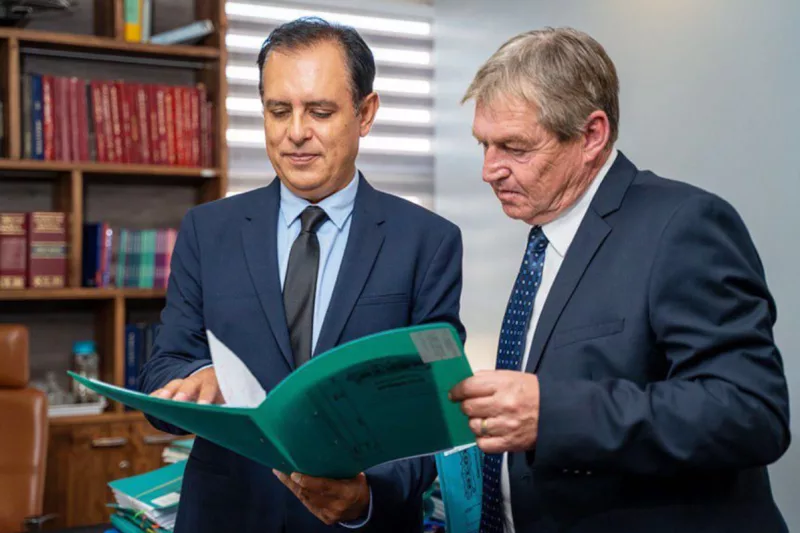
“We handled a highly complex matter that required international coordination across more than 35 countries where the victims resided, as well as litigation in multiple jurisdictions. We have now concluded the legal work on behalf of our clients in the United States, Africa, the Middle East and Asia,” explained Manuel von Ribbeck of Ribbeck Law Chartered.
“Boeing will begin compensating our clients immediately pursuant to the non-prosecution agreement entered into with the U.S. Department of Justice.”
The latest payouts are only part of a wider compensation and accountability framework that could see Boeing's financial exposure from the crashes rise to more than $5.64 billion, or approximately Sh730 billion.
The compensation process has now been reinforced by a new protocol governing the distribution of a separate $444.5 million (about Sh57.5 billion) Boeing 737 MAX Crash Victim Beneficiaries Compensation Fund, established under a Non-Prosecution Agreement between Boeing and the United States Department of Justice dated May 29, 2025.
The fund is separate from private civil lawsuits and is intended to compensate the eligible families, next of kin, heirs and other beneficiaries of all 346 victims of the Lion Air and Ethiopian Airlines crashes.
Under a distribution protocol dated August 21, 2026, the US Department of Justice appointed renowned compensation administrators Kenneth R. Feinberg and Camille S. Biros to oversee the administration and distribution of the fund.
Boeing is required to deposit the $444.5 million, equivalent to approximately Sh57.5 billion, into a Compensation Fund Escrow Account established by the administrators.
The money will then be distributed pro rata among the eligible beneficiaries of the 346 victims, under rules designed to ensure the payments are made quickly, efficiently and securely while protecting the funds from improper diversion.
The structure also ensures that Boeing cannot recover unclaimed money.
If a beneficiary refuses to accept the allocated compensation, or where there are no eligible beneficiaries to receive it, the administrators will redistribute that allocation proportionately among participating beneficiaries.
In effect, no money from the $444.5 million fund will be returned to Boeing.
The compensation fund is particularly significant because it is entirely separate from civil litigation arising from the crashes.
Families receiving money from the fund will not be required to waive their right to sue Boeing or sign any release in exchange for compensation.
The protocol further states that previous settlement agreements or releases signed with Boeing will not automatically disqualify beneficiaries from receiving money from the DOJ-administered compensation fund.
More importantly, Boeing agreed that the fact that a victim's family seeks or receives compensation from the fund, cannot be used to prevent that beneficiary from pursuing any other lawful claim against the aircraft manufacturer.
The provision could prove critical for families still pursuing civil claims or considering further legal action.
The $444.5 million fund is in addition to an earlier $500 million (approximately Sh64.7 billion) victims' compensation fund established under Boeing's 2021 Deferred Prosecution Agreement.
Together, the two criminal case compensation funds amount to $944.5 million, or about Sh122.2 billion, for victims and their families.
Based on the combined figure, average compensation works out at approximately $2.73 million, or about Sh353 million, per victim, although actual payments may vary depending on the applicable distribution rules and eligible beneficiaries.
The settlements, however, go beyond compensation.
Boeing is also under pressure to demonstrate that the deaths of 346 people will lead to fundamental changes in how aircraft are designed, tested, manufactured and monitored.
Under the 2025 Non-Prosecution Agreement, Boeing is required to invest at least $455 million, or nearly Sh59 billion, in compliance and aviation safety programmes.
The agreement also requires the company to retain an Independent Compliance Consultant to oversee and assess improvements in its compliance and safety systems.
The requirements strike at the heart of the crisis that followed the two crashes, which exposed serious concerns about the development and certification of the Boeing 737 MAX and its Maneuvering Characteristics Augmentation System, known as MCAS.
Dr Mohamad Farrag of Cairo, whose brother Abdel Hamid Farrag Mohamed Megali died aboard Ethiopian Airlines Flight 302, said no amount of money could replace the lives lost.
His brother was only 26 and was a research assistant and PhD candidate in animal nutrition, just a month away from completing his doctorate.
He also operated an agricultural, fertiliser and pesticide business and was the principal provider for his pregnant wife, young son, parents and younger siblings.
His death left behind a widow, children and a family that depended heavily on his financial and emotional support.
For Dr Farrag, the legal battle is therefore about more than compensation.
“There is no amount of money in the world that can bring my brother back,” he said, adding that he wanted the litigation to lead to stronger quality-control measures and help prevent future aviation disasters.