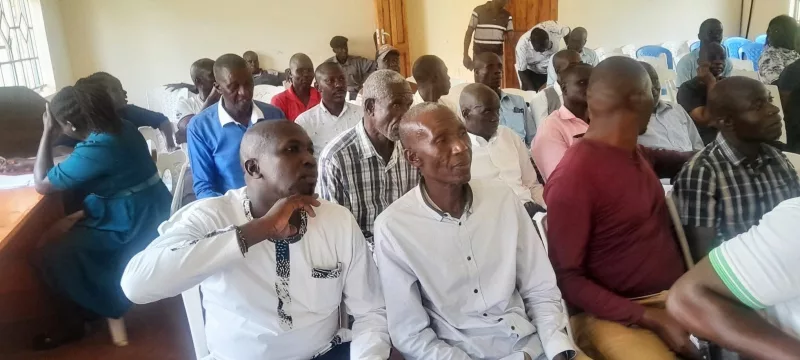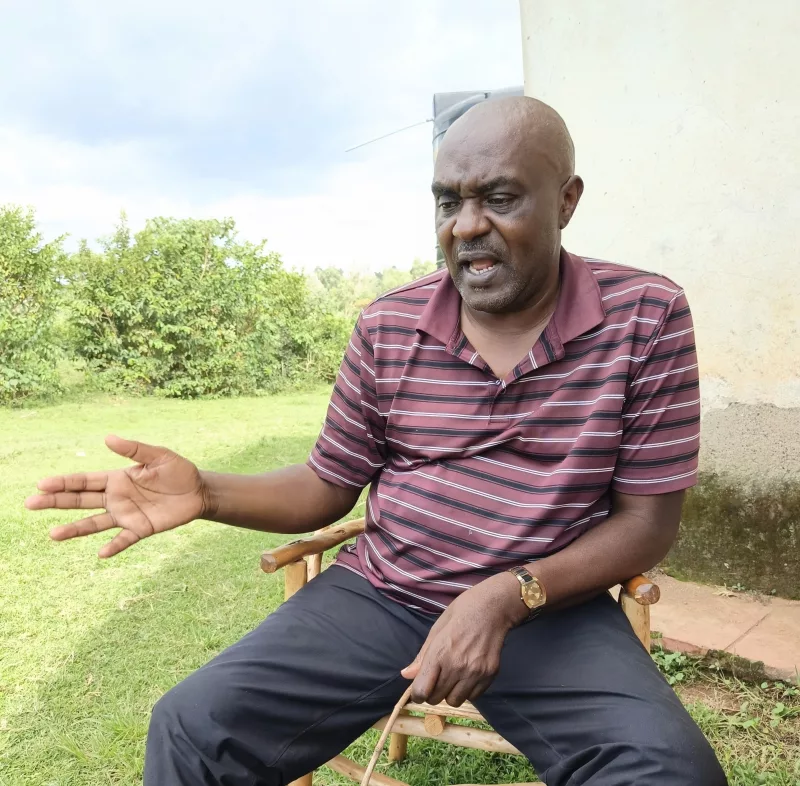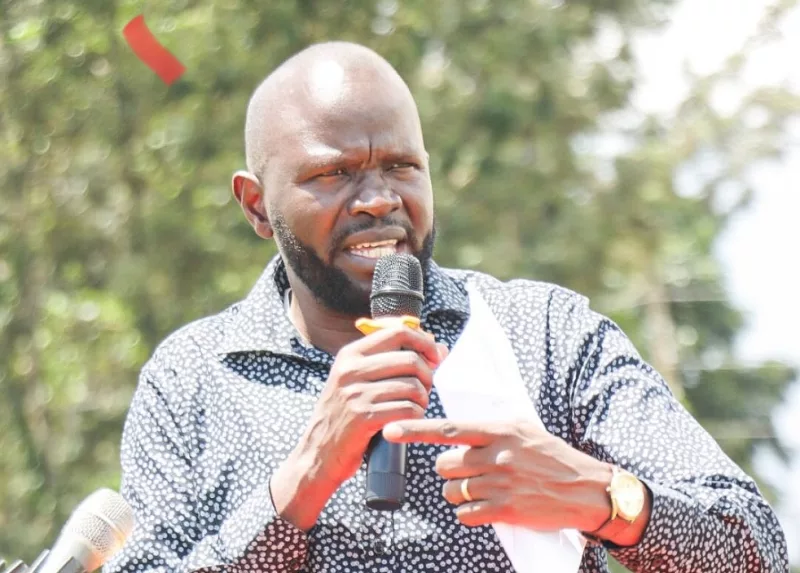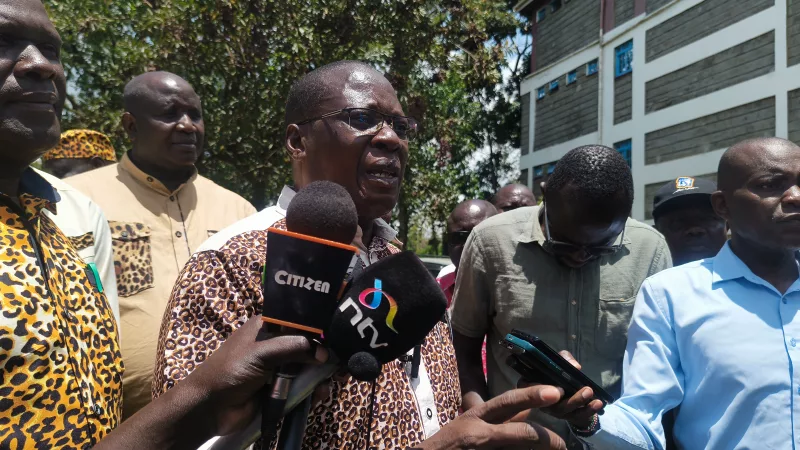
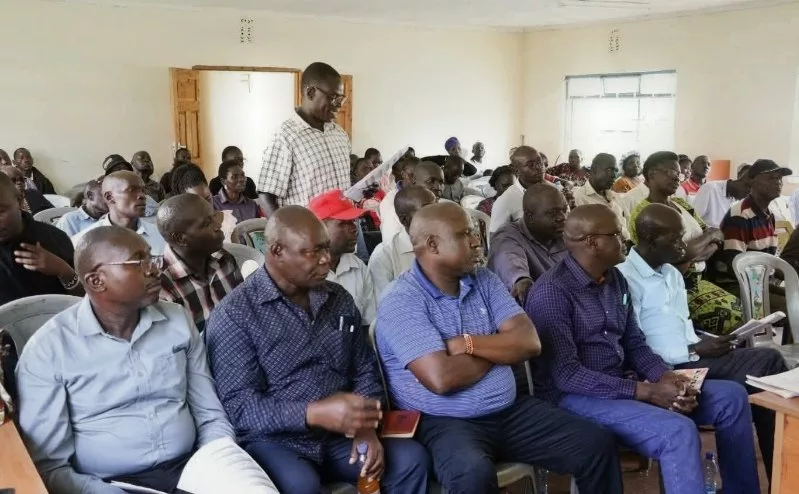
 Teso North Sub-County residents follow proceedings during a public participation on the Busia County Annual Development Plan (ADP) 2027 at the Disaster Centre in Amagoro/IMAGE/HILTON OTENYO
Teso North residents have outlined projects and services they want Governor Paul Otuoma’s administration to prioritise in its final County Annual Development Plan (ADP) before the 2027 General Election.
The residents raised concerns ranging from healthcare and fire response to social protection, youth empowerment, urban planning and the equitable distribution of county resources during a public participation forum organised by the Busia County Assembly on the 2027 ADP at the Disaster Centre in Amagoro.
Some residents said implementation of the plan could influence how voters assess Otuoma’s performance as he seeks a second term.
Joram Epalat of Malaba Central Ward called for the establishment of a child protection centre in Teso North, noting that the county’s only such facility is in Mauko, Matayos ward.
He said a similar facility should be established in Teso North to serve vulnerable children in the region.
Maendeleo ya Wanawake Organisation Teso North chairperson Mary Okedi called on the county government to ensure the timely and regular disbursement of grants to women and community groups.
Okedi also raised concerns about the condition of the Teso North Subcounty Hospital mortuary in Kocholia and called for its rehabilitation to improve services.
“The county government should consider constructing another morgue in Ang’urai to ease pressure on existing facilities,” she said.
Elizabeth Adhiambo called for the urgent establishment of a Gender-Based Violence Centre in Amagoro to support survivors and improve access to essential services.
Paul Omalla of Malaba South ward urged the county government to expand its social protection programmes to include other vulnerable groups, including widowers, rather than focusing primarily on widows.
Duncan Etyang raised concerns over what he described as inadequate funding for vocational training centres (VTCs), saying the institutions had not received sufficient allocations for training materials and equipment since 2021.
He said the proposed Sh15 million allocation for 27 VTCs in the 2027 budget would amount to about Sh550,000 per institution, which he considered insufficient to meet their needs.
Residents also proposed the installation of water hydrants at strategic locations in Kocholia, Amagoro and Malaba to improve response to fire incidents.
The demands come as Otuoma’s administration prepares to implement its final ADP before the 2027 General Election.
An ADP is a county government’s annual development framework through which priorities contained in the five-year County Integrated Development Plan (CIDP) are translated into specific programmes and projects for implementation during a financial year.
Under Section 126 of the Public Finance Management Act, 2012, county governments are required to prepare development plans and submit them to their respective county assemblies for approval by September 1 each year.
The plan also guides the preparation of the County Fiscal Strategy Paper and the annual county budget.
With the 2027 General Election approaching, implementation of the final ADP could provide residents with an opportunity to assess the performance of the Otuoma administration and its record on delivering services and development projects.
The public participation process gives residents a platform to influence the priorities that will shape the county’s development spending in the final year before the election.
INSTANT ANALYSIS
Teso North residents are turning the 2027 development plan into a practical scorecard for Governor Paul Otuoma’s administration ahead of the next election. Their demands reveal concerns that go beyond major infrastructure, focusing on everyday services such as healthcare, social protection, fire response, youth training and protection of vulnerable groups. The proposed allocations for VTCs, in particular, highlight questions about whether county spending matches the needs of young people seeking skills and employment. The public participation forum also shows how residents can use the planning process to influence county priorities. With the election approaching, delivery on these commitments could shape perceptions of Otuoma’s performance and his re-election prospects.