Read Also
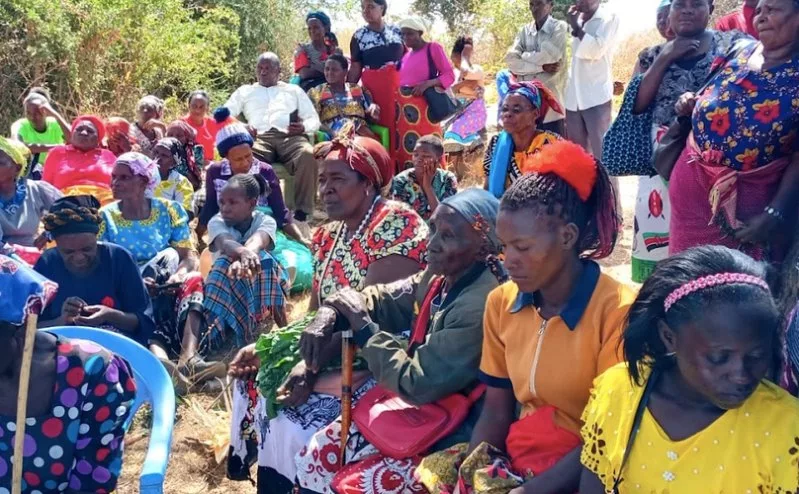
Residents of Mavindini ward in Makueni county say they are counting losses from ongoing blasting at the Thwake Dam project, which they claim has caused extensive damage to homes and community facilities.
The residents, drawn from 40 villages, say years of blasting have resulted in cracks in houses, walls, windows and foundations, as well as heavy dust, loud noise and strong ground vibrations.
They have also raised concerns over alleged effects on livestock and wildlife, health, farming and livelihoods, as well as damage to churches, markets, a police station and health facilities.
“For years, we have lived with the effects of blasting, including cracks in our houses,” the community said in a statement signed by their spokesperson, Samson Ngali.
The community has formed an elected Thwake Dam Blasting-Affected Community Committee to pursue its concerns.
The residents said they are not opposed to the Thwake Dam or development in the region.
“We support development that benefits our region and our country. But development must also respect the people living around these projects,” they said.
The government is implementing the first phase of the project, which involves construction of an 80.5-metre concrete face rockfill dam with a storage capacity of 688 million cubic metres at a cost of Sh36 billion.
The second phase will involve water supply, sanitation and wastewater infrastructure to provide an estimated 150,000 cubic metres of treated water daily to about 1.3 million people in Makueni, Kitui and Konza Techno City in Machakos.
The third and fourth phases will involve a hydropower system with an installed capacity of about 20MW and an irrigation scheme covering an estimated 100,000 acres.
The residents have formally written to the African Development Bank, copying the Ministry of Water, the Thwake Multipurpose Water Development Programme, the contractor and other relevant authorities.
They are calling for an independent review of the assessment and compensation process, saying some affected homes were left out.
“More concerning, some houses close to the blasting areas and visibly affected by blasting were not assessed, while structures much farther away were selected for assessment and compensation,” they said.
The residents want authorities to explain the criteria used in selecting properties for assessment and how compensation was calculated.
They also want assessment reports, photographs, measurements, valuation records, repair costs and Bills of Quantities used to determine the amounts offered.
Some residents said only part of the damage was recorded before they were asked to sign agreements.
The community is also seeking clarification on why the agreements describe the payments as Corporate Social Responsibility while referring to payment in lieu of repairs for assessed damage.
Authorities were yet to respond to inquiries.
The residents want the African Development Bank, Ministry of Water, project contractor and relevant government agencies to investigate their grievances, review the assessment process and reassess cases where damage was left out or inadequately recorded.
They have also called on civil society, human rights, legal and accountability organisations and the media to scrutinise the process and ensure affected communities are heard.