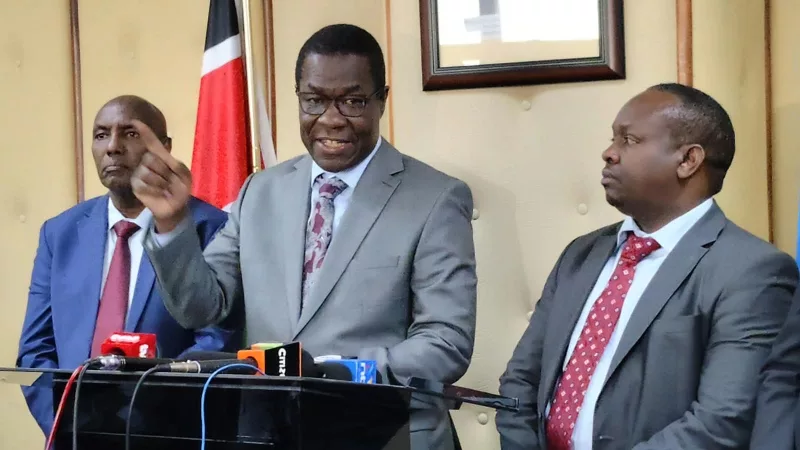
The Ministry of Energy and Petroleum has announced an intensified crackdown on illegal liquefied petroleum gas dealers and illicit cylinder refilling cartels.
Energy Cabinet Secretary Opiyo Wandayi warned traders operating outside the law that enforcement agencies will pursue them in what he says is in the interest of public safety.
According to the CS, the government will not bow to political pressure or allow cartels involved in illegal LPG trade to undermine efforts to regulate the sector.
Wandayi was responding to allegations by former Deputy President Rigathi Gachagua, who criticised the government’s handling of LPG cylinders seized from traders and questioned the conduct of officials at the Energy and Petroleum Regulatory Authority (EPRA).
The CS dismissed the allegations as unfounded but said the government was responding because the issues raised concerned the safety of consumers.
“LPG safety is paramount to the consumer. The government’s crackdown is anchored in the LPG National Growth Strategy approved by Cabinet in October 2023, which seeks to increase the use of LPG as part of Kenya’s transition away from biomass fuels,” Wandayi said.
According to the CS, one of the strategy’s key areas is regulatory reform aimed at curbing illegal refilling and illicit LPG trade, which the government considers a threat to public safety.
“The regulations require LPG businesses to obtain the necessary licences and comply with licence conditions. They also provide for stronger identification and traceability of cylinders and restrict refilling and trading activities to authorised players,” the CS noted.
The 2025 regulations establish a central LPG cylinder tracking system intended to track purchases and sales of cylinders and improve accountability across the supply chain.
Each filled cylinder is also required to have its serial number paired with an authority-issued seal number to validate a genuine refill.
Wandayi, however, rejected claims that a company had already been awarded a contract to operate the cylinder tracking system.
He said procurement of the system would be undertaken in accordance with the Public Procurement and Asset Disposal Act and other applicable laws, adding that the process was still far from completion.
The new regulations also require businesses in the LPG cylinder supply chain to maintain records that can help regulators trace cylinders and transactions.
Wandayi said EPRA was working with the National Police Service and the Directorate of Criminal Investigations to enforce compliance and deal with illegal operators.
“When illegally refilled cylinders are seized, authorities are required to document the items and give affected operators an opportunity to be heard before legal or administrative action is taken,” the CS noted.
He also warned businesses involved in illegal refilling that enforcement operations would be stepped up.
“We shall be relentless in pursuing you in the interest of public safety; the crackdown would continue until full compliance is achieved,” Wandayi said.
The government’s tougher stance comes against the backdrop of past incidents involving fires linked to illegally traded or handled gas cylinders, raising concerns over the safety risks associated with an unregulated LPG market.