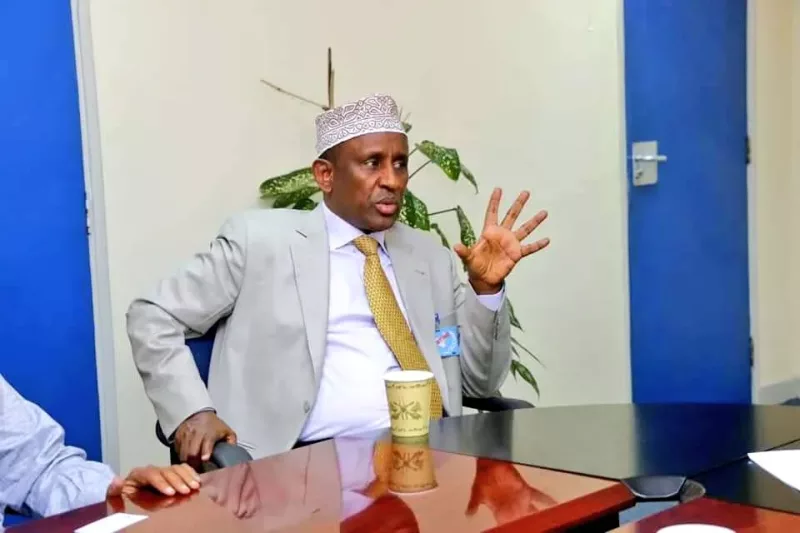
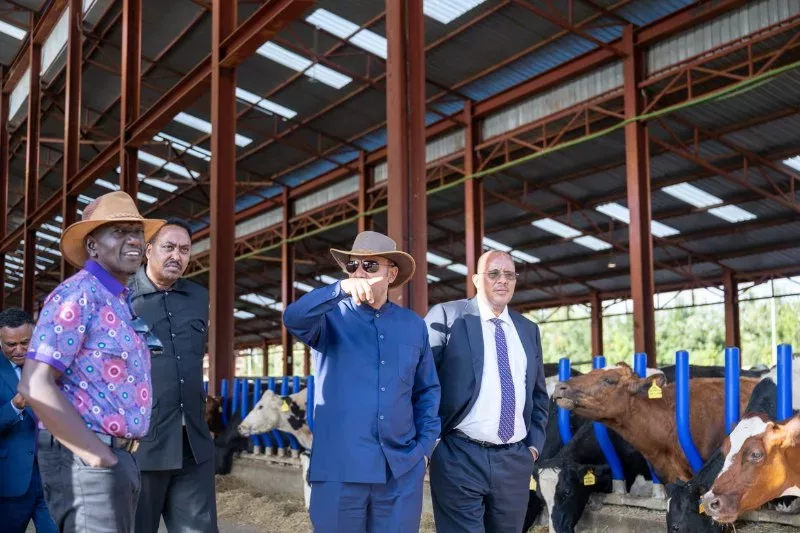
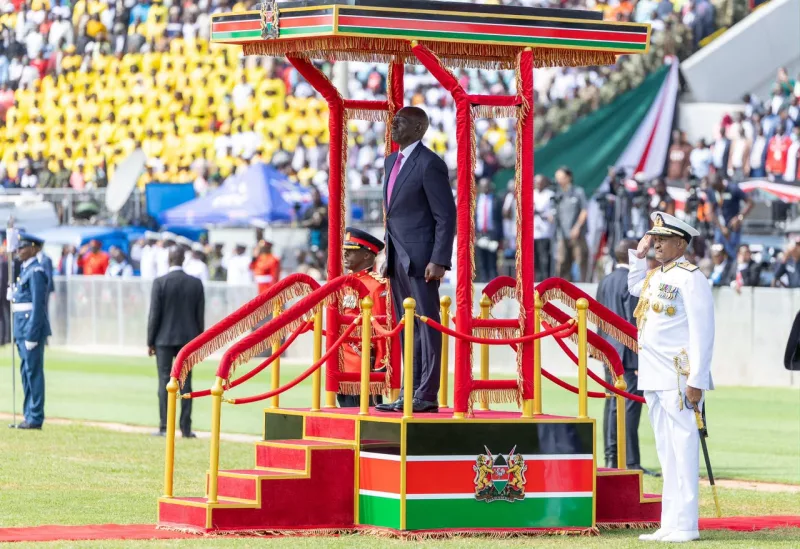
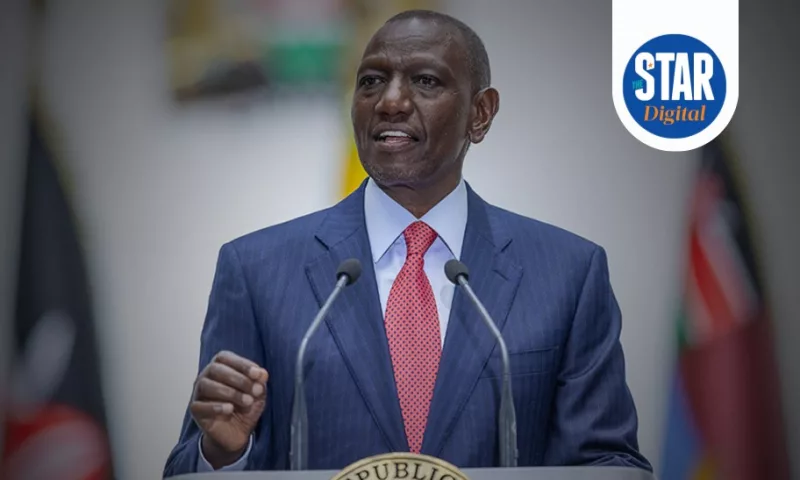
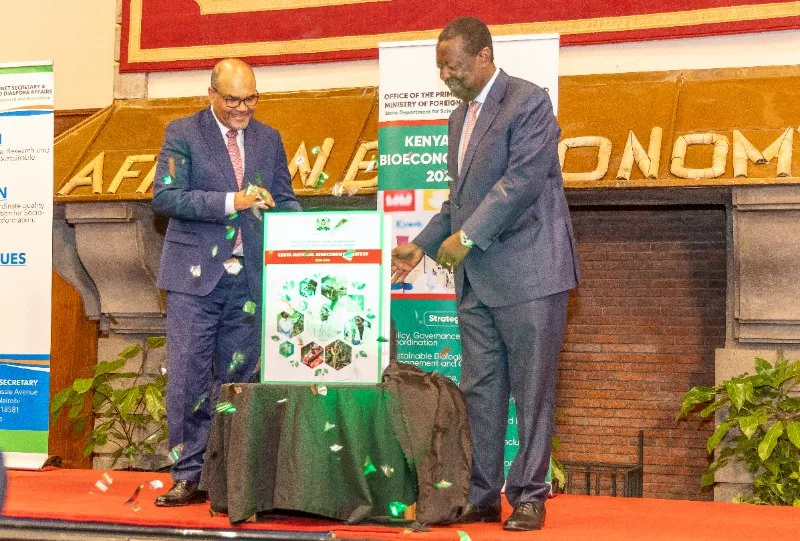
 Prime CS Musalia Mudavadi unveils National Bioeconomy Strategy 2026–2036/HANDOUT
Prime Cabinet Secretary Musalia Mudavadi has unveiled the National Bioeconomy Strategy 2026–2036.
The 10-year framework aims to use the country’s biological resources, research and innovation to create jobs, industries and new economic opportunities.
Speaking at the launch in Nairobi on Tuesday, Mudavadi described the strategy as more than a scientific or environmental initiative, saying it was designed as an economic and industrial framework.
“It provides a strategic response to some of the challenges confronting our economy, including exposure to external trade shocks, economic volatility, high unemployment and the growing effects of climate change,” he stated.
Mudavadi said Kenya has several advantages that could support the development of a strong bioeconomy, including its biological diversity, agricultural sector, scientific community, youthful population and growing innovation ecosystem.
“The question is no longer whether we have the resources to build a bioeconomy, but whether we have the vision and determination to turn those resources into greater prosperity for our people,” he said.
The strategy is expected to guide the development of bio-based solutions across sectors including agriculture, health, energy and industry.
The Prime CS said the government wants to use research, technology and innovation to transform biological resources into higher-value products and competitive industries.
“We must therefore look beyond the production and export of primary. Our ambition must be to increase domestic value addition, develop competitive bio-based products and industries, commercialise innovations and support enterprises that are capable of competing successfully in regional and global markets,” he said.
He linked the strategy to the Bottom-Up Economic Transformation Agenda, saying the bioeconomy could help raise productivity, strengthen value chains and create employment opportunities.
“The bioeconomy gives us an important opportunity to take the biological resources that Kenya possesses in abundance and transform them into higher-value products, enterprises, industries and jobs, through science, research, technology and innovation,” Mudavadi said.
The government also sees investment in research and development as central to achieving the strategy’s objectives.
Mudavadi said Kenya had committed to progressively increasing spending on research and development to two per cent of its Gross Domestic Product, describing research and innovation as fundamental drivers of productivity and long-term economic transformation.
He said public investment would need to attract private capital and strategic partnerships to help viable ideas move from research and early development to commercialisation and eventually scale.
The government is also expected to develop a Bioeconomy Investment and Financing Roadmap to identify investment opportunities, mobilise partnerships and connect priority value chains and enterprises with appropriate sources of financing.
Mudavadi affirmed young Kenyans’ central role in the strategy, particularly those developing ideas in universities, laboratories, farms and innovation hubs.
“We must ensure that the young Kenyan who has an idea in a laboratory, on a farm, in a university or in an innovation hub can see a pathway from that idea to a viable enterprise,” he said.
The launch was attended by Principal Secretary for Science, Research and Innovation Prof Shaukat Abdulrazak, as well as representatives from academia, civil society and international partners, including the Stockholm Environment Institute and the International Centre of Insect Physiology and Ecology.
Mudavadi acknowledged that launching the strategy was only the beginning, saying its success would depend on implementation.
“Our task now is to turn ambition into investment, research into products, innovation into enterprises and our biological wealth into sustainable economic opportunity,” he said.
He said the strategy was ultimately about creating an economy in which Kenya could use its natural resources and human capital to develop industries capable of competing in regional and global markets.
“The bioeconomy is not merely about biology. It is about the kind of economy we want to build and the kind of future we want to create,” the Prime CS added.