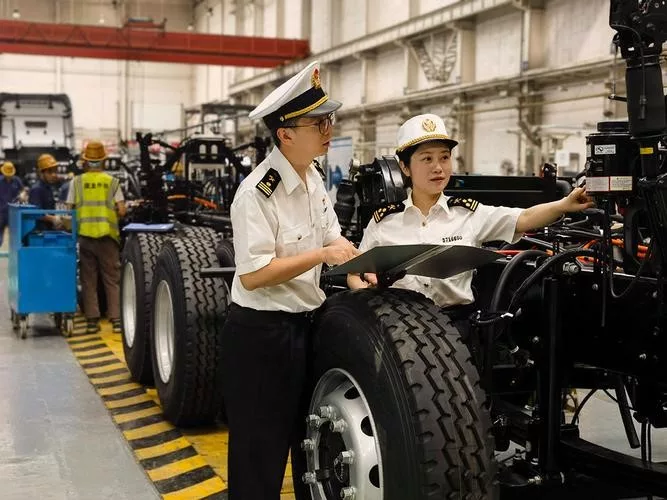
 Xiamen Customs officials conduct research at an automobile export company
China’s coastal trading hub of Xiamen is deepening its economic links with Africa, Latin America and other emerging markets as it seeks to expand its global trade footprint.
According to Chinese State data, this was an increase of more than 11 per cent compared with the same period last year.
Trade between Xiamen and countries participating in China’s Belt and Road Initiative was equally strong, reaching 273 billion yuan (about Sh5.6 trillion).
The figures could speak to Kenya and other African economies looking to attract investment, improve infrastructure and expand access to Chinese markets.
They point to the growing importance of Xiamen as a gateway for trade between China and the continent.
The data obtained by the Star shows that the city’s trade with Africa grew by 48.1 per cent during the six months, while trade with Latin America increased by 16.1 per cent.
The growth comes at a time when China is looking to emerging markets to sustain its international trade amid a complex global trading environment.
Xiamen, a major port city in Fujian province, now has stable trading relationships with 231 countries and regions.
The city had 16,418 businesses actively involved in imports and exports during the first half of the year, which was a growth of more than 2,000 above last year’s.
The increase shows a number of Chinese companies are seeking opportunities beyond the domestic market.
For African countries, the expanding trade relationship is significant as China remains one of the continent’s biggest trading partners.
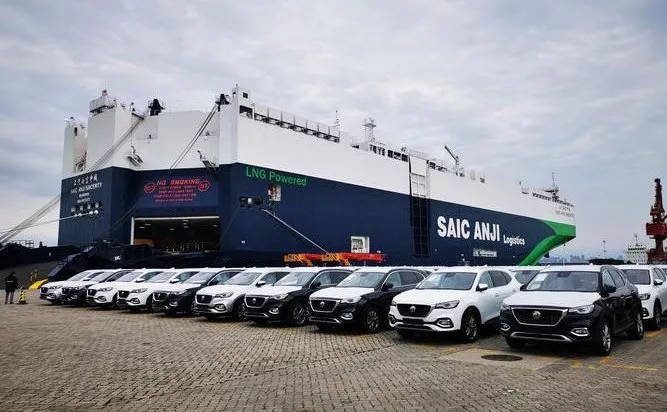 New energy vehicles are loaded onto ships at Xiamen Port for export
overseas. /HANDOUT
New energy vehicles are loaded onto ships at Xiamen Port for export
overseas. /HANDOUTChina is also a major source of manufactured goods, machinery, technology and investment, and infrastructure masterpieces.
Xiamen has also recorded a sharp rise in exports of new-energy products, which could also open new opportunities for African countries.
A better of the continent is still grappling with electricity shortages, high energy costs and the transition to cleaner sources of power.
The city exported 23.36 billion yuan worth of what Chinese manufacturers describe as the “new three” products.
They are new-energy vehicles, lithium-ion batteries and photovoltaic products, most in the first half of 2026.
Lithium-ion batteries accounted for the bulk, with exports valued at 19.64 billion yuan.
About 90 per cent of lithium-ion batteries exported from Fujian province to overseas markets are shipped through Xiamen Port.
Some Chinese companies are already tailoring their products to African conditions.
Xiamen-based Liangdao Energy, for instance, has deployed an off-grid fast-charging system in South Africa.
It combines solar power generation and energy storage, mitigating challenges facing the South African market.
The region is marked with an unreliable power grid and inadequate electric vehicle charging infrastructure.
The company is also expanding into markets including Brazil, Mexico and Vietnam, customising technical services based on local needs.
For African markets, such products could become important as governments and businesses search for alternative solutions to unreliable electricity supplies.
Xiamen attributes its success to improvements at its port and customs-clearance systems where goods move more efficiently between manufacturers and overseas markets.
Exports of high-tech products from Xiamen increased by 11.3 per cent in the first half of 2026, while exports under Chinese-owned brands rose by 17.3 per cent.
For Kenya, which has maintained strong economic and diplomatic ties with China, the expanding network could provide opportunities for Kenyan businesses.
Those seeking to source machinery, technology and manufactured products could benefit, the same opening Chinese markets to Kenyan exports.
In the period, trade with BRICS countries increased by 28.2 per cent, adding to the city’s growing commercial links with countries outside traditional Western markets.
The Belt and Road trade figure of 273 billion yuan represents more than half of Xiamen’s total foreign trade during the first six months of the year.
Xiamen is positioning itself as a bridge between Chinese manufacturers and fast-growing economies in Africa, Latin America and other parts of the developing world.
For African countries, the challenge will be to ensure that rising imports from China are matched by increased exports, investment, and technology transfer.