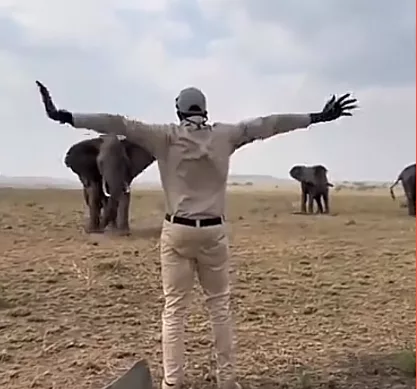
A spectacular encounter between a tour guide and a charging elephant in Tanzania has been captured on video, showing the guide standing his ground as the animal approached a group of tourists.
In the footage, the elephant is seen moving towards the guide while blowing its trunk, appearing agitated at the group.
Instead of running away, the guide raised his hands and repeatedly waves at the elephant, seemingly signalling it to stop.
At one point, he briefly turns around to check on the tourists before facing the elephant again and continuing to wave his hands.
The tourists had been having a meal when the elephant approached. As the animal charged, they moved aside while the guide remained between them and the elephant.
The elephant eventually retreated towards a herd of about eight elephants that was nearby.
The encounter then appeared to settle into a tense standoff, with the guide, tourists and elephants remaining still and watching one another from a distance.
The guide is later seen using hand gestures to reassure the tourists and urging them to remain calm.
The footage has drawn attention to the unpredictable nature of encounters between humans and elephants, particularly when the animals feel threatened.
The elephant involved in the encounter was accompanied by a calf, which may have heightened the animal's defensive behaviour.
Female elephants are known to be protective of their young and can become aggressive when they perceive a threat to a calf.
While the encounter ended without injuries, wildlife experts and guides routinely warn tourists against approaching elephants or making sudden movements when near them.
Elephants are powerful wild animals and can attack humans when they feel threatened, particularly when protecting their young, competing for food or responding to perceived danger.
Human-elephant conflict remains a serious challenge in parts of Africa and Asia, where expanding human settlements and agricultural activities increasingly overlap with wildlife habitats and traditional migration routes.
Habitat loss can force elephants into areas occupied by people, while crop-raiding elephants may come into conflict with farmers protecting their livelihoods.
Male elephants can also become particularly aggressive during musth, a period associated with a significant rise in testosterone and heightened sexual activity.
Past experiences can also influence elephant behaviour. Animals that have been subjected to poaching, harassment or mistreatment may respond aggressively when they encounter people.
The Tanzania encounter, however, ended peacefully, with the guide maintaining his composure until the elephant eventually turned back towards its herd.