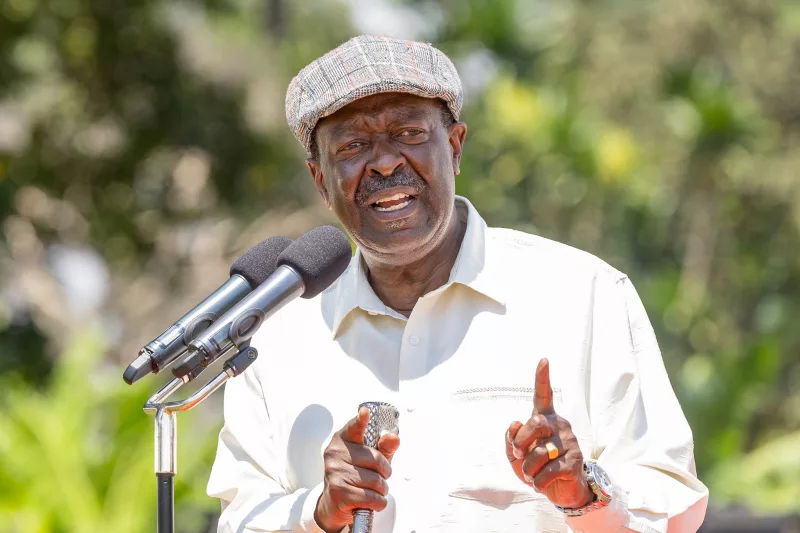
 Prime Cabinet Secretary Musalia Mudavadi/HILTON OTENYO
Prime Cabinet Secretary Musalia Mudavadi has called for a stronger and more resilient health system that can anticipate threats, withstand shocks and continue delivering services during crises.
Mudavadi said Kenya must move away from reacting to health emergencies and instead invest in systems that can detect and prepare for emerging threats.
Speaking at the Kenya Health Summit at the Kenyatta International Convention Center (KICC) in Nairobi on Tuesday, Mudavadi said the global health environment was changing rapidly.
He said disease outbreaks, antimicrobial resistance, non-communicable diseases, demographic change, climate change and new technologies were creating risks that required a different approach to health.
“Health is no longer only a social-sector concern; it is a question of national resilience, economic security and sustainable development,” Mudavadi said.
He said disruptions to health systems could affect schools, workplaces, trade, tourism and the wider economy.
Mudavadi said the country must strengthen surveillance, diagnostics, health workers, supply chains, digital information systems, emergency preparedness and community structures.
“The real test of a health system is not how it performs when conditions are normal, but whether it can continue functioning when they are not,” he said.
He described the summit’s focus on health security and emergency preparedness as timely, saying Kenya needed to prepare for health threats before they became crises.
Mudavadi also called for stronger foundations for what he described as Kenya’s health sovereignty.
He said constrained and unpredictable global health financing required Kenya to have an “honest conversation” about sustainable domestic financing while maintaining partnerships that strengthen local institutions and capabilities.
He said medicines, vaccines, diagnostics and other health products should be treated as strategic assets, particularly during a crisis.
Mudavadi said Kenya should consider not only what it could afford to import, but also what it could produce and the capabilities it could develop locally.
The focus on local manufacturing, research, innovation, quality and safety, he said, could help link health with industrialisation, jobs and economic resilience.
Mudavadi also highlighted climate change as an increasing public health emergency.
He said floods, droughts, extreme heat, food insecurity and changing disease patterns were placing new pressure on health systems.
Kenya, he said, should build climate resilience into its infrastructure, supply chains, surveillance and emergency preparedness.
He further called for stronger cross-border surveillance and regional cooperation, citing Kenya’s position as a regional hub for aviation, trade, tourism and diplomacy.
“Protecting health security also protects our economy and our position as a regional hub,” Mudavadi said.
On devolution, Mudavadi said national and county governments must work together to deliver one national health outcome.
He said the success of health reforms should ultimately be measured by the experience of citizens rather than the number of policies or institutions created.
“The ultimate test of reform, however, is not the number of policies or institutions we establish, but the experience of the citizen,” he said.
Mudavadi said the key questions were whether Kenyans could access care, afford it, get it when needed and receive services of good quality.
He said Community Health Promoters, primary healthcare networks and digital health systems were important in bringing the right to health closer to households.
The summit is themed “Reforms Delivered; Health as a Right.”
Mudavadi said the emphasis on “delivered” was important and urged the summit to produce more than discussions and resolutions.
He said the Summit Communiqué and Joint UHC Acceleration Plan should translate ambitions into clear commitments, timelines and accountability.
“Every commitment should answer three questions: Who will do it? By when? And how will Kenyans know that it has been done?” he said.
Mudavadi said Kenya would face another health shock and should focus on whether it would be ready when that happened.
“The question before us is not whether Kenya will face another health shock. We will. The question is whether, when it comes, we will be ready,” he said.
He urged stakeholders to build a health system that could anticipate threats, withstand shocks, continue delivering services and recover quickly.
He called for a shift “from dependence to sustainability, from reaction to prevention, and from reform commitments to reforms delivered.”