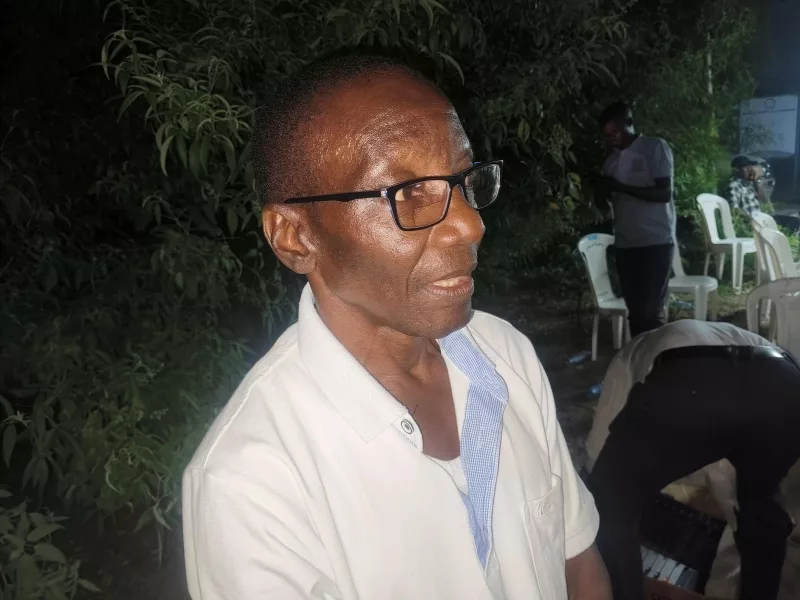
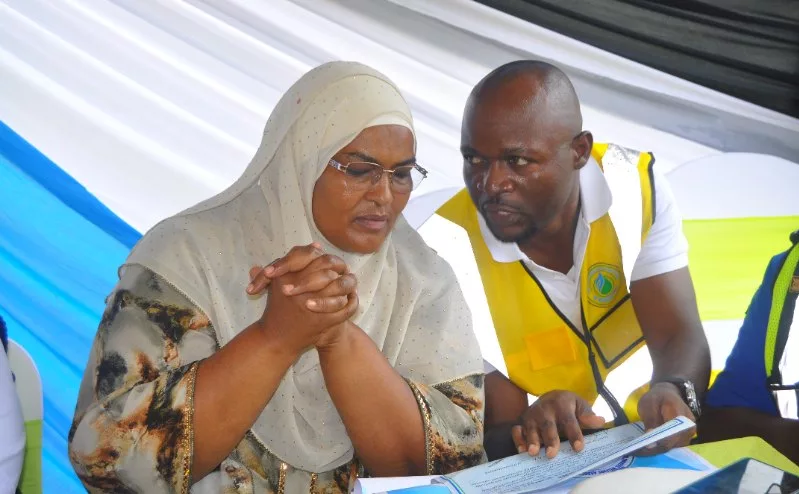
 Coast Regional Traffic Commandant Asha Wario and Pwabowa chairman Joseck Oyalo during a Mandatory Water Bowser Stakeholder Safety, Compliance and Regulatory Meeting held at the Refineries ground in Changamwe on Saturday / CHARLES MGHENYI
For thousands of Mombasa residents, water bowsers have become an essential source of water, filling a critical gap left by inadequate and unreliable piped supplies.
The tankers deliver water to households, businesses, schools, hospitals, construction sites and communities, particularly in areas where residents face prolonged shortages.
The Pwani Water Bowser Owners Welfare Association (Pwabowa) said private suppliers have become an important part of Mombasa’s water supply chain, helping serve residents who remain outside reliable piped-water coverage.
Pwabowa chairman Joseck Oyalo said Mombasa Water Supply and Sanitation Company (Mowassco) currently meets about 20 per cent of the city’s water demand, leaving an estimated 80 per cent gap.
“The county government, or rather Mowassco, is giving around 20 per cent of the supply, and the general population is lacking 80 per cent. The private sector comes in to try and fill that gap of the 80 per cent,” Oyalo said.
Oyalo spoke during a Mandatory Water Bowser Stakeholder Safety, Compliance and Regulatory Meeting held at the Refineries ground in Changamwe on Saturday.
The meeting brought together water bowser owners and operators, government agencies, regulators, vehicle dealers, financial institutions and other stakeholders to discuss safety, compliance and regulation of the industry.
Pwabowa estimates that nearly 200 water bowsers are operating in Mombasa, but Oyalo said about half are not properly regulated.
He said the lack of regulation makes it difficult to establish who owns some of the vehicles, who drives them and where they obtain their water.
The association wants all bowsers registered, with details of their owners and drivers captured, alongside information on their water sources and destinations.
Oyalo said the move would also address concerns that some private operators obtain water illegally from Mowassco infrastructure and resell it to consumers.
“We have had cases where the private entities have been blamed for siphoning water from the resources of Mowassco to be distributed to the public,” he said.
“We want to make sure that our members are properly regulated so that we know the source and the destination of every water bowser that runs around in Mombasa.”
According to Pwabowa, some private suppliers obtain water from boreholes and wells.
Oyalo singled out Nyali, where he said private operators have been able to access groundwater.
“We have private harvesting of water through boreholes and wells that have been dug, especially the Nyali area, which has very good rocks that give good water,” he said.
Oyalo said the water is purified and subjected to quality analysis before being delivered to consumers.
He said water quality was a key responsibility for private suppliers because consumers trust them with an essential commodity.
“When a customer buys water from a water bowser, they trust us with something essential to life,” Oyalo said.
The association's push for regulation also comes amid concerns over road accidents involving water bowsers.
He said some bowsers operate at night, when supervision is more difficult, and claimed that the association's records show most accidents involving the vehicles occur at night.
“The record shows that most accidents of water bowsers happen at night, not during the day,” he said.
Pwabowa wants to work with the National Transport and Safety Authority, Traffic Police and other government agencies to register and train water bowser drivers.
The association says a comprehensive register would also help trace vehicles involved in accidents and establish accountability among owners and drivers.
Oyalo said operators must also take responsibility for maintaining their vehicles and ensuring that drivers are qualified.
The association is seeking closer cooperation with the Mombasa county government and Mowassco on water sourcing, licensing, public health, environmental requirements and other regulatory obligations.
Oyalo said clear guidelines and better coordination would help reduce disputes between regulators and operators, while ensuring consumers receive safe and reliable water.
INSTANT ANALYSIS
Mombasa’s water bowser industry has evolved from a stop-gap response to an essential component of the city’s water supply system. With Mowassco reportedly meeting only about 20 per cent of demand, private operators are helping bridge a significant supply deficit.