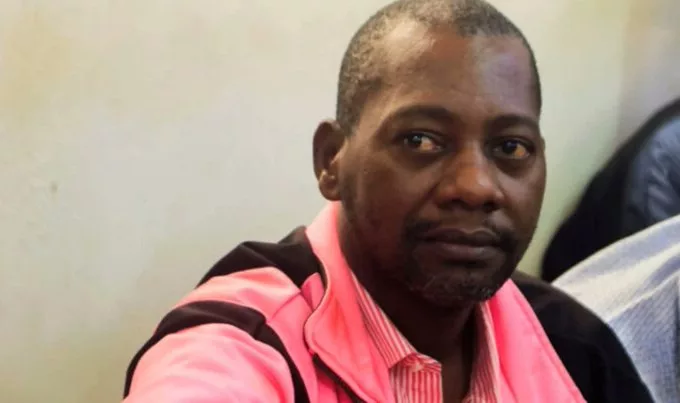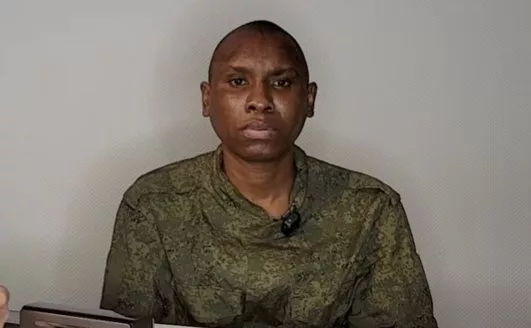
A Kenyan electrician who travelled to Russia in search of work says he never expected the journey to end with him becoming a prisoner of war in Ukraine.
Francis Ndarua, 35, says he was struggling to support his wife and child when a former university colleague approached him in July 2025 with an offer that appeared to provide a way out of unemployment.
The opportunity was presented as a security job in Russia.
“I said if there’s such an opportunity I will gladly go because I have a wife a child to feed,” Ndaru said.
He had previously worked as an electrical engineer for a company before his contract ended. He then turned to electrical work in his local area and other casual jobs.
Ndarua says he was asked to submit copies of his passport, health certificate and certificate of good conduct. The documents were forwarded to a person he later discovered was linked to an international agency.
Within weeks, he was told that his visa and flight tickets were ready.
On August 11, 2025, he left Kenya, travelling through Istanbul before arriving in St Petersburg with four other recruits.
He says the group was received by two men, taken to an apartment and later accompanied to a bank to open accounts.
Three days later, they travelled to Novgorod.
It was there, Ndarua says, that the nature of the arrangement began to change.
“We were told we were going to sign the contracts,” he said.
But the contracts were written in Russian, a language he could not read.
“They were written in Russian and I couldn’t read and after signing we were dispatched to a military base,” Ndarua said.
He says the recruits were told they were going for military training.
At the military base, Ndarua encountered recruits from several countries, including Colombia, Iraq and African countries.
The men were divided into groups and transported by vans to an airstrip before being flown to a training camp.
He says he underwent 13 days of military training beginning August 16.
He was subsequently sent into an active combat zone.
Ndarua says his understanding of the Russia-Ukraine war before leaving Kenya was limited, and he did not appreciate the scale of the conflict.
“I had very little knowledge, I knew that Russia and Ukraine had a small conflict. I didn’t know it was this big,” he said.
His deployment ended on November 22, 2025, when he was captured by Ukrainian forces.
He says the unit's commander had earlier stepped on a landmine, suffering a devastating leg injury.
As winter approached, the deputy commander ordered the group to change positions.
Ndarua was later assigned to another commander.
During the movement, the group encountered two Ukrainian soldiers.
“We came across two Ukrainian soldiers and I didn’t even know these were Ukrainians,” he said.
He says the Ukrainian soldiers fired shots into the air before his commander dropped his weapon and backpack and lay on the ground.
“I didn’t understand the language but I saw my commander lie on the ground and I followed what he did,” he said.
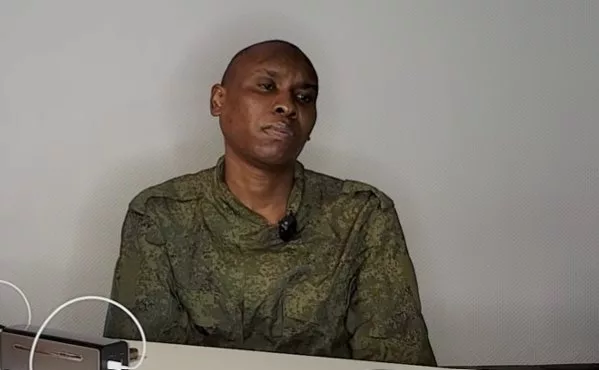
Ndarua says he was paid only 300,000 roubles.
His reason for seeking the job, he says, was straightforward: he wanted to improve the financial circumstances of his family and build a home in Kenya.
“I wanted money to build a house at home,” he said.
His story later gained wider attention after a video emerged appearing to show him with a T-Tank landmine strapped to his chest.
In the footage, a voice can reportedly be heard instructing him to run into a dark tunnel.
The video has added another dimension to Francis' account of how Kenyans and other foreign nationals can find themselves caught up in the Russia-Ukraine war after travelling abroad in search of employment.
For Ndarua, what began as a search for a civilian job ended in military training, deployment to a battlefield and capture by Ukrainian forces.
His account highlights the uncertainty that can confront foreign jobseekers when the terms of employment are unclear or contracts are presented in languages they cannot understand.
“I said if there’s such an opportunity I will gladly go because I have a wife and a child to feed,” he recalled.
The decision, made in the hope of securing a better future for his family, ultimately took him thousands of kilometres from home and into one of the world's most dangerous ongoing conflicts.
Ndarua is currently the third documented Kenyan POW in Ukraine.
This comes even as talks between Kenya and Ukrainian authorities continue to have the POWs released back to the country at the request of President William Ruto.