Read Also
Schools in Kwale county are increasingly turning to tree
growing and waste recycling as part of efforts to tackle climate change and
promote environmental conservation among learners.
At least 12 schools in Matuga subcounty have established tree nurseries where learners and teachers grow different varieties of trees for planting within school compounds and in neighbouring communities.
At Matuga Comprehensive School, the programme has significantly transformed the institution’s surroundings. Trees have added greenery to the compound while providing learners with practical lessons on environmental conservation.
The school has also introduced a unique bamboo species, which offers both environmental and economic benefits.
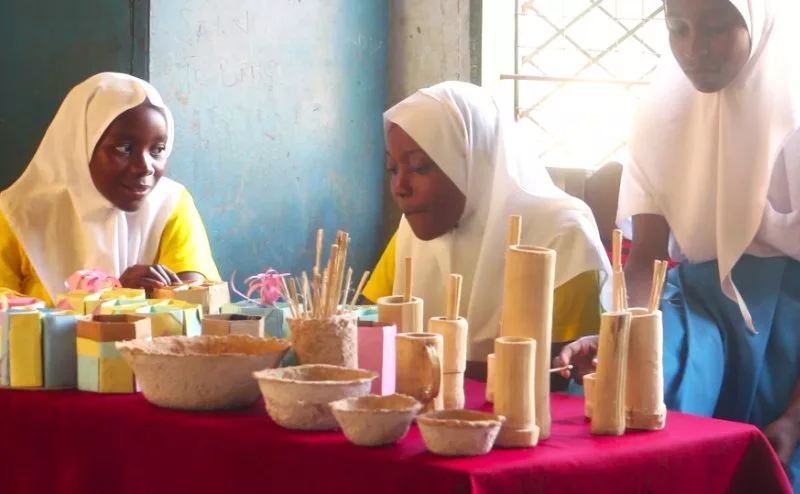
The conservation efforts extend beyond tree planting, with learners being trained to identify, collect and transform waste materials into useful and decorative products.
The initiatives are being implemented under the “Sikiliza Sauti Yetu, Dunia Inaita” project by WeWorld, with funding from the European Union.
Project officer John Elly said the environmental programme was launched two years ago and had made considerable progress in participating schools.
Elly said the initiative had not only increased tree-growing activities but had also equipped learners with practical knowledge and skills in waste management and environmental conservation.
He said exposing children to environmental conservation at an early age was critical to creating a generation that understands the importance of protecting natural resources.
“The progress we have witnessed in the schools shows that when students are given the opportunity and resources, they can play a significant role in environmental conservation,” Elly said.
He said teachers were using different approaches to promote conservation, including growing fruit trees, grafting and recycling waste materials.
At Matuga Comprehensive School, Headteacher Hadija Hamisi said environmental conservation had been incorporated into learning through practical activities.
Hamisi said learners were taught how to identify waste that could be reused and transform it into useful items. This helped reduce litter and keep the school environment clean.
“The learners have become more aware of the importance of keeping the environment clean. They are now able to identify waste materials that can be reused instead of simply throwing them away,” Hamisi said.
She said the practical skills acquired at school could also be passed on to families and communities, multiplying the impact of the programme beyond the classroom.
For learner Mwanamisi Chari, the initiative has changed her understanding of waste and environmental responsibility.
Chari said she had learnt that materials often considered useless could be reused to make useful or decorative items, reducing pollution and improving cleanliness.
She said the lessons had also influenced her behaviour at home, where she now pays greater attention to waste disposal and keeping her surroundings clean.
“I have learnt that protecting the environment is everyone’s responsibility. What we learn at school can also help us make our homes and communities cleaner,” Chari said.
Chari said she also shares the lessons with her family, encouraging them to avoid littering and find ways of reusing materials instead of throwing them away.
She added that the practical activities had made environmental lessons more engaging while giving learners skills they could use in their everyday lives.