Read Also
The Kisumu County Government has defended its financial
performance, saying it has made progress in reducing pending bills and cutting
its wage bill.
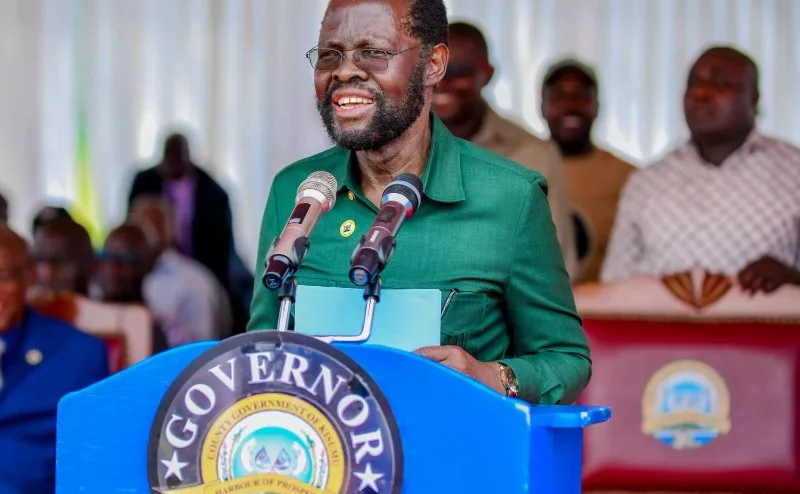
In a response to the Senate Parliamentary Budget Office (PBO) County Fiscal Performance Management Review for the 2024-25 financial year, Governor Anyang’ Nyong’o said pending bills had fallen from Sh5.9 billion as at June 30, 2025, to about Sh4.5 billion by June 30, 2026.
Nyong’o attributed the reduction to payments of approximately Sh1.95 billion during the 2025-26 financial year.
“The remaining pending bills include Sh1.7 billion owed to suppliers and contractors, about Sh900 million in pensions, mainly historical obligations inherited from defunct municipal councils and Sh1.9 billion arising from court decrees and advocates’ fees,” he said.
The governor said the county had undertaken a comprehensive review of its obligations, including verifying payables and putting in place measures to settle genuine pending bills.
On the wage bill, Nyong’o pointed to the transfer of management of Jaramogi Oginga Odinga Teaching and Referral Hospital (JOOTRH) to the national government as a key factor in reducing expenditure.
He said the hospital’s annual wage bill of about Sh770 million had placed a significant burden on the county before the transfer.
As a result, the county’s wage expenditure declined from 63 per cent to about 40 per cent during the 2025-26 financial year, he said.
On own-source revenue, the county acknowledged that more needed to be done to improve collections.
Kisumu collected Sh2.7 billion during the 2024-25 financial year against a target of Sh3.8 billion, representing 71 per cent of the target.
The county also addressed concerns over development spending, saying its County Fiscal Strategy Paper prioritised settling pending bills and completing ongoing projects.
It spent Sh680 million on development-related pending bills and Sh390 million on new development projects, bringing total development expenditure to Sh1.07 billion.
Nyong’o said the spending was broadly aligned with the county’s priorities, although absorption of the development budget remained below the desired level.
The governor said the county had introduced measures to prevent further accumulation of pending bills.
These include freezing additional human resource expenditure commitments, rolling over incomplete projects and allocating funds to settle outstanding obligations.
The county is also seeking to strengthen own-source revenue collection, negotiate possible waivers on interest linked to historical debts inherited from defunct local authorities and improve its litigation capacity.
Nyong’o said the PBO report largely reflected the county’s financial position during 2024-25 and did not fully capture measures implemented in the subsequent year.
He said the county expected to make further payments during 2026-27, with the aim of reducing its pending-bills portfolio further.