For many months, every chemotherapy session meant travelling from Kilifi to Mombasa for Mgeni Sudi.
Already battling Stage Three breast cancer, she also had to worry about transport costs, accommodation and finding someone to accompany her for treatment.
While the Social Health Authority (SHA) covered the cost of
chemotherapy, travelling for care remained an expensive and exhausting part of
her fight against cancer.
Today, that journey has ended.
Instead of travelling to Mombasa, Sudi now receives
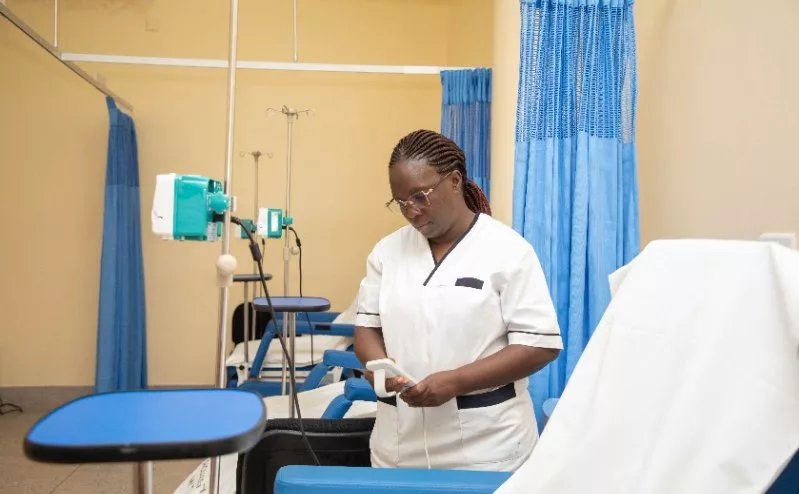
chemotherapy at Kilifi County Referral Hospital, thanks to the county's first
dedicated chemotherapy centre.
"I am a resident of Kilifi. Here I can just walk
in. I do not have to travel long distances or look for accommodation whenever I
go for chemotherapy sessions," she says.
Sudi's ordeal began last year after she noticed changes
in her breast and sought treatment at Kilifi County Referral Hospital.
A referral to Mombasa was followed by delays caused by
doctors being away on leave and a faulty mammogram machine.
After a biopsy and further laboratory tests, she was
diagnosed with Stage Three ER-positive breast cancer.
Fortunately, scans showed the disease had not spread to
other organs, allowing treatment to begin.
Chemotherapy brought its own challenges, including
fatigue, loss of appetite and hair loss, but she remained determined to
complete treatment.
Her experience reflects the reality many cancer patients
in Kilifi have faced for years.
Specialised
treatment often meant travelling to Mombasa or Nairobi, adding transport, food
and accommodation costs to an already expensive illness.
Doctors refer to this as financial toxicity — the economic burden cancer places on patients and their families beyond medical bills.
The new chemotherapy centre, launched on June 18, is beginning to reduce that burden.
Dr Suchira Udugamasooriya, a clinical and radiation oncologist at Kilifi County Referral Hospital, says patient numbers have doubled since the unit opened, largely because residents who previously sought treatment elsewhere can now access services closer to home.
The facility currently has five chemotherapy beds and can handle about 10 patients a day, although demand is already outgrowing available space.
Between July 2025 and June 2026, the hospital recorded more than 300 newly diagnosed cancer cases.
Cervical cancer accounted for about one-fifth of the
cases, while prostate and breast cancers remain among the most common. Doctors
are also managing oesophageal, colon and liver cancers.
The biggest challenge, however, remains late diagnosis.
Many patients delay seeking treatment because of fear,
stigma, cultural beliefs or lack of awareness. By the time they seek medical
care, the disease is often advanced, limiting treatment options.
"If you come early, you can actually get a cure
from cancer, including breast cancer," Dr Udugamasooriya says.
To encourage early diagnosis, Kilifi county has expanded
cancer awareness campaigns and screening programmes while working with
community health promoters, religious leaders and local leaders to tackle myths
surrounding the disease.
"Cancer is manageable. If you get screened early,
you are detected early and start treatment early, you can always get some
help," says Dr Eddy Nzomo, the county's head of curative and rehabilitation services.
The county says these efforts are beginning to bear
fruit, with increased uptake of HPV vaccination and cervical cancer screening.
Kilifi is also looking beyond chemotherapy.
Plans are underway to introduce radiotherapy services, with construction of a room for the equipment already in progress.
The county also hopes to establish a regional oncology
centre that will serve more patients including those from neighbouring counties.
Health officials say the vision reflects the promise of devolution — bringing specialised healthcare closer to the people who need it most.
For Sudi, however, the impact is measured in the elimination of the journey to and from Mombasa.
Instead of boarding a bus to Mombasa every few weeks,
she now walks into a hospital in her own county.
For a patient fighting cancer, that means less time on the road, lower costs
and more energy to focus on recovery.
Instant analysis
The opening of Kilifi's chemotherapy centre shows how devolution can transform healthcare by bringing specialised services closer to patients. For years, cancer treatment meant costly and exhausting journeys to Mombasa or Nairobi, often delaying care and adding financial hardship to an already devastating diagnosis. While the new facility marks a major milestone, it also highlights the need for sustained investment in oncology services, including radiotherapy, dedicated cancer wards and early screening programmes. Equally important is tackling stigma and misinformation, which still cause many patients to seek treatment too late. Early diagnosis remains the strongest weapon against cancer.