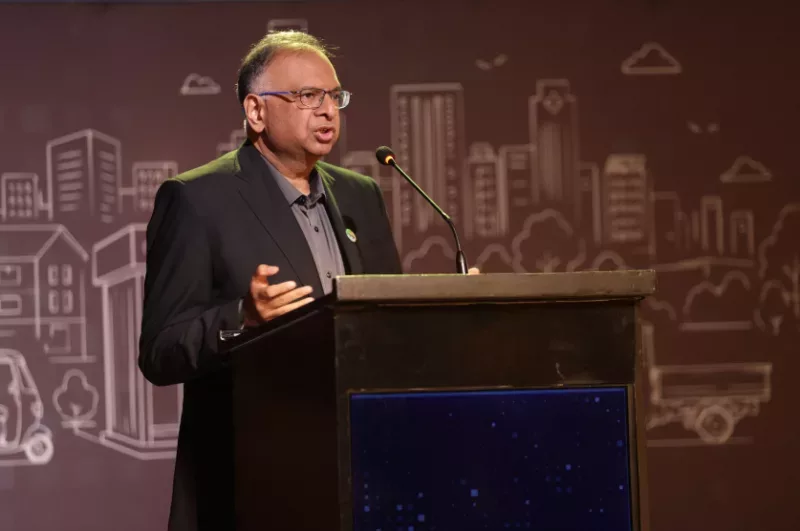
 Public Private Partnerships (PPP) Director Eng. Kefa Seda /HANDOUT
The government has urged engineers to take a more central role in Kenya’s economic and fiscal planning, arguing that technical expertise is critical to ensuring public investments deliver value for money.
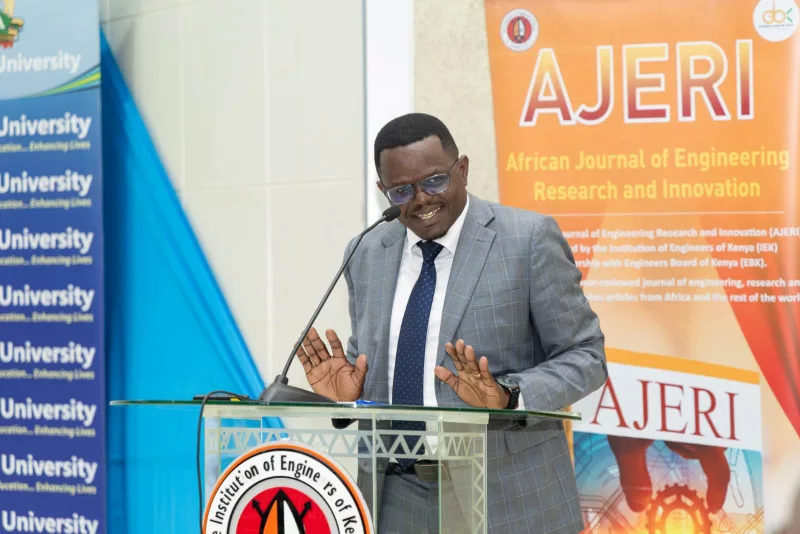
Speaking on behalf of Treasury Cabinet Secretary John Mbadi during the opening of the Second African Journal of Engineering Research and Innovation (AJERI) Scientific Conference, Public Private Partnerships (PPP) Director Eng. Kefa Seda said engineers should move beyond their traditional role of implementing development projects.
Seda said engineers should be involved in fiscal planning, infrastructure financing and policy formulation to help the government develop projects that are financially viable, climate-resilient and capable of generating long-term economic value.
“Economic planning and engineering are inseparable. Every national development plan eventually becomes an engineering project,” Seda said.
He said government budgets alone do not create infrastructure, with engineers playing a key role in converting public resources into productive national assets.
Seda urged engineers to contribute to the development of bankable projects and innovative financing models, including public-private partnerships, green bonds and the National Infrastructure Fund.
He cited major infrastructure investments in railways, roads, energy, ports, water and sanitation, digital connectivity and industrial parks as examples of how engineering can translate government policy and budget allocations into economic activity.
He challenged engineers to look beyond individual infrastructure projects and help develop economic corridors that can stimulate trade, manufacturing and job creation.
The call came as speakers at the two-day conference urged stronger collaboration between government, universities and industry to ensure engineering research influences public policy and supports industrialisation.
Kenyatta University Professor James Kung’u said universities have a responsibility to generate research and innovations that address climate change, environmental degradation and growing pressure on natural resources.
The conference, themed “Engineering Innovation for Circular Economy and Resource Efficiency,” is focusing on technologies and systems that reduce waste, extend the life of products and infrastructure and improve the use of natural resources.
Engineers Institution of Kenya caretaker committee chairperson Eng. Hillary Nyaanga said the transition to a circular economy must begin at the design stage, with engineers considering whether products and infrastructure can be repaired, reused, repurposed or remanufactured.
She said engineering research should move beyond academic journals and laboratories to produce practical solutions for better roads, safer buildings, cleaner energy, improved water management and more efficient industries.
The conference is also examining innovations in second-life electric vehicle batteries, solar energy storage, recycled construction materials, wastewater reuse, geothermal energy, climate-resilient roads, automated irrigation and digital infrastructure monitoring.
Nyaanga said engineers must therefore participate more actively in economic planning, budgeting, policy development and investment decisions as the country seeks to improve the efficiency of public spending and accelerate sustainable economic growth.