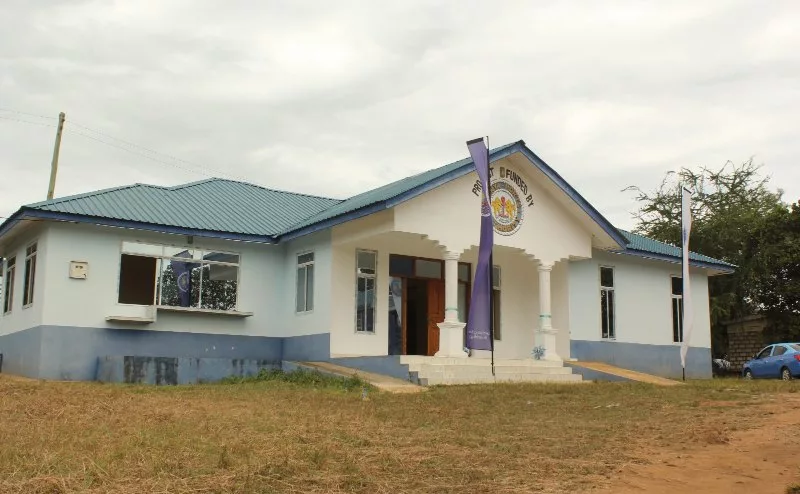
 The newly launched fish storage facility in Msambweni, Kwale County.
For decades, fishermen in Msambweni, Kwale County, have watched a large portion of their daily catch spoil before reaching consumers, forcing them to sell fish at throwaway prices or incur heavy post-harvest losses.
Read Also
The lack of cold storage, ice production and modern preservation facilities has denied coastal communities the full economic benefits of the rich fishing grounds in the Indian Ocean.
However, that long-standing challenge is now set to ease following the commissioning of a modern cold storage facility, an ice plant and a fishing vessel worth Sh129.6 million.
The project is expected to transform fishing into a more profitable and sustainable livelihood while strengthening Kenya's blue economy.
Commissioned by the Kenya Ports Authority (KPA) on August 3, 2026, the facility is expected to significantly reduce post-harvest losses, preserve fish quality, support value addition and expand access to local and regional markets.
The investment is also projected to create new jobs in fish handling, processing, transportation, marketing and cold-chain logistics.
KPA Managing Director Captain William Ruto said the project reflects the government's commitment to empowering small-scale fishermen by providing infrastructure that enables them to maximise earnings from every catch.
"This facility will help fishermen store excess fish, reduce losses caused by poor preservation, and avoid selling their produce at throwaway prices," he said.
He noted that the improved storage capacity will enable fishermen to sell their fish when market prices are favourable instead of rushing to dispose of highly perishable catches.
Captain Ruto added that the investment will stimulate economic activity across the fisheries value chain, creating employment opportunities for youth and women while improving household incomes in coastal communities.
He said the project complements the ongoing development of the Shimoni Fish Port, positioning Kwale as a major fisheries and seafood processing hub capable of attracting investment and expanding market opportunities.
The KPA boss urged residents to safeguard the facility, noting that its long-term success will depend on proper maintenance, accountability and community ownership.
Msambweni MP Feisal Bader said the newly acquired fishing vessel will enable local fishermen to venture into deeper waters, where fish stocks are more abundant, increasing catches and boosting incomes.
He said the combination of modern fishing equipment, reliable ice production and cold storage facilities will ensure fish reaches consumers in better condition, attracting more buyers and better prices.
Beyond improving livelihoods, Bader said revenue generated from the facility will support community development programmes, including education, water projects and support for madrasa teachers.
He, however, warned against mismanagement, saying strict oversight measures would be implemented to ensure public resources are protected.
"Anyone planning to misuse funds is mistaken. We will regularly audit the facility's accounts to ensure every shilling is accounted for," he said.
Kwale Beach Management Unit (BMU) Network chair Omar Mtengo described the project as a game changer for fishermen who have for years suffered huge financial losses due to inadequate fish preservation facilities.
He said access to ice and cold storage will help fishermen maintain product quality, attract more buyers, and negotiate better prices, ultimately increasing their earnings.
Mtengo said the investment will strengthen the entire fisheries value chain and position Msambweni as one of the leading fish trading centres along the Kenyan coast.
He urged the community to respect existing Beach Management Unit structures to ensure transparency, accountability and sustainable management of the facility.
"We already have BMU structures. If we respect them and work together, this facility will benefit the community," he said.
INSTANT ANALYSIS
The commissioning of the Sh129.6 million fisheries facility in Msambweni marks a major shift from subsistence fishing to a more commercial and sustainable blue economy.
By addressing post-harvest losses through cold storage and ice production, the project enables fishermen to preserve fish quality, access better-paying markets, and increase household incomes.
The addition of a fishing vessel will also expand access to deeper fishing grounds, boosting catches and productivity.