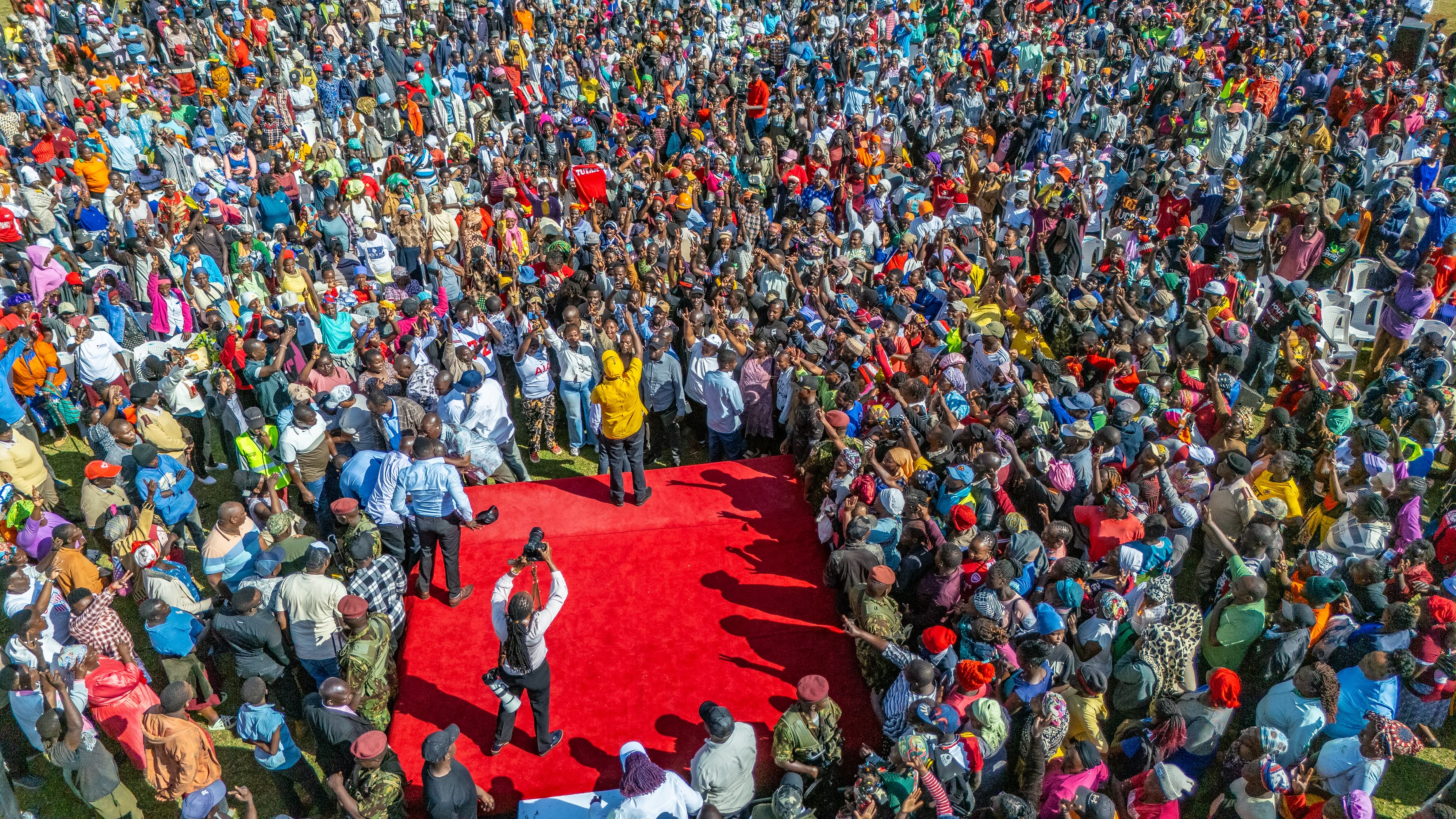
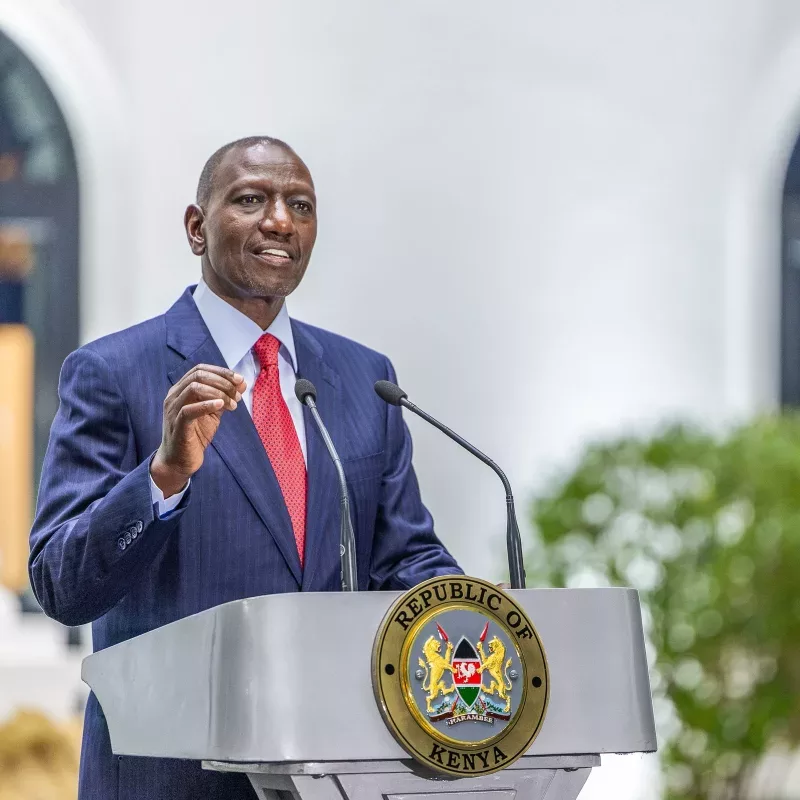
 President William Ruto during the Special National Address at State House on July 30 /PCS
For nearly two decades, Kenya’s national development agenda has been anchored on Vision 2030, the long-term blueprint launched under retired President Mwai Kibaki in 2008.
Now, as the 2030 deadline approaches, President William Ruto is opening another national conversation over what should come next, and whether Kenya can finally build a development framework capable of carrying the country into high-income, industrialised status.
In his special national address on Wednesday, Ruto announced that the National Conversation on Kenya’s Future Beyond Vision 2030 will formally begin on August 12, 2026.
He described it as one of the most consequential national conversations since the promulgation of the 2010 Constitution, insisting that the exercise must move beyond political competition and individual governments.
“This national conversation must rise above politics, transcend electoral cycles and unite us around a shared destiny,” Ruto said.
The President has already started laying the groundwork by inviting Professor Hiroyuki Hino, Professor Anyang’ Nyong’o and other experts to examine Kenya’s future beyond Vision 2030.
“It was in that spirit that I invited Professor Hiroyuki Hino, Professor Anyang’ Nyong’o and their distinguished colleagues to begin examining Kenya’s future beyond Vision 2030,” he said.
The shift marks another major chapter in Kenya’s long tradition of national economic planning.
Before Vision 2030
Vision 2030 was not the first attempt by the Kenyan Government to establish a long-term development direction.
The country had for decades relied on national development plans, alongside strategies designed to respond to immediate economic challenges.
One of the most important immediate predecessors was the Economic Recovery Strategy for Wealth and Employment Creation, 2003-2007, introduced under Kibaki’s administration. Government planning documents identify the ERS as the strategy succeeded by the first medium-term plan under Vision 2030.
The ERS sought to revive Kenya’s economy after years of weak growth, with emphasis on economic recovery, job creation and improved public services.
The Vision 2030 process followed that recovery programme and sought to move the country from short-term economic recovery towards a much longer development horizon.
The Vision 2030 development process was initiated in 2006 under Kibaki.
Its preparation involved senior government officials, experts, private-sector players and other stakeholders.
The vision was ultimately launched in June 2008, with Kibaki and then Prime Minister, the late Raila Odinga formally unveiling it.
Vision 2030 was designed as Kenya’s development blueprint covering 2008 to 2030, with the objective of transforming the country into a newly industrialising, globally competitive and prosperous economy.
It was built around economic, social and political pillars supported by a range of foundations and enablers.
Implementation was to take place through successive five-year medium-term plans.
The first, covering 2008-2012, translated the broader vision into specific policies, programmes and flagship projects.
Why Ruto wants a new framework
Ruto says Vision 2030 has provided Kenya with an important national direction, but its target year is approaching and some of its most ambitious goals remain unfinished.
“It has served Kenya well. It transformed the way we think about national development, provided a common direction, inspired investment, guided public policy and demonstrated the power of long-term planning,” he said.
But he argued that the country must now honestly assess where it succeeded and where it fell short.
Vision 2030 originally aimed to transform Kenya into a newly industrialising, middle-income country with a high quality of life by 2030.
Ruto acknowledged that Kenya has not achieved all those ambitions.
“Honesty also requires us to acknowledge that many of its ambitions remain unattained,” he said.
For the President, however, this is not a reason to abandon long-term planning.
Instead, he wants the next framework to learn from Vision 2030 while setting more ambitious targets.
“Our responsibility is far greater under the 2010 Constitution: to craft a new national development charter that gives effect to the development imperatives enshrined in the Constitution and to decide, together, what kind of Kenya we want to build over the next generation, and beyond,” Ruto said.
From a government plan to a national charter
One of the biggest differences in Ruto’s proposal is how he describes the new framework.
He does not want it to be simply another government development plan that changes when administrations change.
Instead, he wants a national development charter anchored in the 2010 Constitution and capable of surviving political transitions.
The proposed charter would focus on practical outcomes in areas such as healthcare, housing, education, food security, water, social protection and economic opportunity.
Ruto argued that the constitution already provides the broad development mandate, including the rights to healthcare, adequate housing, food, clean water, social security and education.
The challenge, he said, is to translate those constitutional promises into measurable national outcomes.
“The purpose of state power is not simply to administer the affairs of the State, but to expand opportunity, promote human dignity, create prosperity and improve the lives of citizens,” he said.
The Vision 2030 development process was initiated in 2006 under Kibaki.
Ruto’s decision to involve Hino and Nyong’o is therefore intended to provide the starting point for that larger national debate.
The team has already presented proposals on strategic guidelines for Kenya’s long-term transformation.
“The thrust of their proposals is both ambitious and achievable: that Kenya can become a prosperous, high-income, industrialised and globally competitive nation within a generation,” Ruto said.
But he stressed that the experts will not have the final word.
“These proposals provide the foundation for a much broader national conversation; a conversation that now belongs not to government, nor to its authors, but to every Kenyan,” he said.
That approach echoes an important element of the Vision 2030 experience, which was developed through broad consultations rather than solely inside government. The Vision 2030 Secretariat records a process involving experts and stakeholders before the blueprint was formally adopted.
A new political test
The post-2030 process could also become a test of whether Kenya can sustain long-term planning beyond presidential terms.
Ruto says the next vision should survive elections and changes of government, ensuring that national priorities are not repeatedly rewritten for political reasons.
“A vision worthy of guiding Kenya for the next generation cannot be written by Government. It cannot be crafted by a handful of experts, however distinguished,” he said.
“It must be forged through a genuinely people-driven, citizen-centred and future-focused national process.”
The proposed conversation will therefore involve counties, political parties, business, workers, faith organisations, universities, professional bodies, civil society, innovators, creative industries and young people.
On August 12, 2026, Kenya is expected to formally begin that process.
From the ERS of the Kibaki era, to Vision 2030, and now Ruto’s proposed post-2030 charter, Kenya is once again attempting to answer the same fundamental question: what kind of country does it want to become, and what must be done differently to get there?
As Ruto put it: “If the defining achievement of those who came before us was to give Kenya a Constitution worthy of our aspirations, then the defining responsibility of our generation is to build a nation worthy of that Constitution.”