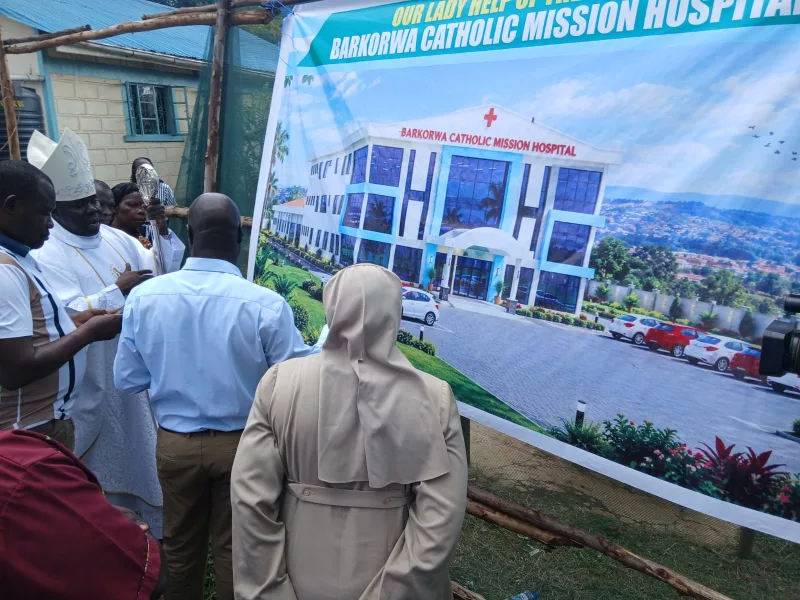
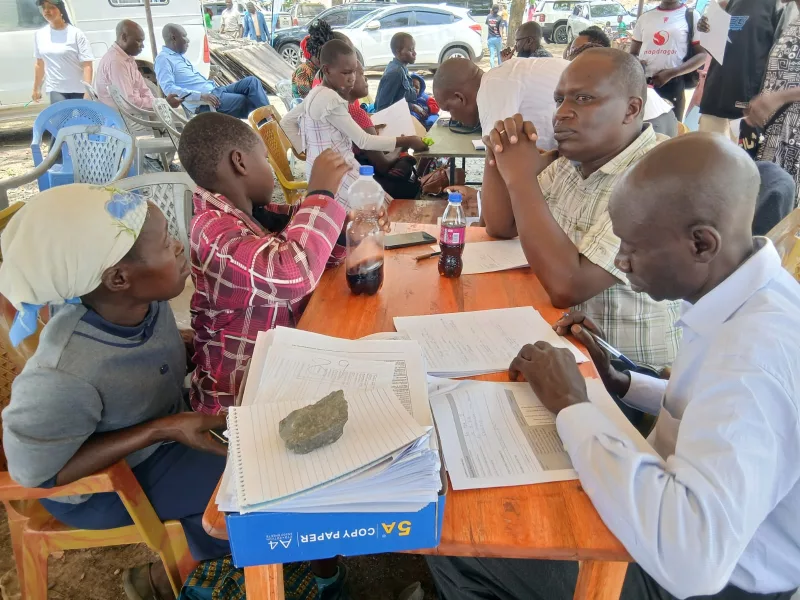
 Kisumu Governor Anyang' Nyong'o during the handover of Konam Agricultural Training Centre Seme to the Kenya School of Agriculture /Faith Matete
  Kisumu Governor Anyang' Nyong'o and Agriculture PS Paul Kipronoh during the handover of Konam Agricultural Training Centre Seme to the Kenya School of Agriculture /Faith Matete
 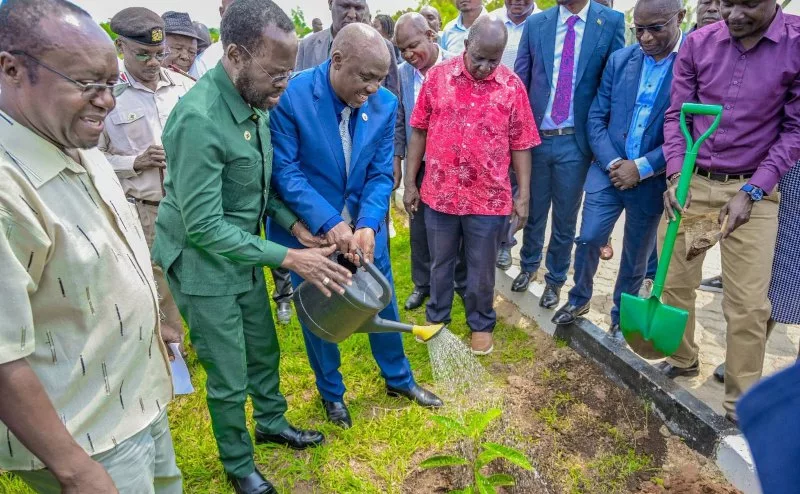 Kisumu Governor Anyang' Nyong'o and Agriculture PS Paul Kipronoh during the handover of Konam Agricultural Training Centre Seme to the Kenya School of Agriculture /Faith Matete
 The Kisumu government has handed over the Pap Konam Agricultural Training Centre in Seme to the Kenya School of Agriculture to expand farmer training and strengthen agricultural innovation.
Governor Anyang' Nyong'o said the partnership will enable farmers, young agripreneurs, agricultural extension officers and other professionals to access nationally accredited training and modern farming technologies.
He said the county had provided the land and invested public resources in constructing the facility, while the Kenya School of Agriculture would offer academic leadership, technical expertise and institutional capacity.
Nyong'o spoke during the handover ceremony at Pap Konam Village on Wednesday.
"The county government has fulfilled its responsibility by providing the land, mobilising public resources and constructing this modern institution," he said.
"The Kenya School of Agriculture brings decades of experience in agricultural education, curriculum development, research and professional training."
The governor said the county opted to hand over the facility to the national institution to avoid duplicating structures and creating additional recurrent expenditure.
Nyong'o said the arrangement would ensure the centre remains sustainable while relieving the county of the cost of running academic programmes, staffing, certification and institutional administration.
"Rather than duplicate institutions and create unnecessary recurrent expenditure, we have chosen partnership over parallel structures. This is cooperative governance in practice," he said.
The centre is expected to offer practical training in rice production, fisheries and aquaculture, dairy farming, poultry production, horticulture, indigenous vegetables, irrigation and climate-smart agriculture.
Nyong'o said it will also support continuous professional development for agricultural extension officers and promote demonstration farms and farmer field schools to accelerate the adoption of improved farming technologies.
He said nearly half of households in Kisumu depend on farming, livestock, fisheries and related value chains for their livelihoods, while agriculture contributes about 16 per cent of the Gross County Product.
However, he said the sector continues to face challenges, including climate change, persistent crop pests and diseases, and low productivity.
He said many young people are abandoning agriculture in search of opportunities elsewhere despite rising demand for food.
"These realities cannot be overcome through goodwill alone. They require knowledge, innovation and technology," Nyong'o said.
The governor urged young people to view agriculture as a viable business capable of creating jobs, wealth and entrepreneurship opportunities rather than as an occupation of last resort.
He said the training centre will equip young people with practical skills to establish profitable agricultural enterprises while creating employment opportunities.
Nyong'o said the institution is expected to stimulate economic activity in Pap Konam by attracting students, researchers and agricultural professionals who will require accommodation, transport and other services.
He said the facility has the potential to serve the wider Lake Region and neighbouring counties and grow into a centre of excellence in agricultural education and innovation.
Nyong'o urged residents to protect and support the institution and encourage young people to take advantage of the opportunities it offers, saying it will play a key role in transforming agriculture and strengthening food security for future generations.
Instant analysis
The partnership between Kisumu and the Kenya School of Agriculture reflects a shift from investing solely in infrastructure to building long-term agricultural capacity. By handing over the centre to an established national institution, the county is seeking to ensure sustainability, professional training and nationally recognised certification without increasing recurrent costs. The initiative also responds to broader challenges facing agriculture, including climate change, low productivity and declining youth interest in farming. If effectively implemented, the centre could become a regional hub for agricultural innovation, helping farmers adopt modern technologies while creating new opportunities for agribusiness, employment and improved food security.