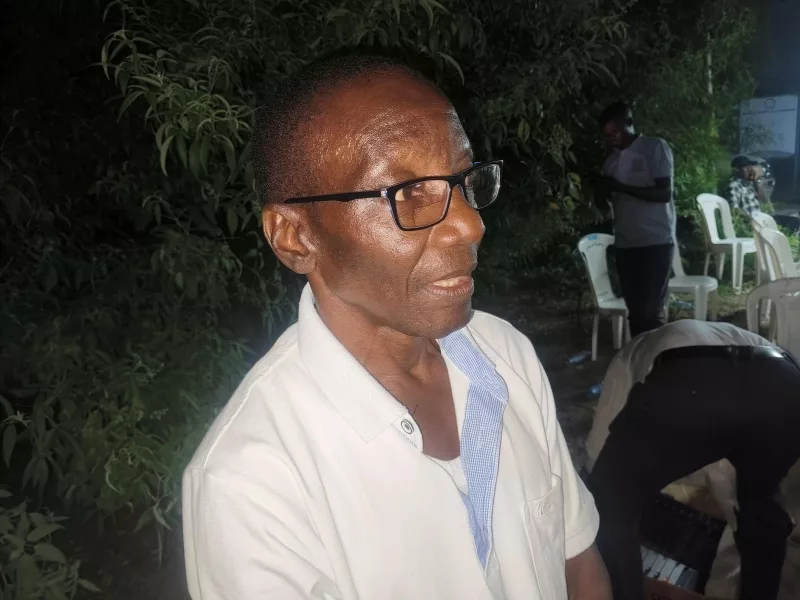
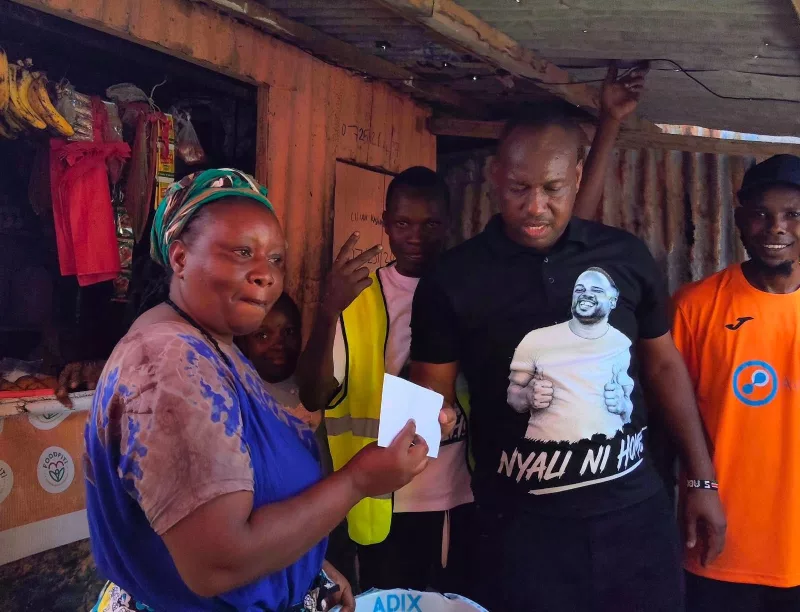
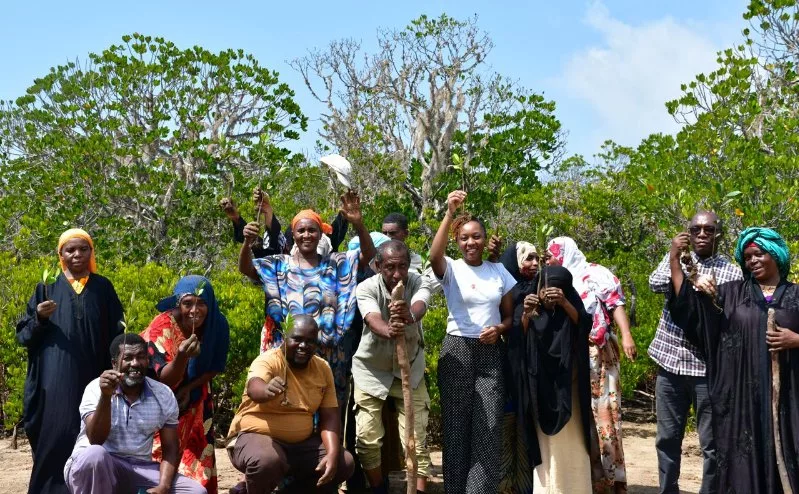
 Canco officers and Ngomeni villagers at Ngomeni village in Magarini, Kilifi county on Tuesday / BRIAN OTIENO
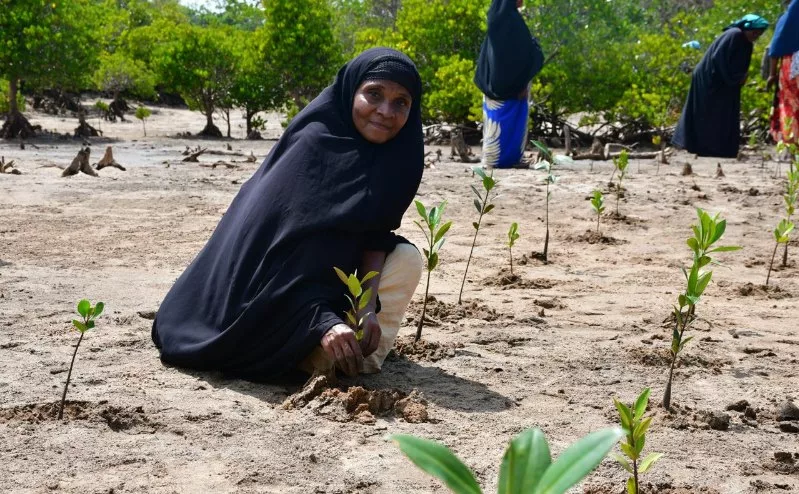 Zakia Maduni at Ngomeni village in Magarini, Kilifi county on Tuesday / BRIAN OTIENO
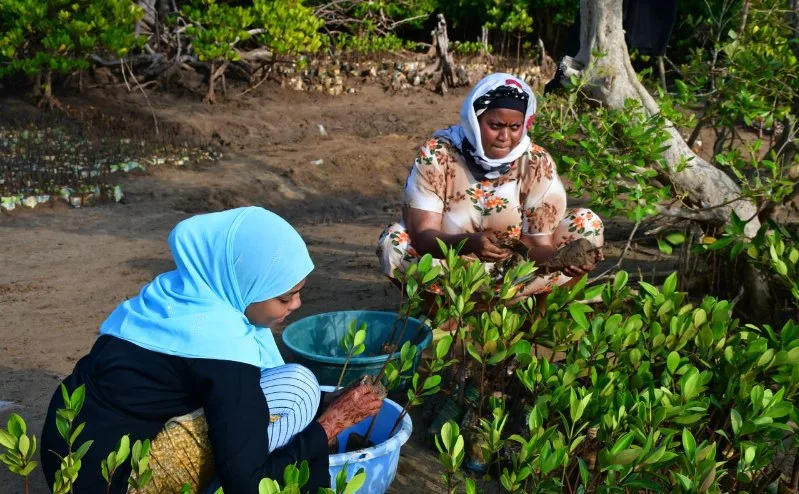 Ngomeni Tuhifadhi Self Help Group chair Hazra Ahmed and member Ramla Sheshe at Ngomeni village in Magarini, Kilifi county on Tuesday / BRIAN OTIENO
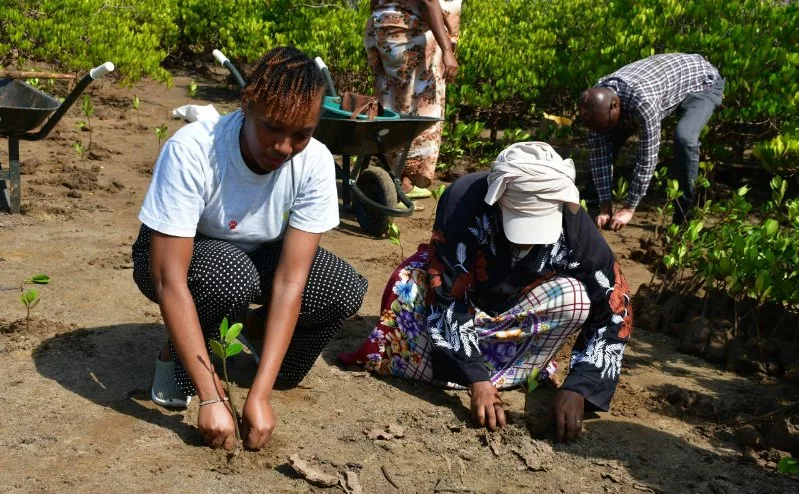 Canco project manager Joyce Keingati [L] at Ngomeni village in Magarini, Kilifi county on Tuesday / BRIAN OTIENO
For years, residents of Ngomeni village in Kilifi county watched their livelihoods vanish as the mangrove forests that
sustained them were destroyed.
Today however, they are leading a remarkable recovery aimed at restoring
the ecosystem that once fed their families and shielded their homes.
Ngomeni sublocation village elder Omar Mohamed
recalls when the village thrived because of its rich mangrove forests.
"There was plenty of fish. We did not have any
problems," Mohamed said.
That changed when commercial logging of mangroves for export to Saudi Arabia started. The widespread destruction devastated fish breeding grounds, causing fish catches to plummet.
"We used to catch more than 50kg of fish
in one trip. That dropped to barely 10kg after the mangroves were
destroyed," Mohamed said.
The decline pushed many families into hardship, forcing
them to cut back on meals and making it difficult to educate their children.
The situation worsened as nearby salt companies blocked natural waterways, starving sections of the mangrove forest of seawater.
The loss of the trees exposed homes to strong ocean winds, while prawns and crabs, once abundant, disappeared as their breeding grounds were destroyed.
"We realised we had to act if we were to continue living here," Mohamed said.
With support from Community Action for Nature
Conservation (CANCO), residents formed the Ngomeni Tuhifadhi Self Help Group
and began restoring the degraded forest.
Their efforts are beginning to bear fruit.
Chairperson Hazra Ahmed said the group has planted more
than 50,000 mangrove trees since it was formed and members have gained valuable
conservation skills through regular training.
Women have played a central role in the restoration.
Community member Ramla Sheshe said they persisted despite resistance from those
who had benefited from the illegal logging.
"They called us the mangrove police but we remained committed," she said, adding that the group needs more financial support to expand its work.
CANCO project manager Joyce Keingati said healthy mangrove ecosystems are essential for sustainable fisheries because they provide breeding grounds for many fish species.
She added that mangroves also store large amounts of carbon and protect coastal communities from erosion, strong winds and other marine hazards.
To reduce pressure on the forests, Keingati said
communities should be supported to diversify their livelihoods through
nature-based enterprises such as beekeeping.
CANCO executive director Hardley Becha said industrial activities, including
salt production and infrastructure development, continue to threaten mangrove
ecosystems.
He said the organisation is working with residents to ensure different
mangrove species are restored in suitable habitats to secure the long-term
health of the ecosystem.