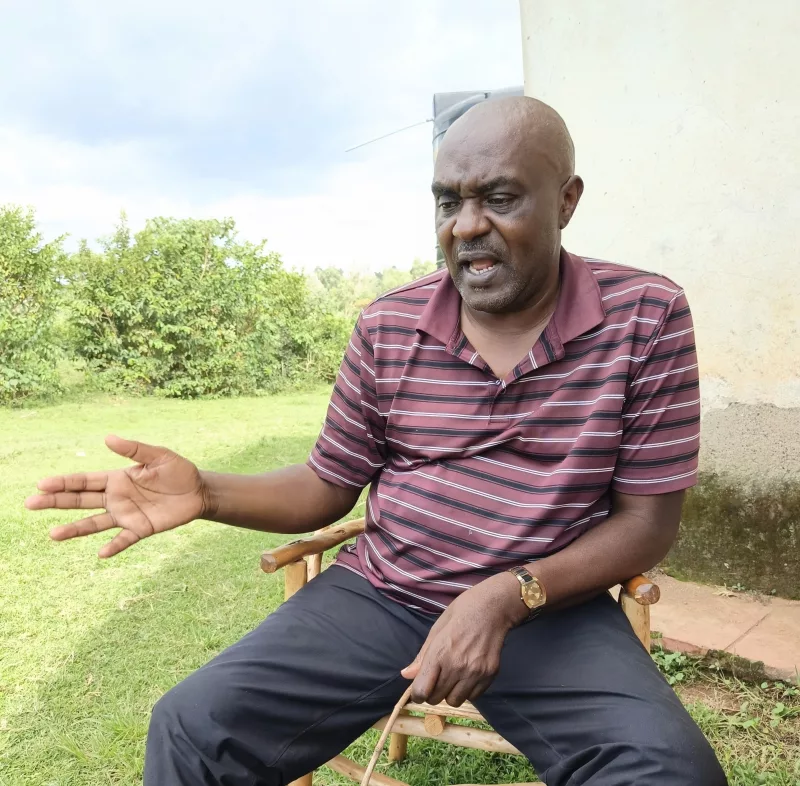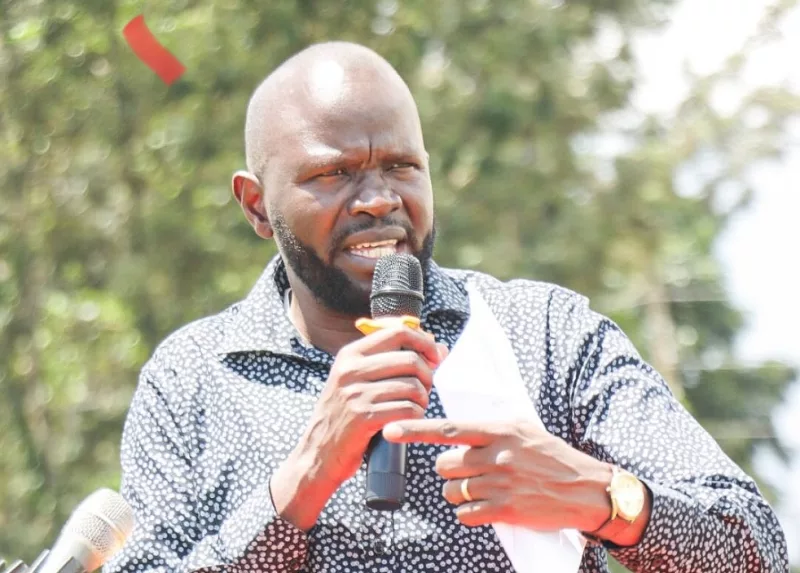
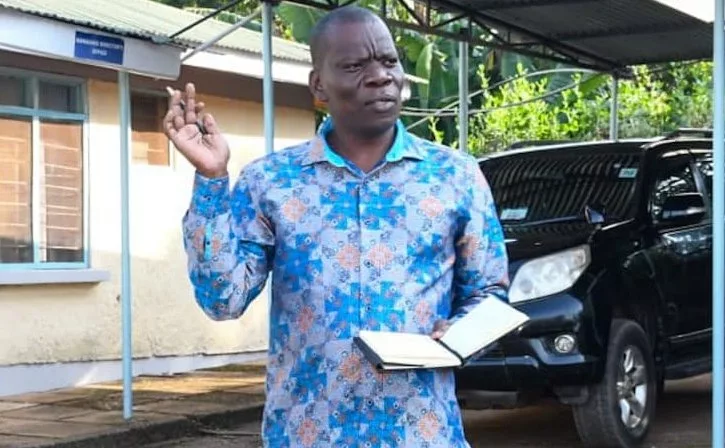
 Kakamega Water and Sanitation Company CEO Charles Tung'a addressing workers at the company yard on Monday /HILTON OTENYO
The Kakamega County Water and Sanitation Company (Kacwasco) has launched
a major initiative to reduce non-revenue water, improve supply and boost
revenue collection.
The programme includes a crackdown on illegal water connections through regular inspections, replacement of faulty water meters, Geographical Information System mapping of all meters and the rollout of an Enterprise Resource Planning system.
Non-revenue water currently accounts for 59 per cent of the water produced by the company each day.
Kacwasco generates 20,000 cubic metres of water daily at its Tindinyo treatment plant against a demand of 35,000 cubic metres, leaving a deficit of 15,000 cubic metres that has resulted in water rationing.
Kacwascochief executive Charles Tung'a said the initiative aims to reduce non-revenue water to the industry-accepted level of 25 per cent.
He said the company is replacing 4,500 faulty water meters across its service area while deploying an ERP module to accurately monitor customers' monthly water consumption and eliminate estimated billing.
"This will help us extend the hours of water supply by reducing
rationing and ultimately increase our revenue collection," Tung'a said.
The company has the potential to collect Sh50 million every month but is currently collecting only Sh25 million because of unmetered water and other losses.
“We have assembled a technical team that will remain on standby to respond promptly to customer complaints and ensure burst pipes are repaired immediately to minimise leakages," the CEO added.
Tung'a said the technical team will also carry out regular inspections of the water distribution network from the Tindinyo source in Nandi county to Mumias town and its environs to detect leaks and ensure uninterrupted supply.
He added that the company is engaging road contractors whose activities have damaged water pipelines to ensure they avoid destroying the infrastructure or take responsibility for any damage caused.
The company is also establishing district metered areas (DMAs)and introducing ultrasonic water meters as part of efforts to improve monitoring and reduce water losses.
A DMA is a defined section of a water distribution network where all water entering and leaving the area is measured using meters.
The system helps detect leaks quickly, monitor consumption, reduce water losses and manage water pressure more effectively.
Ultrasonic water meters use sound waves to measure the velocity and volume of water flowing through pipes, enabling accurate measurement of water consumption.