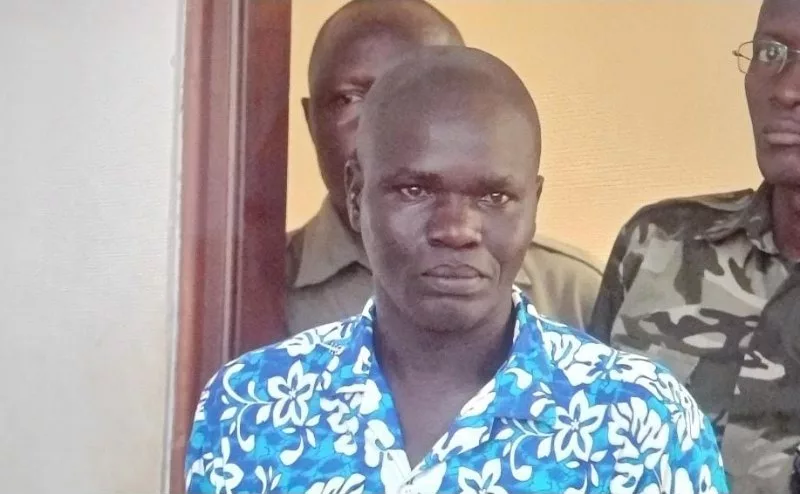
The High Court in Kisumu has sentenced Shem Akuku Otieno, alias "Daddy", to death for the murder of his wife, seven-year-old son and two relatives.
Justice Joe Omido imposed the death sentence on Monday after finding the accused's actions demonstrated exceptional brutality, involving the systematic killing of four family members through deception and abuse of trust.
Otieno had initially denied the four counts of murder but later sought to change his plea.
During court proceedings, he voluntarily admitted responsibility, telling the court he had killed all four victims and wished to plead guilty.
The court repeatedly cautioned him that murder carries the maximum penalty of death before accepting his plea.
The victims were Joseph Ouma Akuku, his seven-year-old son; his 26-year-old wife Emily Adhiambo Akuku; his 74-year-old uncle Thomas Odula Nyameche; and Mary Kuya Otieno, 56.
All were killed on February 24, 2024, at Wagunga village in Nyang'oma location, Muhoroni subcounty, in Kisumu county.
Justice Omido said the court had considered mitigating factors, including that Otieno was a first offender, pleaded guilty and expressed remorse, thereby sparing the victims' families the trauma of a lengthy trial.
However, he ruled that those factors were outweighed by the gravity of the offences.
"The accused did not take one life. He extinguished four lives during a single criminal episode," the judge said, noting that the victims were members of his own family who had trusted him.
The court observed that Otieno murdered his son, whom he had a parental duty to protect, and his wife inside what should have been a place of safety.
It further found that he lured his elderly uncle by falsely claiming two relatives were fighting over land before attacking him, while Mary Kuya Otieno, who was unwell and resting at home, was similarly deceived into leaving her house before being killed.
Omido also noted the accused attempted to attack another relative, his sister Monica Atieno, who escaped after he fell while pursuing her.
After the killings, he hid the murder weapon in a sugar cane plantation before later surrendering to police as members of the public reportedly sought to lynch him.
Victim impact statements presented to the court showed the killings left the extended family devastated, with relatives continuing to suffer profound grief, psychological trauma and financial hardship following the loss of key providers.
A pre-sentence report further indicated the community remained deeply traumatised and that releasing the accused would expose him to serious danger because of public outrage.
While acknowledging the Supreme Court's decision in the Francis Karioko Muruatetu case, which restored judicial discretion in murder sentencing, Justice Omido said the death penalty remains lawful in exceptional cases.
He ruled this was one such case because the murders involved multiple victims, deception, abuse of familial trust and the targeting of vulnerable family members.
"The offences were not the result of a momentary lapse involving a single victim. They involved the systematic killing of four persons at different locations," the judge said.
The court sentenced Otieno to death on all four counts but ordered that the sentences on counts II, III and IV remain in abeyance, in line with established practice where multiple capital convictions arise from the same proceedings.
He was informed of his right to appeal within 14 days.