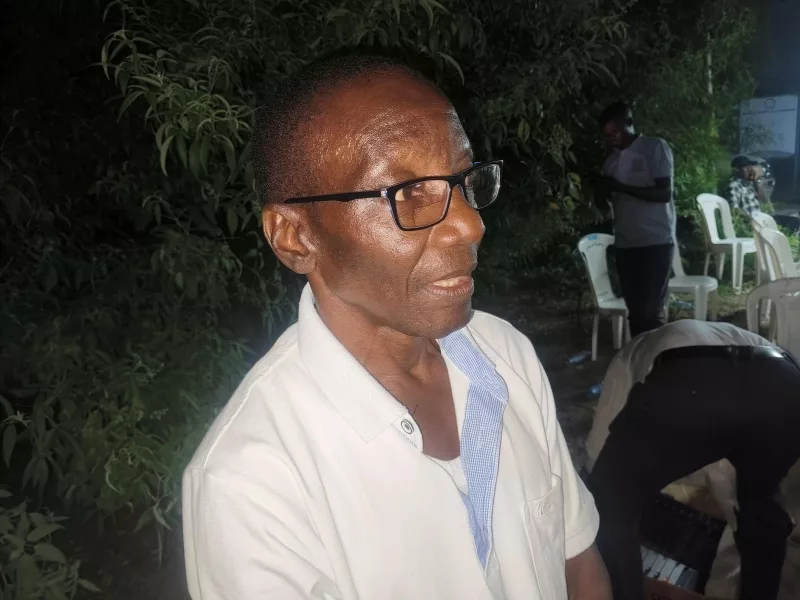
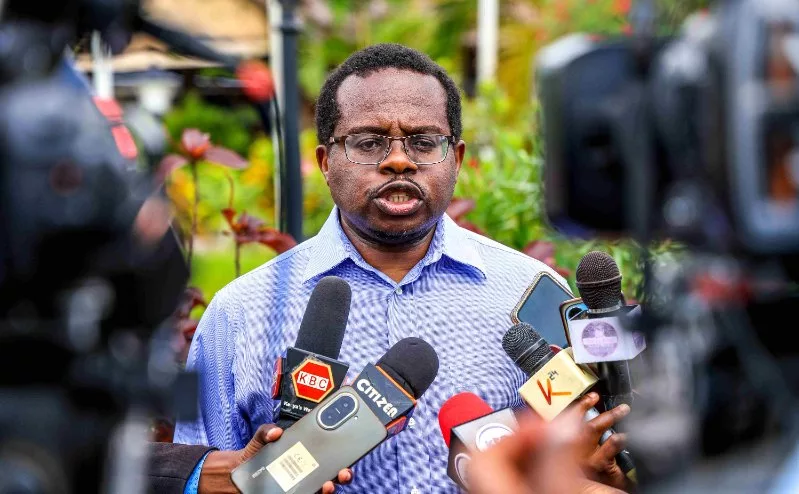
 LSK president Charles Kanjama in Mombasa on Monday / BRIAN OTIENO
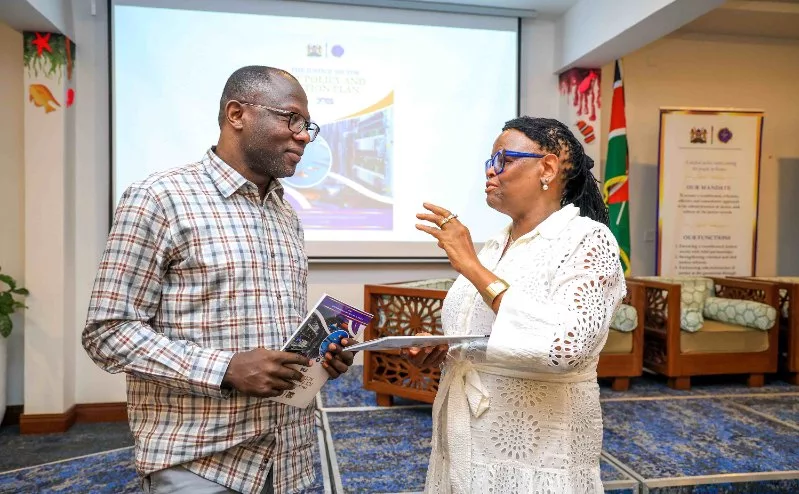 IEBC chairperson Erastus Ethekon and Chief Justice Martha Koome in Mombasa on Monday / BRIAN OTIENO
Chief Justice Martha Koome has expressed concern about election preparedness as the country moves towards the general election.
She said the National Council on the Administration of Justice (NCAJ) must continue its early preparations, noting that election preparedness goes beyond election management.
“It encompasses the readiness of the entire justice sector to uphold constitutionalism and the rule of law, to protect rights, especially those of the vulnerable, to manage disputes efficiently and to preserve public confidence in the rule of law,” the CJ said.
She said the NCAJ Election Preparedness Committee must continue providing leadership in facilitating coordinated planning among all justice sector institutions.
Her remarks on Monday came hot on the heels of the Ol Kalou by-election in Nyandarua county, where several observer agencies noted violations of the electoral code with impunity. She spoke at the launch of several landmark justice sector reforms during the 38th NCAJ meeting in Mombasa.
Law Society of Kenya president Charles Kanjama, who was present at the NCAJ meeting, said it is critical the country puts all its resources, including laws, structures and processes, in place to facilitate smooth elections that are free and fair.
“Today, we are not prepared,” he said.
“We did see in the recent by-election in Ol Kalou a lot of concerning incidents of violations of electoral law and impunity. We saw open bribery, goons and violence, and for us as LSK, we want to ensure there is accountability for any person who flagrantly violates the law.”
Kanjama said the Ol Kalou by-election exposed the country's lack of preparedness, especially within the justice sector, for next year's general election.
“If the legal system doesn’t work, if the police are not able to do it, if the IEBC is not able to do it, as the LSK we also want to ensure there is accountability. So, clearly, there is some way to go,” Kanjama said.
The senior counsel said although Kenyans, including leaders, have political rights to express their views, these should not trespass the boundaries provided by the constitution.
“When there is robust civil and political engagement, that’s a good thing. When there is trespassing over the boundaries provided by the constitution, for example into hate speech, violence and trying to frustrate others when they are exercising their rights, then there is a problem,” Kanjama said.
He said what makes an electoral or legal system responsive and effective is its ability to deal with cases where people go beyond what the constitution permits.
“That is what we hope is going to happen through the coordination that is taking place through this forum,” Kanjama said.
He said all individuals and institutions need to build and upgrade their capacities to better handle election-related issues.
“We want all professionals to be able to play their actual role to ensure free, fair and verifiable elections,” the LSK president said.
International Justice Mission country director Vincent Chahale said Public Benefit Organisations (PBOs) need to collaborate with state agencies to achieve better results.
He said the country has reached a point where there is a need to create long-lasting frameworks and consortia between PBOs and state agencies to mobilise resources more effectively.
“What has happened before is that we’ve had situations where, as PBOs, we come and identify one or two areas where we can collaborate with government agencies, and we have done that," Chahale said.
“It is now time that we look at it holistically and say, for example, what does NCAJ need over the next five years? What budget are we projecting for NCAJ over those five years? And how can we create a consortium between civil society and government agencies so that we look for large resources that can cater for such big budgets?”
He said public institutions need an annual "check-up", much like individuals have health check-ups, to determine whether they are performing effectively.
Chahale said the check-up would assess performance, public confidence in the institutions, the reliability of services provided, among other indicators.
The NCAJ, led by the CJ, brings together heads and representatives of key state and non-state justice sector agencies, including the Office of the Attorney General, the Office of the Director of Public Prosecutions, the National Police Service, the Kenya Prisons Service and the Department of Children Services.
It also includes, for oversight, commissions such as the Commission on Administrative Justice, the Kenya National Commission on Human Rights, the Ethics and Anti-Corruption Commission and the Independent Policing Oversight Authority.
The non-state actors include the Law Society of Kenya and the Federation of Women Lawyers.