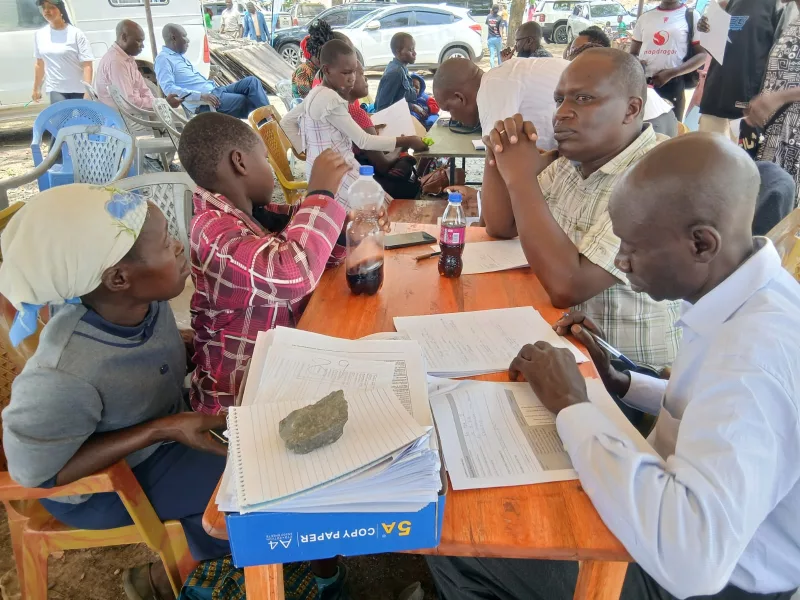
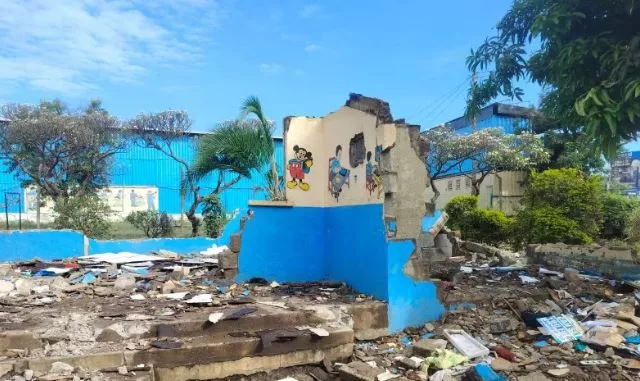
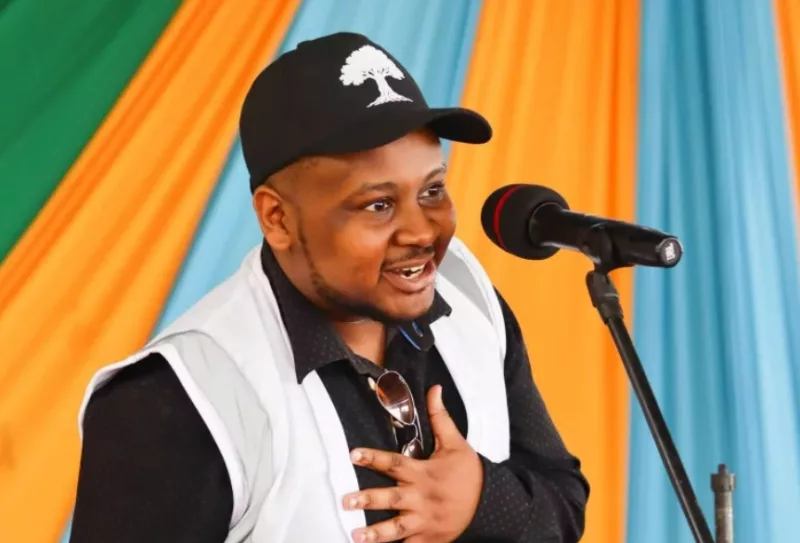
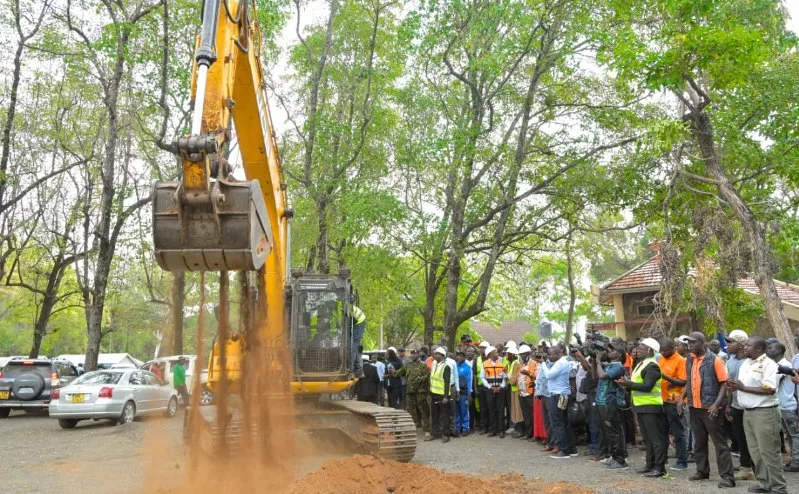
 The ongoing construction of a mausoleum in honour of former Prime Minister Raila Amolo Odinga /FAITH MATETE
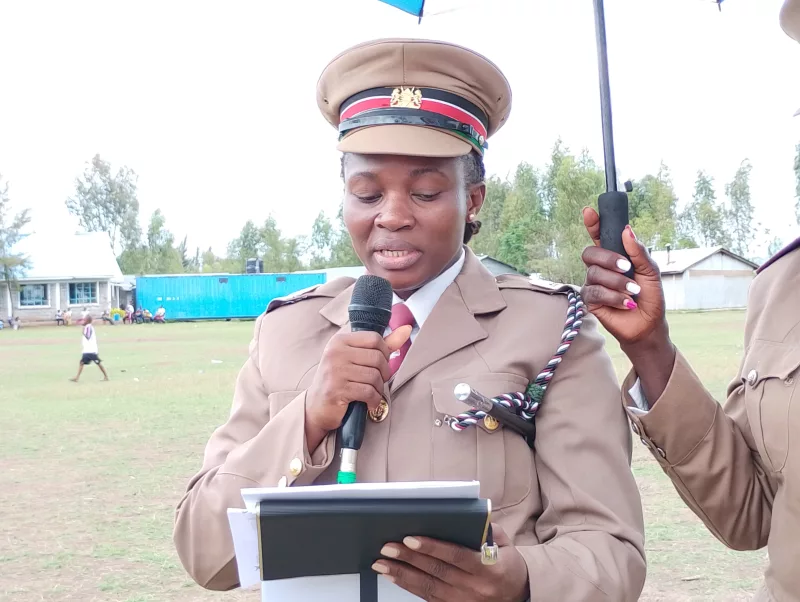
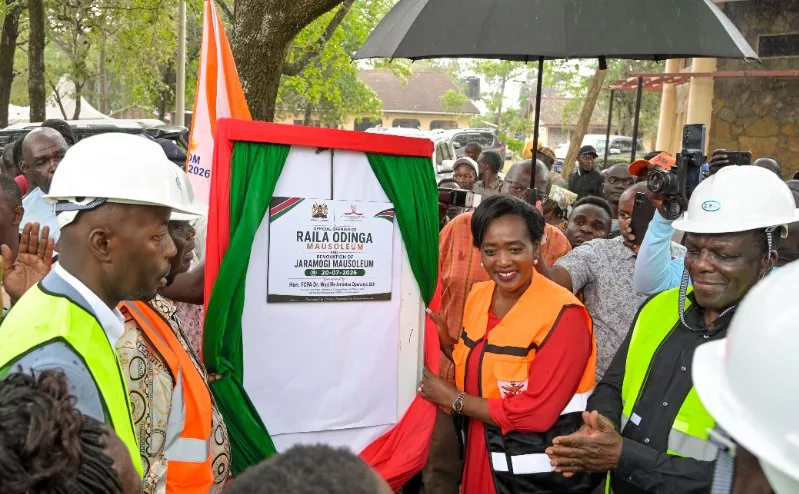 Defence CS Soipan Tuya during the groundbreaking ceremony for the construction of a mausoleum in honour of late former Prime Minister Raila Odinga /FAITH MATETE
Raila died on October 15 last year.
The project was launched during a groundbreaking ceremony on Monday and is expected to be completed within two months. It will serve as a national monument preserving the former ODM leader’s political journey, contribution to Kenya's democratic development and the ideals he championed throughout his life.
Defence Cabinet Secretary Soipan Tuya assured the Odinga family that the accelerated construction timeline would not compromise the quality or dignity of the facility.
"I want to assure the family that quality shall not be compromised by the speed that we have to put into this project," Tuya said.
She said the Ministry of Defence was overseeing the project, leveraging the expertise, discipline and infrastructure delivery capacity of the Kenya Defence Forces to ensure the mausoleum is completed within the set timeline and to the required standards.
"The Ministry of Defence is undertaking project management for this mausoleum, leveraging on the proven capacity, discipline and meticulous infrastructure delivery by our Kenya Defence Forces," Tuya said.
The planned facility will include a main memorial hall, archival galleries, exhibition spaces, a landscaped reflection courtyard, visitor amenities and security installations. Existing facilities at the site will also be upgraded.
The mausoleum is also expected to house a public learning and archival centre focusing on Kenya's democratic history, transforming the site into a place of remembrance, research, public education and reflection.
Tuya said the government would work with relevant agencies to improve supporting infrastructure at the site, including water supply, electricity backup and network connectivity.
The facility is set to become a world-class museum befitting Raila's national stature while promoting cultural tourism and economic activity in the region.
"It is a project that is going to be a symbol of strength and national unity through recognition of Kenya's diverse political history," she said.
The project is being undertaken by the Ministry of Defence in collaboration with the State Department for Culture and the Arts and other government agencies.
It is expected to complement the existing Jaramogi Oginga Odinga Mausoleum and Museum, positioning Kang’o ka Jaramogi as an important centre for understanding Kenya's independence and democratic journey.
ODMleader Oburu Oginga welcomed the government's support, saying the Odinga family could have been left to construct the facility on its own.
"We don't take it for granted. This is not something which is their duty. They could have decided to say, 'No, you people as a family, do it on your own,'" Oburu said.
He said the family had initially planned to construct the mausoleum but welcomed the government's partnership.
Oburu, however, cautioned that the two-month construction timeline should not come at the expense of quality, saying the facility must be modern and befitting of Raila's national stature.
Former Kakamega Governor and Cabinet Secretary Wycliffe Oparanya described the groundbreaking as a moment of honour, humility and remembrance for the Odinga family, the people of Siaya and the country.
He said the project should be more than the construction of a building, describing it as the foundation of a national place of memory that would preserve Raila's life, sacrifices and ideals.
"This mausoleum must become a shrine to democracy. It must not belong to one political party, one community or one election," Oparanya said.
He said the facility should provide space for research, learning, archives and public engagement, allowing students, historians, researchers, artists and ordinary citizens to engage with Raila's legacy.
Oparanya said the best way to honour the former PM was to continue championing the values of unity, justice, inclusion and shared prosperity.
Instant analysis:
The construction of Raila Odinga's mausoleum
signals the government's intention to preserve the legacy of one of Kenya's
most influential political figures through a permanent national monument.
Beyond commemorating his life, the planned facility is designed as a centre for
research, education and public engagement on Kenya's democratic history. The
involvement of the Ministry of Defence and the emphasis on quality reflect the
project's national significance. Support from the Odinga family and calls for
the mausoleum to transcend partisan politics reinforce the vision of the site
as a shared national heritage space dedicated to remembrance, learning and
democratic values.