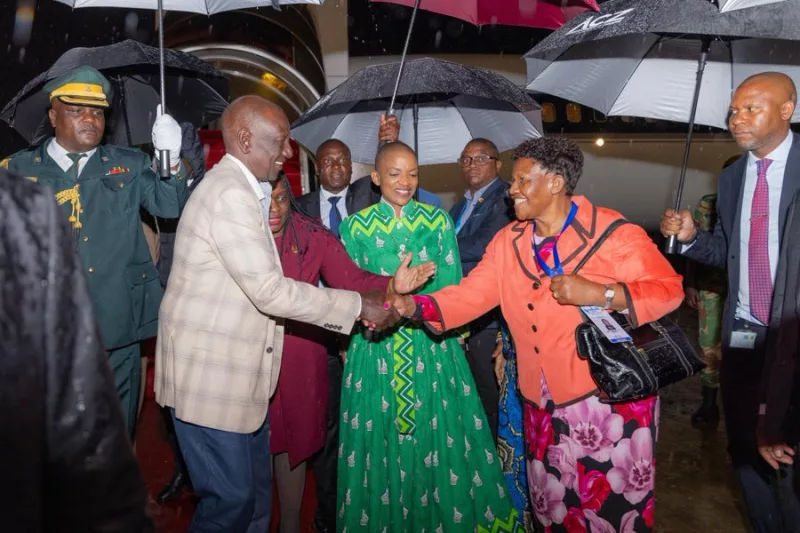
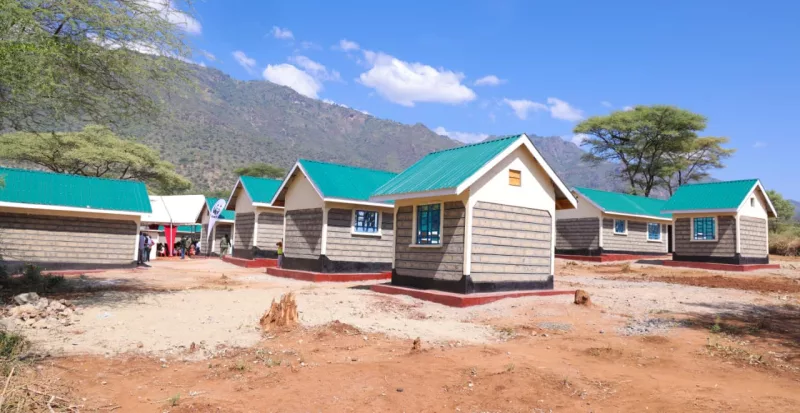
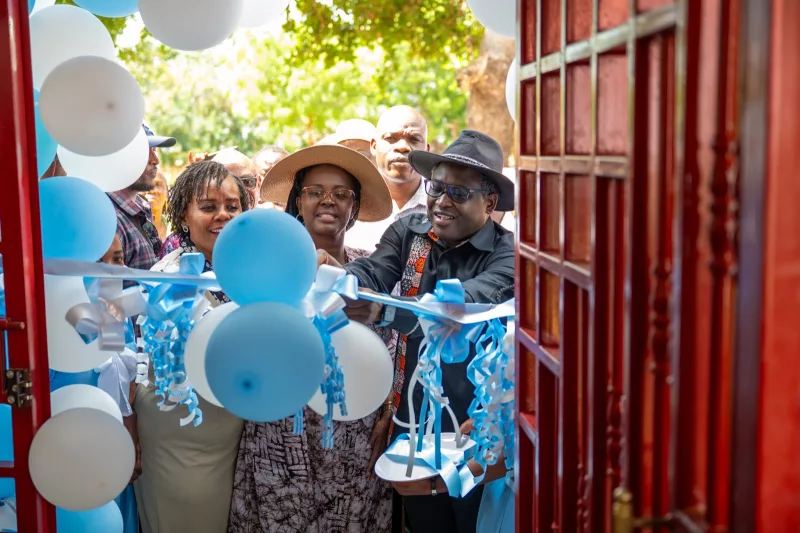
 Shofco Founder Kennedy Odede opens the safe house in Kilofi./HANDOUT
For years, Neema Mwanajuma, a gender case worker in Kilifi, has had to comfort survivors of gender-based violence with few options to offer.
She recalls cases of women and children fleeing abuse in the middle of the night only to be accommodated in police stations, or by well-wishers because the county lacked a functional safe house.
“We have seen women return to abusive homes simply because they had nowhere else to sleep. This safe house gives survivors a chance to start again, said.
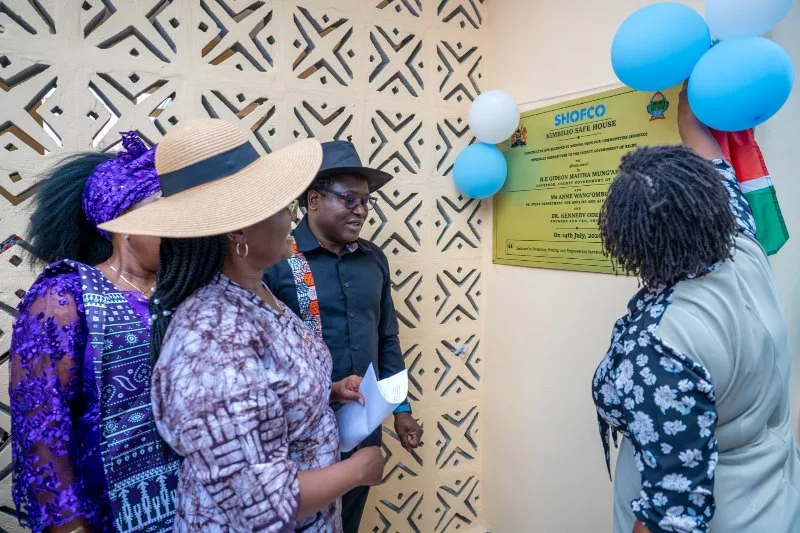
The safe house, unveiled by Shining Hope for Communities (SHOFCO) in partnership with the Kilifi County Government, comes as the county grapples with rising cases of violence against women and girls. Data from the National Council on the Administration of Justice (NCAJ) shows that 1,024 gender-based violence cases reached courts in Kilifi in 2025, up from 939 cases recorded in 2024.

Speaking during the launch, Anne Wang'ombe, Principal Secretary of the State department for Gender Affairs and Affirmative Action, described the safe house as a significant milestone in the country's efforts to end violence against women and girls.
“Gender-based violence continues to rob many women and children of their dignity, and opportunities. Facilities such as this safe house are critical because they provide survivors with immediate protection and access to services that enable healing and justice,” Wang'ombe said.
She commended SHOFCO and the Kilifi County Government for their collaboration and noted that the fight against GBV requires partnerships between government and development organisations to enhance multisectoral approach in prevention, response and rehabilitation.
“As Kimbilio transitions into full operations, the next critical requirement is establishing a sustainable operational financing model. I want to assure you that the State Department for Gender Affairs will continue to walk with you, offering policy guidance, standardization, and collaborative support to ensure that no survivors get the refuge they really need,” the PS added.
Flora Chibule, Kilifi Deputy Governor, said the county government had sought SHOFCO's support to establish the facility after recognising the growing need for safe spaces for survivors.
“For years, survivors in Kilifi have faced enormous challenges in accessing protection and support services. The increasing number of reported cases has shown us that we need a dedicated facility where survivors can receive care, and protection,” Chibule said.
She noted that many survivors, particularly women and children, often remain trapped in abusive situations due to a lack of shelter and economic support.
"This is the only safe house we have in the entire county, and it marks an important beginning in ensuring that survivors have a safe place to seek refuge, heal and access the support they need to break free from violence,” she said.
Dr. Kennedy Odede, SHOFCO founder and chief executive officer, said the organisation responded to the county government's request after Kenya National Bureau of Statistics (KNBS) report showed Kilifi was among the top three counties in Kenya with high GBV prevalence rate.
“At SHOFCO, we believe that every person deserves to live free from violence and fear. When a survivor escapes abuse, they need more than temporary shelter; they need a pathway to healing, justice and economic independence,” Dr. Odede said.
He said the safe house would offer a range of services aimed at helping survivors recover and rebuild their lives, including access to medical care, legal aid, counselling and economic empowerment programmes.
Dr. Odede added that community-driven partnerships are essential in addressing GBV and called on other counties and organisations to invest in survivor-centred interventions.