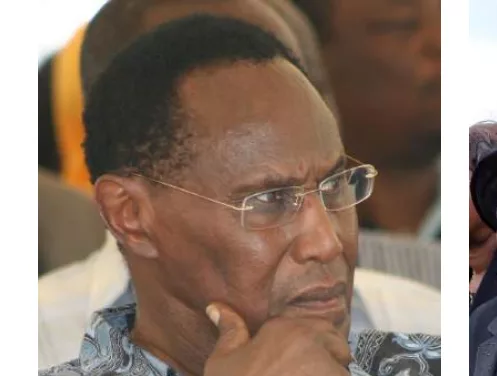
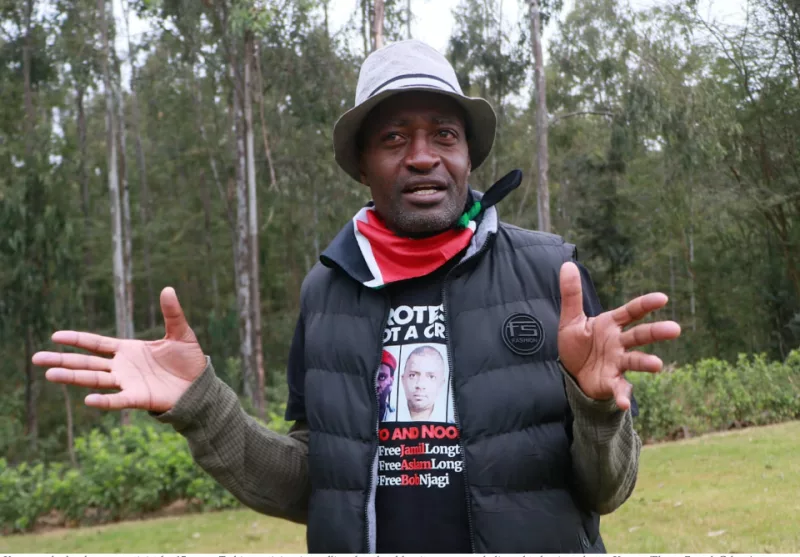
 Activist Julius Kamau/HANDOUT
For more than a decade, Julius Kamau has become a familiar face at protests across Nairobi, earning a reputation as one of the country's most consistent human rights activists.
Whether the demonstrations are against police brutality, corruption, the high cost of living or alleged violations of constitutional rights, the 48-year-old is almost always among the first to arrive and the last to leave.
Kamau says he has lost count of the number of times he has been arrested, insisting that the struggle for justice is bigger than any individual.
Speaking to the Daily Nation, the activist said he has been participating in demonstrations since 2012 and estimates that he has been arrested more than 50 times during that period.
Despite the repeated arrests, court appearances and physical attacks, he says he has no intention of abandoning activism.
"I will only stop protesting when Kenya fully embraces the rule of law and justice becomes a reality for everyone," Kamau said.
"Until then, I will continue demanding accountability from every institution, including the Judiciary."
Over the years, Kamau says he has repeatedly been bundled into police vehicles during demonstrations and, on several occasions, assaulted by armed goons while participating in protests.
According to him, the increasing use of hired gangs to infiltrate demonstrations and attack protesters has made activism significantly more dangerous.
He argued that politicians are increasingly deploying goons to disrupt peaceful protests and intimidate opponents, exposing human rights defenders to greater risks than before.
"The growing trend of politicians using goons to infiltrate protests and attack opponents has significantly increased the risks faced by activists, making the struggle for constitutional freedoms more perilous," he said.
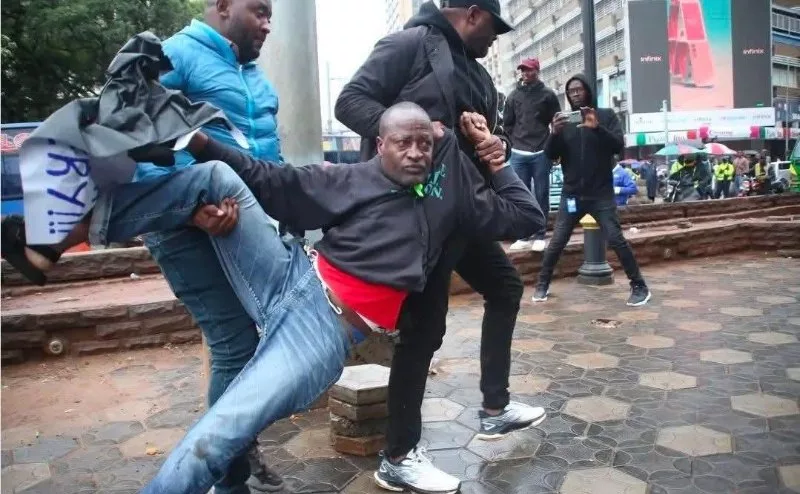 Julius Kamau being arrested during protests/SCREENGRAB
Away from the streets, Kamau earns his livelihood by selling second-hand clothes, commonly known as mitumba, a business he says has sustained him since relocating from Kandara in Murang'a County to Nairobi in search of better economic opportunities.
Ironically, it was his experience as a hawker that inspired his activism.
Kamau recalled witnessing the repeated harassment of street vendors by authorities and the death of one of his colleagues, experiences that convinced him to speak out against injustice.
He says he now sees himself as a voice for ordinary Kenyans who are often unaware of their constitutional rights.
"When I came to the city, I never imagined we would reach a point where police killings would become so common. It pains me to see so many lives being lost. These things should not be happening," he said.
Years of confronting police officers, spending nights in custody and facing physical danger have not diminished his resolve.
Instead, Kamau says the injustices he witnesses daily have strengthened his determination to continue fighting for accountability.
"When I see these things, I ask myself, what happened to humanity? We have become either hypocritical or unwilling to stand up for what is right and defend those who cannot speak for themselves," he said.
Kamau also dismissed claims that activists receive money from political actors or civil society organisations to participate in demonstrations or destabilise the government.
He maintained that he finances himself through his mitumba business and has never been paid to join protests.
"I earn a living as a hawker and have never received payment from any organisation to protest," he said.
However, he acknowledged receiving legal support from the Defenders Coalition, a national network that assists human rights defenders facing arrests and court cases.
The organisation, he said, has on several occasions helped secure legal representation after he was charged over his participation in demonstrations.
Even so, Kamau joked about the persistent allegations that activists are bankrolled.
"If organisations paying activists are really there, I would like to find them and use that money for the right cause—to mobilise people into a revolution because what this country needs is a people's revolution," he quipped.