Modern adulthood is often measured against invisible deadlines: a stable job by a certain age, marriage not too far behind, and emotional composure that never appears to crack.

Yet reality continues to diverge from these expectations, leaving many people feeling out of step with the timelines they were once told to follow. A recent social media comment captured this tension in plain language, challenging the idea that life must unfold in a fixed order.

“By now, I hope you’ve realised that it’s possible to be jobless at 30 or even unmarried at 35. Not all alcoholics are bad people, and sadness can lead to depression.” The remark captured a growing frustration with rigid expectations around adulthood, employment, relationships, and emotional wellbeing.

Unemployment and social expectations

In many societies, being unemployed beyond a certain age is still treated as a personal failure rather than an economic reality. For many, that gap becomes a source of shame.
“People don’t see the applications or the rejections. They only see the absence of a job,” one commentator said
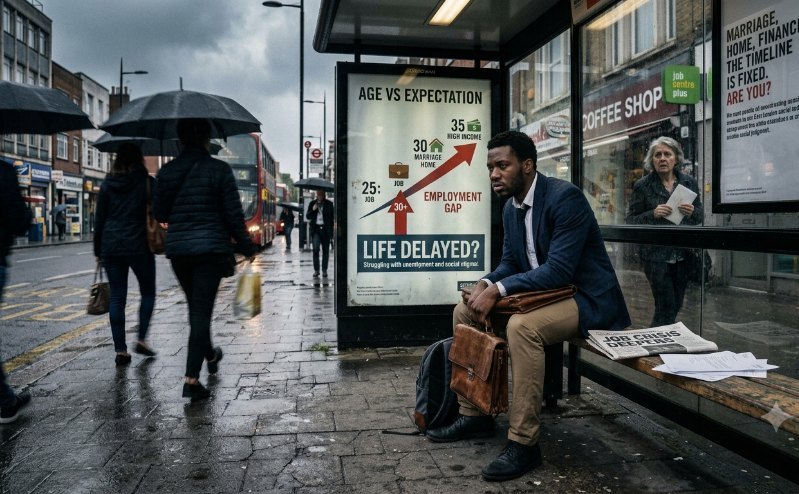
The pressure is often compounded by expectations around marriage and financial independence by a fixed age, despite shifting economic conditions and rising living costs.
                                          Age verses Expectations // Gemini

Alcohol, coping and stigma

The original comment also challenged assumptions around alcohol use, pointing to a commonly overlooked issue: coping mechanisms.
Public health research has long noted that alcohol misuse can be linked to stress, isolation, and untreated mental health conditions. The World Health Organisation estimates that harmful alcohol use contributes to more than 3 million deaths globally each year.
Yet stigma persists, with addiction often framed as moral weakness rather than a health condition.
“Not all alcoholics are bad people,” the comment emphasised.

Depression and silence

Mental health remains one of the least openly discussed aspects of unemployment and social pressure. Still, many do not seek help due to fear of judgement.
“Sadness can lead to depression,” the original post warned, a simple line that reflects a medically recognised continuum rather than a sudden change.

Experts stress that prolonged stress, isolation, and perceived failure can intensify symptoms if left unsupported.