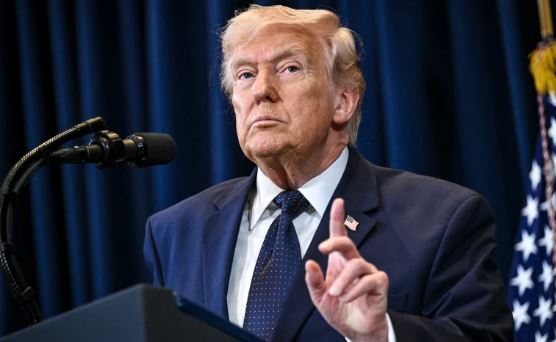
 Health Cabinet Secretary Aden Duale/HANDOUT
Counterfeit Viagra, fake HIV drugs and ineffective blood thinners are among more than 2,200 medicines swept off the Kenyan market in what the government describes as its most aggressive offensive yet against substandard and falsified medical products.
The nationwide purge, announced by Health Cabinet Secretary Aden Duale on Wednesday, lays bare the scale of a problem that health authorities say has silently exposed thousands of patients to medicines that are poorly made, contain the wrong ingredients or simply do not work.
Declaring that patient safety would take precedence over commercial interests, he warned manufacturers, importers and distributors that Kenya would no longer tolerate the trade in unsafe medicines.
"The action they are taking has the highest political backing in the interests of the Kenyan patient. So you either play by the law as provided by the regulator or you look for another country to go and do business," Duale said.
The crackdown comes as the World Health Organization estimates that one in every 10 medical products used in developing countries is either substandard or falsified, with Africa carrying a disproportionate share of the burden.
Duale spoke while launching an Interministerial Steering Committee that will develop Kenya's National Action Plan on Substandard and Falsified Medical Products.
He revealed the Pharmacy and Poisons Board (PPB) had undertaken a mandatory review of medicines that had remained on the market for years without undergoing modern regulatory scrutiny.
"As a result of that re-registration of legacy products, which had been postponed for too long, 2,258 products were removed from the register for non-compliance," he said.
The CS also announced an end to parallel importation of medicines, saying the system had been exploited to create loopholes through which bogus medicines entered the country.
Although the arrangement allows genuine branded medicines to be imported from other markets outside the manufacturer's authorised local distribution channels, Duale said it had made regulation and market oversight more difficult.
He defended the growing number of product recalls and public safety alerts issued by the PPB, saying they reflected a regulator becoming more vigilant rather than a worsening crisis.
"Since January 2025, the Pharmacy and Poisons Board has coordinated 58 recalls of substandard medical products and issued 14 rapid public alerts on falsified medical products. Some may interpret these numbers as evidence of a worsening problem," the CS said.
"I take a different view. This demonstrates a regulator that is more vigilant, more transparent and above all more effective in identifying risks, taking decisive action and informing the public."
Duale described those behind fake medicines as criminals whose products silently cost lives by causing treatment failure, fuelling antimicrobial resistance, increasing household healthcare costs and eroding confidence in hospitals and clinics.
A 2025 report by healthcare group CFAO estimates that fake medicines contribute to more than 100,000 deaths across Africa every year.
To tighten oversight, Kenya will begin piloting a national digital track-and-trace system this month before rolling it out on August 1.
"When that pilot goes live, every medicine dispensed in our country can be traced to the pharmacist, the distributor, the wholesaler and all the way to the manufacturer from a patient anywhere in Kenya," Duale said.
He said the system would make it easier to detect unsafe medicines and remove them from circulation before they could cause further harm.
PPB chairperson Dr John Munyu said Kenya had strengthened regulation through mandatory re-registration of older medicines, tighter inspections, enhanced border surveillance and expanded monitoring of medicines already on the market.
However, he cautioned that fake medicines remain a complex challenge stretching beyond the health sector.
"Substandard and falsified medical products do not respect institutional mandates, administrative boundaries or national borders. They exploit weaknesses across supply chains, international trade, border control, law enforcement, digital commerce and criminal networks," he said.
Dr Edward Abwao, head of post-market surveillance at the PPB, said the National Action Plan would strengthen border controls, improve intelligence sharing, coordinate investigations and prosecutions, introduce digital tracking of medicines and increase public awareness.
The PPB has recorded 1,413 product quality complaints since 2021 and 32,833 reports of adverse medicine effects since 2011.
"Reports have increased over time largely due to enhanced surveillance and reporting systems. While progress has been made, more must be done to keep Kenyans safe," Abwao said.
Instant analysis
Kenya's crackdown signals a shift from reacting to fake medicines to proactively policing the pharmaceutical supply chain. The removal of more than 2,200 products suggests regulators are tightening oversight of medicines that had remained in circulation for years. The planned digital track-and-trace system and coordinated action across government agencies indicate recognition that counterfeit medicines are not only a health threat but also a security, trade and governance challenge. Success, however, will depend on sustained enforcement, stronger border controls and industry compliance. If effectively implemented, the reforms could restore public confidence in the medicines market and significantly improve patient safety across the country.