For the second year running, young Kenyans grieving friends killed during the 2024 Gen Z protests found refuge not in a government hall or community centre but inside one of Mombasa's oldest churches.
As they walked through the doors of ACK Mombasa Memorial Cathedral dressed in black and draped in Kenyan flags, they were welcomed by a priest whose own life has been shaped by rejection, sacrifice and reconciliation.
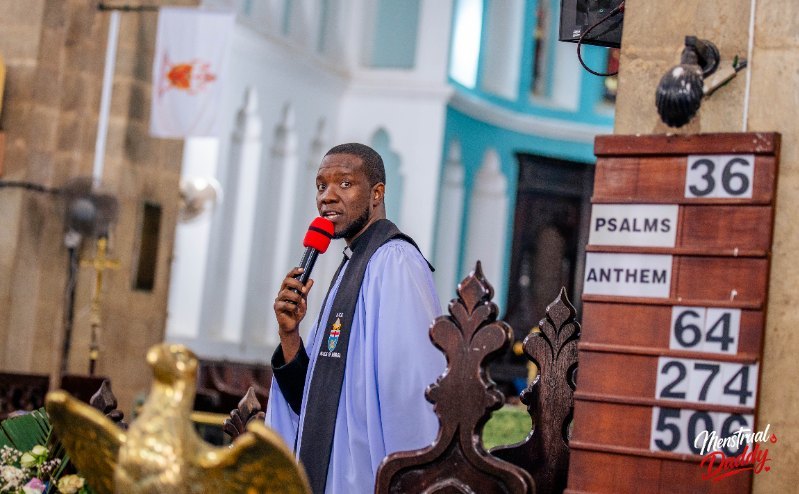
Standing quietly at the altar was Reverend Joseph Salim Ramadhan.
His message was simple: "The church belongs to everyone."
For many in attendance, he had become the face of a church willing to listen when many institutions seemed unwilling to hear.
Few, however, knew that decades earlier Salim himself had once been a young man searching for sanctuary.
Long before he became Reverend Joseph Salim, he was Salim Ramadhan Chiapo, the fifth-born child in a Muslim family in Mombasa.
His childhood revolved around madrassa classes, mosque prayers and family traditions.
"I grew up in an Islamic family. My father was Muslim, my mother was Muslim. We were seven children," he says.
He attended Tudor primary school before joining Kilindini secondary school. Much of his free time was spent playing football around the Railways grounds in Shimanzi.
Nothing suggested he would one day become an Anglican priest.
But everything changed while he was in Form 2.
A local Anglican priest, the late Reverend Canon Habel Chambia of St Luke's Makupa, began talking to the teenager about Christianity.
Weeks of conversations gradually transformed his thinking until he decided to embrace the Christian faith.
His mother, Amina Ramadhan, was the first person he informed about the move.
She thought he had lost his mind and pleaded with him never to tell his father.
But when his father returned home, Salim spoke anyway.
"I have received Christ as my Lord and Saviour."
His father offered him two choices: abandon Christianity or leave home.
The 16-year-old walked away.
He never returned that night.
With nowhere else to go, Salim sought refuge at Reverend Chambia's home.
The priest welcomed him without hesitation.
His father stopped paying his school fees and instructed relatives not to shelter him.
"My father said I was no longer his son; he called me an infidel," Salim recalls.
Without fees, he was repeatedly sent home from school and eventually stayed out of class for two years while his peers continued their education.
What could have marked the end of his schooling instead became the beginning of a new chapter.
Determined that Salim would not lose his future, Reverend Chambia persuaded the church to sponsor his education.
Salim repeated Form 2 at Kilindini secondary school before transferring to Mombasa secondary school when Kilindini closed. He later completed his Kenya Certificate of Secondary Education.
By then he already knew his calling.
"I want to continue with my work on the mission," he told Chambia.
He enrolled at Diguna Discipleship Training College in Nairobi, where he earned three certificates in Christian ministry, before studying theology at Pwani AIC College and later obtaining a diploma at St Paul's University.
During that period he served senior clergy, including retired Bishop Lawrence Dena, initially as his personal driver.
When Dena became the founding Bishop of the newly created ACK Malindi Diocese in 2015, he invited Salim to continue working alongside him.
After one-and-a-half years as Bishop Dena's driver, Salim returned to St Paul's University for further theological studies before earning a bachelor's degree and later a master's degree at Uganda Christian University.
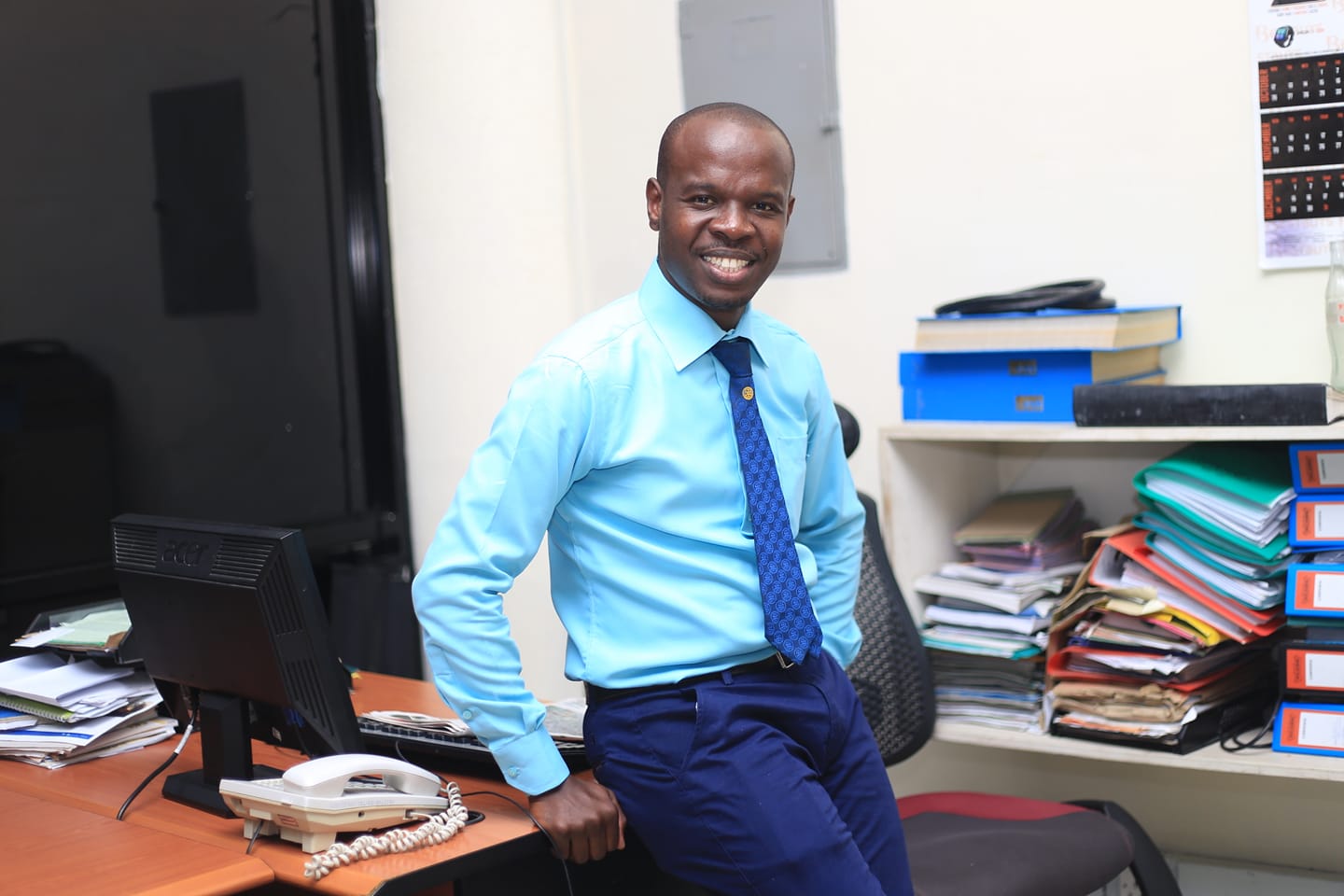
Today, he serves as Chief Operations Officer at ACK Mombasa Memorial Cathedral.
Life also brought happiness.
He married Nellius, a fellow worshipper at St Luke's Makupa.
Unfortunately, she died in September 2023 after battling a serious lung illness.
"It was devastating for me," Salim recalls with an air of melancholy.
Rather than stepping away from ministry, Salim immersed himself more deeply in pastoral work while completing his master's degree.
Reconciliation with his family took decades.
For years, his father refused to speak to him and relations with some of his brothers remained hostile.
He says he filed more than 10 police reports after repeated confrontations an elder brother.
"I couldn't even walk freely in some parts of Mombasa. Whenever we met, war would break out and we would fight before I rushed to report to the police," he says.
Eventually, attitudes softened.
While Salim was studying at St Paul's University, his father invited him for a conversation.
Father and son forgave each other.
Before his father died in 2022, they had rebuilt their relationship.
Today, Salim says, his family not only accepts him but often seeks his advice.
His mother has since embraced Christianity, and some of his siblings have also converted.
"It took many years, but we finally found peace," he says.
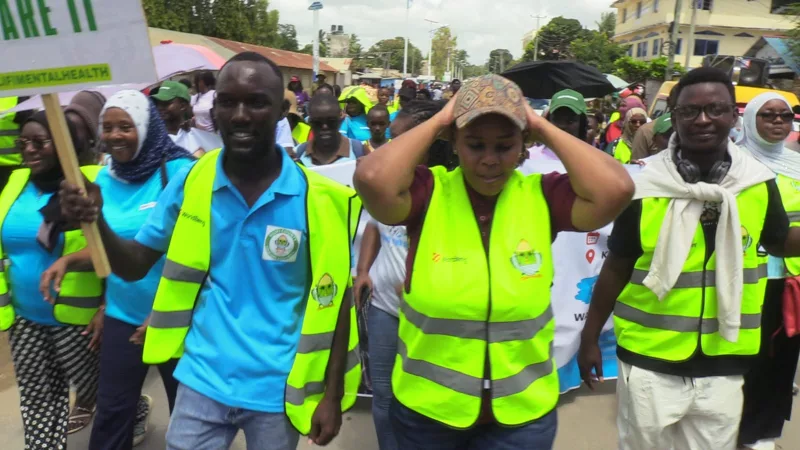
On Thursday, scores of young people gathered at ACK Mombasa Memorial Cathedral before walking six kilometres through Mombasa's central business district to commemorate those killed during the 2024 anti-Finance Bill protests.
While authorities questioned the planned demonstrations, the cathedral welcomed them.
For Salim, the decision required little debate.
"The church is like a hospital. People come wounded in different ways. Some are injured physically. Others emotionally. Some are grieving. The church must receive all of them."
He believes healing begins with listening.
"Young people want leaders who sit with them and reason together. They don't want people who only exercise authority. They want people who hear them."
He insists churches should never close their doors to those carrying pain.
"They came looking for refuge. They came looking for hope."
Much of Salim's ministry has focused on young people.
He has served as priest-in-charge at Mikomani and Masahani in Kaloleni, assistant priest at Shimba Hills, youth pastor at ACK Emmanuel Church and Diocesan Youth Officer in Mombasa.
"Ministry is about relationships. If I cannot relate to you, I cannot minister to you," he says.
He believes the growing divide between Kenya's youth and institutions can only be bridged through dialogue.
"If we understand each other's problems, we can build together. But if we refuse to listen, we create misunderstanding and conflict."
Looking back on the decision that cost him his family, education and years of hardship, Salim pauses before smiling.
"I have never regretted it."
He believes every setback prepared him for ministry.
Rejection taught compassion. Hardship built resilience. Loss deepened empathy.
Whenever someone walks through the cathedral doors seeking comfort, he remembers being a frightened teenager with nowhere else to go. Someone once opened a door for him. Today, he keeps the doors open for others.
Reflecting on the meaning of his name, Salim points to John 3:23, where Salim is mentioned as a place where John the Baptist baptised believers. "I pray that I become like that river. A place where people come and find God. I want to draw people to God," he says.
It is a fitting image. Once rejected by his family for choosing his faith, Reverend Joseph Salim Ramadhan has built a ministry defined not by exclusion but by welcome.
For Kenya's grieving Gen Z generation, that open door has become far more than the entrance to a church. It has become a sanctuary.