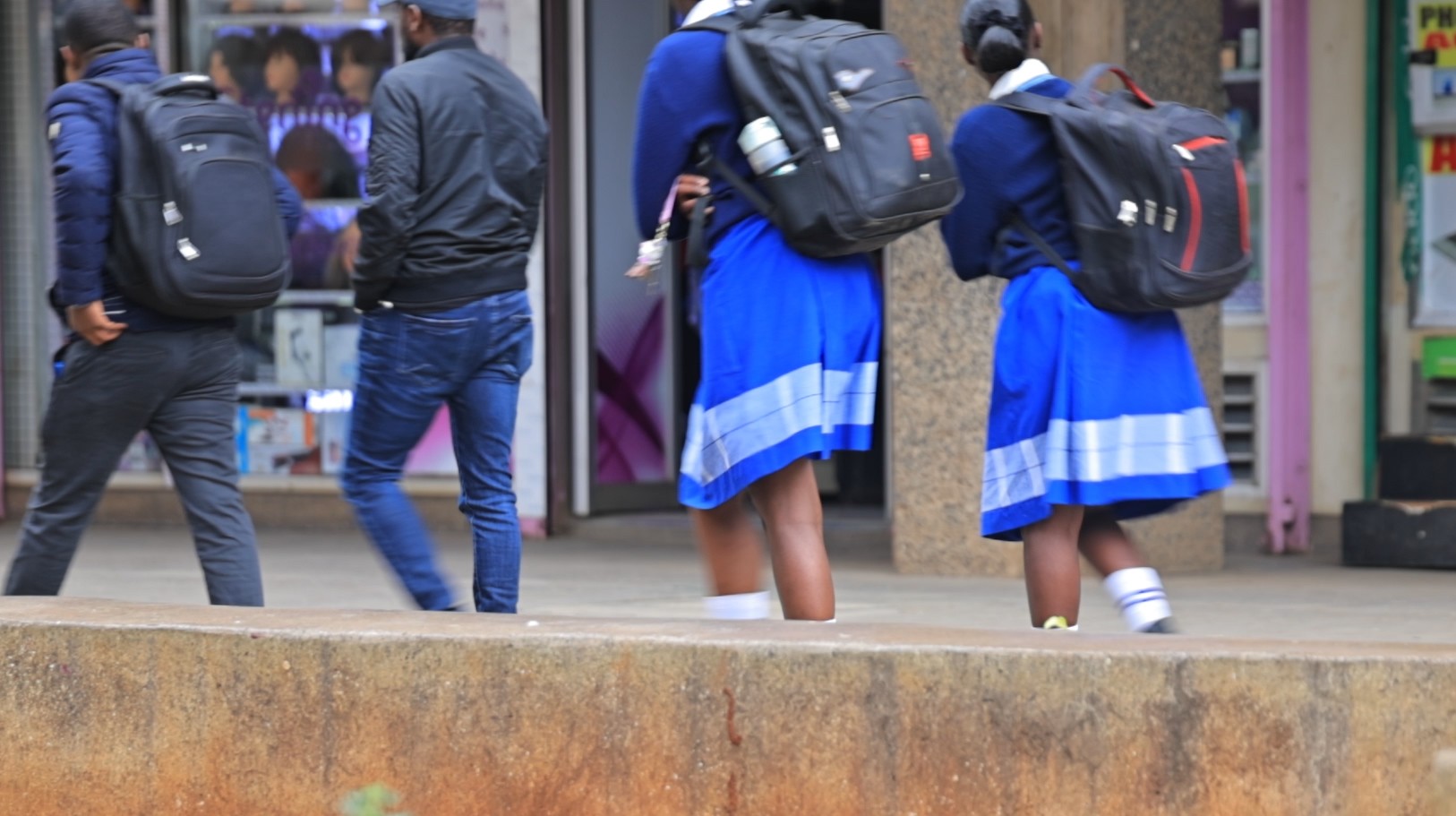
 Secondary school students walk in Nairobi on August 28, 2025 /FILE
Schools across the country broke for the second-term midterm break on Wednesday, with the usual traffic snarl-ups associated with school closures largely absent on major highways.
The five-day break runs from June 24 to June 28, with learning scheduled to resume on Monday, June 29. The second term will officially end on July 31.
The break comes against the backdrop of widespread student unrest that has disrupted learning in dozens of schools, forcing some institutions to close indefinitely following riots and incidents of arson.
While most schools remained operational until the official break, some institutions had yet to reopen by Wednesday after sending learners home in recent weeks.
Several schools closed following dormitory fires suspected to have been started by students, while others opted to release learners as a precautionary measure amid rising tensions and fears of copycat incidents.
The Ministry of Education has maintained that the unrest affected only a small proportion of schools and did not warrant a nationwide early closure.
The ministry said an audit established that 204 schools had been affected by unrest.
“From our records, less than one per cent of schools have experienced unrest. The rest are continuing with learning normally, so there is no justification for closing schools early,” said the then Basic Education Principal Secretary Julius Bitok.
He urged school administrators to remain vigilant and identify early warning signs of unrest, noting that examination pressure had emerged as a key trigger in many cases.
“In some cases, rather than forcing students to sit examinations, schools can consider postponing them,” he said, while encouraging school leaders to embrace dialogue as a conflict-resolution tool.
The scale of the unrest has been notable, drawing in some of the country’s most prestigious institutions, including Alliance High School and Mang’u High School, where cases of student indiscipline have historically been rare.
In some schools that closed despite experiencing no incidents, learners reportedly argued that they could not continue with normal learning while students in elite institutions had already been sent home.
Parents and guardians in several affected schools received communication instructing them to collect their children until further notice due to growing tensions among groups of students.
Many of the closures followed the May 28 dormitory fire at Utumishi Girls Academy in Gilgil, Nakuru county, which claimed the lives of 16 students and left 79 others injured.
Amid the unrest, Education Cabinet Secretary Julius Ogamba announced on June 10 that the government was considering shortening the second term from next year, citing concerns that the current 14-week stretch may be contributing to learner fatigue, stress and indiscipline.
“Starting next academic year, the ministry shall rationalise the school calendar to ensure that the terms are balanced and that the second term is not as long as it has been,” Ogamba said.
The midterm break means learners whose schools closed earlier due to unrest will spend an even longer period away from class before returning for the remainder of the term.
Speaking on June 21 during the 95th St John Ambulance Annual Parade and Inspection at State House, Nairobi, President William Ruto urged parents to use the holiday period to spend time with their children and instil positive values.
He expressed concern over the recent unrest, noting that some incidents had resulted in the loss of innocent lives and severe consequences for those suspected of involvement.
The remarks came just days before the Director of Public Prosecutions approved murder charges against nine girls accused of starting the fire at Utumishi Girls Academy that killed 16 of their colleagues.
“Our young people must draw lessons from these incidences. Be the generation that understands that every action matters, every choice counts and every choice carries consequences,” the President said.