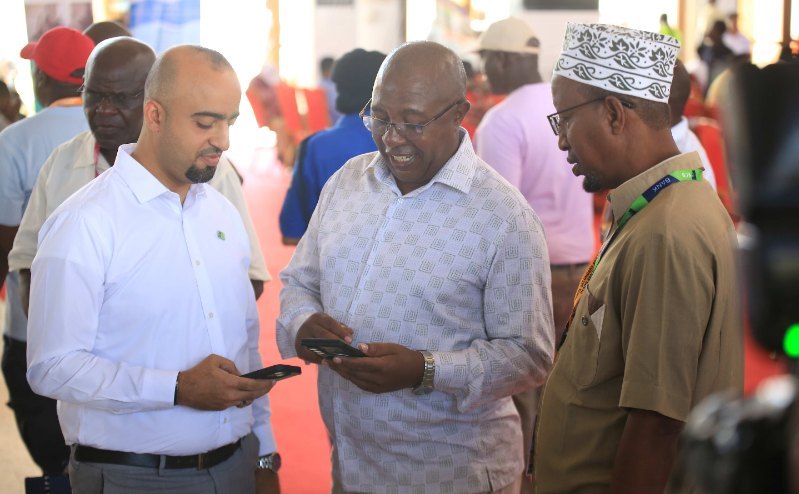
 KCB Coast regional business manager Yasir Ashur, Kessha chair Willie Mwangi and secretary general Abdi Noor at Sheikh Zayed Hall in Mombasa on Monday / JOHN CHESOLI
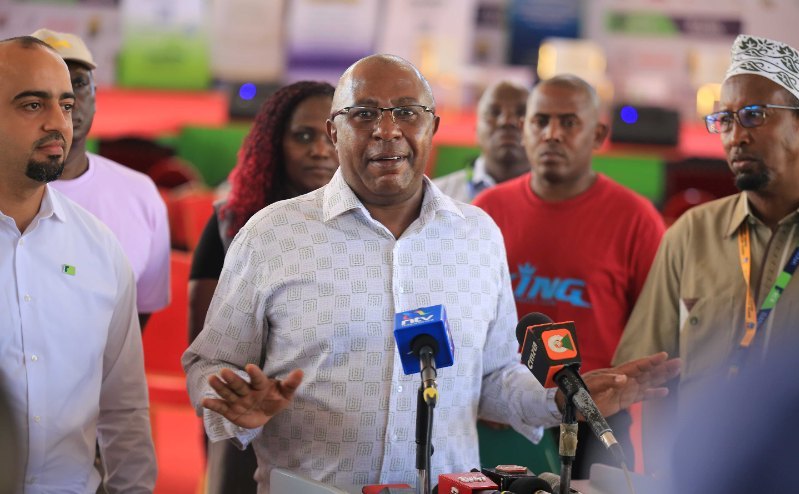 Kessha chair Willie Mwangi at Sheikh Zayed Hall in Mombasa on Monday / JOHN CHESOLI
Banning boarding schools is not the solution to the unrest currently being witnessed in schools across the country, secondary school heads have said.
The Kenya Secondary Schools Heads Association chair, Willie Mwangi, on Monday said instead, those who feel they cannot cope with boarding schools should be identified early enough and be taken to day schools.
“Maybe for those learners they should find their way to day schools where they can be under the close monitoring of their parents,” Mwangi said.
Addressing journalists at Sheikh Zayed Hall in Mombasa, the Kessha chair said the unrest is not a new phenomenon and usually happens in the second term, which is curious.
He suggested this could be because mostly, candidates for national examinations have usually registered for the exams in the first term, and the learners feel they have surpassed the stage where they can be told what to do.
“This is because of the thinking that once registered, they cannot be deregistered,” Mwangi said.
He suggested the establishment of new rules where the Kenya National Examination Council registers the learners for national exams in the third term.
“Another rule could be established to allow Knec to cancel the exam registration and push it by one year, so that even if they are registered for the 2026 KCSE, they can do the exam in 2027 if found culpable of causing unrest,” Mwangi suggested.
The matter, he said, will feature prominently in the five-day Kessha/KCB Annual National Conference in Mombasa, which starts proper on Tuesday.
Mwangi said secondary school heads have experienced a very challenging time lately but expressed hope that after the conference, there will be a lasting solution.
“But I don’t think that (banning boarding schools) can be the solution,” Mwangi said.
He said there are learners who are not comfortable in boarding schools, insinuating these are the ones who are mostly involved in school unrest, including burning of school infrastructure.
He noted that boarding schools require learners with a lot of responsibility.
He spoke to journalists in a press briefing ahead of the 49th Kessha/KCB Annual National Conference in Mombasa, which is expected to be attended by more than 8,000 school heads, ministry officials and other education stakeholders.
“Our submission would be the learners who are not able to cope with the boarding school regulations should become day scholars,” the Kessha chair said.
He dismissed as mere allegations reports that some teachers could be involved in one way or the other in the school unrest in some places.
“Every time such things happen, there are always investigations, which are done by education officials and the police. So that report should come from them,” the Kessha chair said.
This year’s theme is ‘Strong Schools and Collaborative Leadership for Promoting Competency-Based Education’, which Mwangi said reflects their commitment to strengthening school leadership now that CBE has now reached secondary schools and they want to ensure its successful implementation.
“So we want to come to this forum and think, how best can we do it?” Mwangi said.
Tuesday’s discussion will be about school leadership and CBE transformation in a changing education landscape.
Wednesday will mainly focus on strong schools’ accountability, building resilience and strengthening education reforms.
This will also be the official opening day, and Felix Kosgei, the Head of Public Service and State House chief of staff, will be the chief guest.
Thursday will see the focus change to education financing and human resource management. Here, there will be discussions around sustainable education financing and teacher management.
Friday, which will be the last day of the conference, will focus on future skills
“We will have our closing ceremony on Friday. The focus of the day will be about education, employment and global opportunities,” Mwangi said.
The chairman said Kessha is committed to supporting quality, inclusive and transformative education to learners.
“This conference will generate variable insights and practical recommendations that will strengthen the delivery of CBE and enhance learning outcomes across the country,” Mwangi said.
KCB Coast regional business manager Yasir Ashur said the bank, as the main sponsor of the conference, is committed to supporting schools through financing, sustainability solutions and strategic partnerships that will help schools grow and thrive.
“Through initiatives in clean energy, scholarships and school financing, we continue to strengthen learning environments and contribute to better educational outcomes,” Ashur said.
KCB has been supporting schools to transition from firewood to clean energy solutions such as solar-powered cooking systems, Liquefied Petroleum Gas (LPG) and hybrid technology.
“This initiative reduces operational costs, improves health and safety, and promotes environmental sustainability,” Ashur said.
In 2025, during the pilot programme, KCB involved 266 schools, achieving energy cost savings of up to 90 per cent, he said.
This year, Ashur said, they are looking to expand the programme to around 3,000 schools by the end of 2026. The programme will also increase to Sh45 billion.
Schools in Kenya consume over 1.3 metric tonnes of biomass annually, which is equivalent to about 10 million trees cut down, according to Ashur.
“So, through this program, KCB is lowering costs to schools while contributing to climate action in sustainable education,” he said.
Through the KCB Foundation, under the KCB Scholars Program, the bank is investing about Sh600 million to support around 1,000 academically gifted but financially vulnerable children.
The programme covers school fees, uniforms, stipends, mentorship and talent development through to university.
“We also provide financing to help schools meet immediate operational needs without disrupting learning,” Ashur said.
Construction and modernisation of classrooms, dormitories and labs and other financial assistance are offered by the bank to schools.