In many households, financial responsibility extends far beyond the nuclear family. One person’s income often supports a wide network of relatives. In such settings, family planning decisions made in one home can have direct consequences in another.
The tension emerges when those earning steady incomes feel pressured to support growing households they did not directly create.
“While I’m budgeting for rent and school fees, someone else is adding dependants I end up paying for,” one breadwinner says.
Read Also
The issue is not only about childbirth. It is about how extended family systems distribute financial responsibility in practice.
Subject and Object of the Strain
The subject of the story is the working relative — often a young professional or breadwinner. The object of the strain is the wider family network, particularly dependants added through relatives’ reproductive choices.
Money becomes the connecting thread. In many cases, income is not treated as an individual's but as a shared family resource. Requests for school fees, food, rent, and medical bills follow naturally once earning capacity is known. Over time, this creates a cycle where financial independence becomes difficult to maintain.
Reactions Within Families
Reactions to this situation are deeply divided. Some family members view financial support as a cultural obligation rooted in solidarity and shared survival. Others see it as an unsustainable expectation that punishes individual effort.
“If you earn, you are automatically responsible for everyone behind you,” another contributor explains.
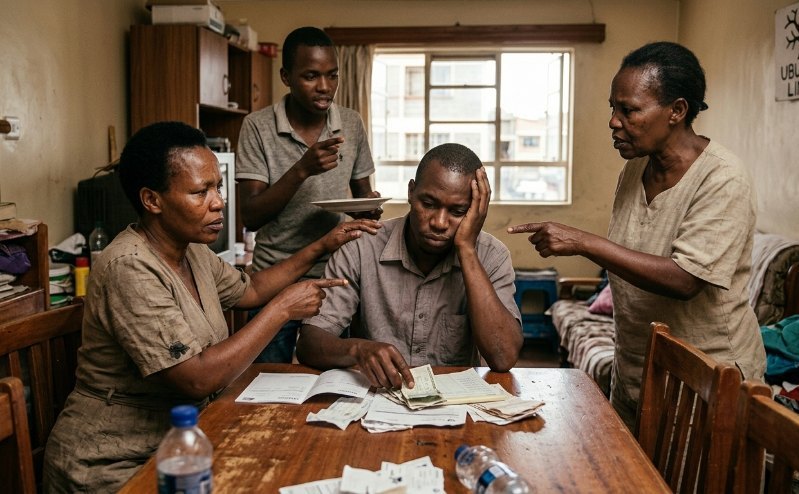
Tensions often rise when support is reduced or withdrawn. Boundaries are sometimes interpreted as abandonment rather than financial limitation.
When Pressure Turns into Resentment
In some cases, the emotional cost becomes as heavy as the financial one. Breadwinners report fatigue, frustration, and quiet resentment, especially when their own goals are delayed by constant family demands.
Yet stepping away is rarely simple. Cultural expectations and emotional ties make financial boundaries difficult to enforce.
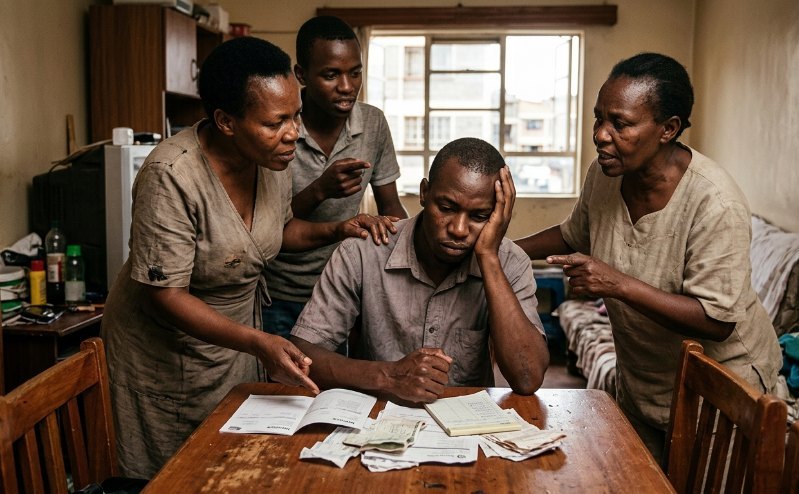
Studies on household economics in extended family systems across parts of Africa show that informal support networks can be both protective and financially draining, depending on income stability and dependency levels.
A Question Without an Easy Answer
Between responsibility and self-preservation, many continue to navigate a fragile balance. Support is given where possible, reduced where necessary, and negotiated in silence.
At the centre of it all remains an unresolved question: in tightly connected families, where does personal responsibility end and collective obligation begin?