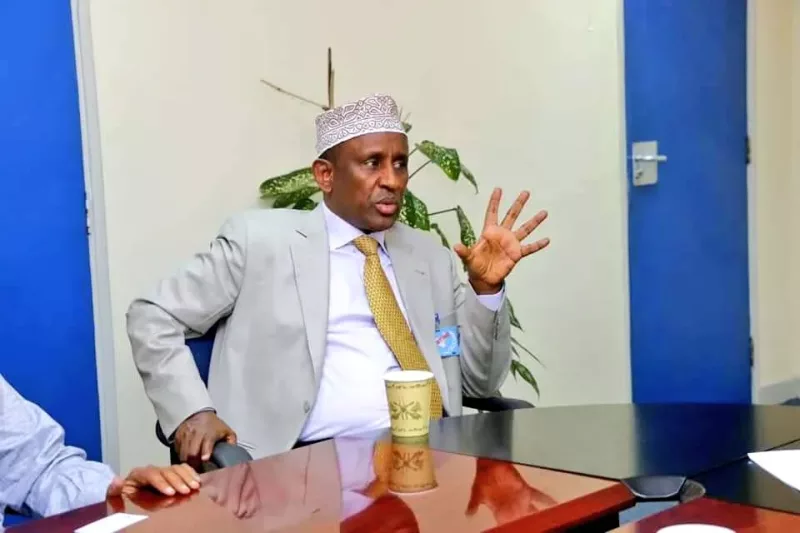
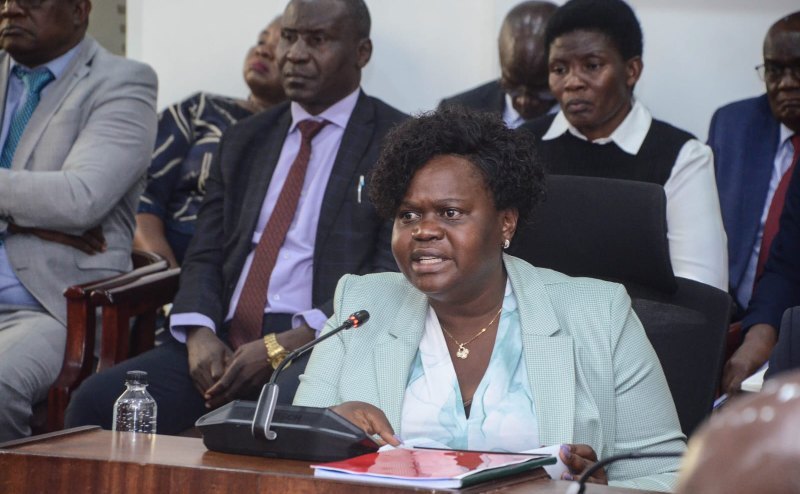
 Homabay Governor Gladys Wanga, when she appeared before the County Public Accounts Committee (CPAC) in the senate, chaired by Senator Moses Kajwang at Bunge Towers, on June 16, 2026./DOUGLAS OKIDDY
A Senate watchdog committee is seeking to establish the whereabouts of more than Sh700 million collected from Homa Bay county hospitals in the last financial year.
The development comes even as the Senate County Public Accounts Committee opened an inquiry into the controversial financing of the Sh820 million county headquarters.
Read Also
Appearing before the panel on Tuesday, Governor Gladys Wanga was put to task to explain the whereabouts of the Sh700.45 million collected from 24 health facilities in the county.
According to the governor, the facilities collected Sh915.94 million from patients during the financial year.
However, the Auditor General contradicted the figure, stating that the facilities generated Sh1.61 billion, leaving an unexplained variance of Sh700.45 million.
“Where is the Sh700 million? Was it spent at source?” Committee chairman Moses Kajwang’ asked as the panel pressed the county boss to explain the discrepancy.
“I don’t think the AuditorGeneral can go to Homa Bay and just come up with a figure of Sh1.6 billion without going through the collection schedules for those 24 facilities,” Nandi Senator Samson Cherargei said.
He added; “The difference between Sh1.6 billion and Sh915 million is Sh700 million. Was it spent at source?”
According to the governor, the facilities had collected Sh915.954 million by June 30, 2025.
“The facilities report on an accrual basis. They report what they have claimed from SHA, not necessarily what SHA has reimbursed at any particular time. They might report that amount in their books, but the actual receipts may be different,” she said.
The governor dismissed suggestions that health facilities had spent the funds before banking them, insisting that the county had strengthened financial controls and eliminated expenditure at source.
According to Wanga, all revenue collected by county health facilities is subjected to established accountability procedures before being utilised.
However, auditors maintained that the figures reflected actual collections as of June 30, 2025.
An official from the Office of the Auditor General told senators that records examined during the audit showed the facilities had collected Sh1.6 billion by the close of the financial year but had transferred only Sh915 million to the designated special-purpose account.
“We normally use the cut-off date of June 30. At that point, we establish what the facilities have collected,” the auditor explained.
“At the cut-off date, we established that the facilities had collected Sh1.6 billion, but only Sh915 million had been transferred to the special-purpose account.”
The explanation failed to settle the matter, prompting the committee to direct both the county government and the Auditor General to provide detailed schedules showing revenue collected by each of the 24 facilities.
“From the auditor’s statement, the facilities collected the money. A collection is money that has been received,” Kajwang’ ruled.
“This is a matter that requires further interrogation. These figures must be scrutinised.”
The committee also questioned the county over alleged violations of the Facility Improvement Financing (FIF) framework, which allows public health facilities to retain and utilise the revenue they generate.
According to the Auditor General’s report, Homa Bay county transferred revenue collected by health facilities into a special-purpose account instead of remitting the funds back to the facilities after deducting the allowable 20 per cent.
Wanga explained that the issue arose from a conflict between national legislation and county-level regulations governing the management of health facility revenue.
Beyond the hospital revenue questions, senators also opened a separate inquiry into the financing arrangement used to construct the Homa Bay county headquarters.
The county entered into a tenant purchase agreement (TPA) with the County Pension Fund (CPF), under which it is expected to pay approximately Sh820 million before taking ownership of the building.
The arrangement sparked debate among senators, who questioned whether the transaction amounted to borrowing and therefore required approval under laws governing county debt.
Kajwang’ challenged county officials to clarify the nature of the agreement.
“If I enter into a tenant purchase arrangement with NSSF and pay interest over 15 years until I own the building, is that not a loan?” he asked.
“I have been forced to take mortgage insurance over it. Can we define this animal we have here? Is it a loan?”
Nairobi Senator Edwin Sifuna argued that the arrangement bore all the characteristics of a conventional loan.
“There are very basic ingredients of a loan. If the money used to construct the building is not yours, belongs to another person and must be repaid under whatever arrangement, then that is essentially a loan,” Sifuna said.
However, the county government maintained that the arrangement did not amount to borrowing.
Through the county attorney, Homa Bay argued that the agreement was a lawful charge against county revenue and not a loan.
“No, this is not a loan. It is a charge under Article 207 of the constitution,” the county attorney told senators.
“We relied on Article 207(2)(a), which allows county governments to enact legislation permitting charges against the County Revenue Fund.”
The explanation failed to convince members of the committee, who resolved to launch an independent inquiry into the transaction and determine whether the county breached public finance laws.
The committee also raised concerns over Sh1.09 billion in pending bills accumulated by the county government.
In response, Wanga assured senators that her administration was committed to clearing the outstanding obligations.
“The management has noted the Auditor-General’s observation and wishes to clarify that it is committed to settling all pending bills in accordance with the Pending Bills Action Plan for FY2025-26 entered into with the Office of the Controller of Budget,” she said.
INSTANT ANALYSIS
The Senate probe exposes growing concerns over financial accountability in county governments, particularly in the management of health revenue and infrastructure financing.
The unexplained Sh700 million variance in hospital collections raises questions about revenue reporting, internal controls and compliance with public finance laws.
Equally significant is the scrutiny of the Sh820 million county headquarters deal, which could set a precedent on whether tenant purchase agreements constitute public borrowing.
The outcome of the inquiry may influence future oversight of county finances and expenditure practices.