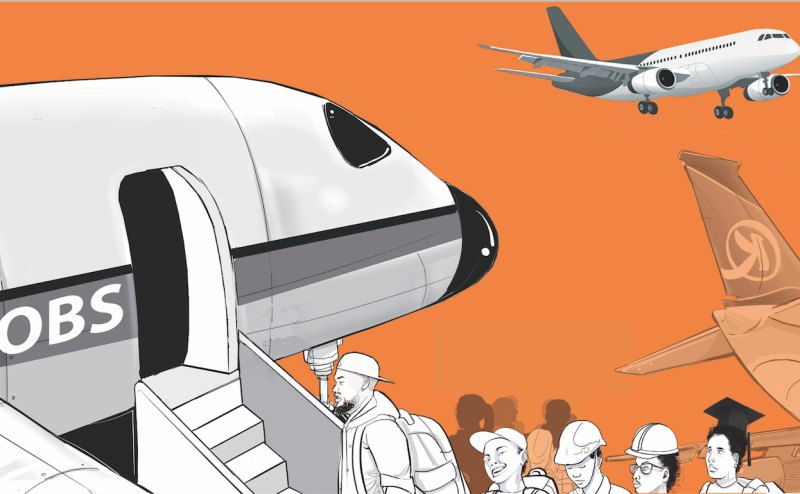
The ongoing Gulf crisis teaches us one lesson: that human resource-exporting countries such as Kenya not only need to celebrate the highs of exporting migrant workers, but also manage the lows of their abrupt return home.
On the onehand,thereisaclearadvantageinthat young peoplegetemployedabroadtoalleviatejoblessness.Ontheotherhand, when thereisanunplannedreturnaswewitnessnow,itcan becomeacrisis.Thereistheshort time happiness when people return from aconflict zone. Although some come home with savings and skills, others return with debt, trauma and uncertainty.
There has been a clear policy push to export workers from Kenya to many countries in Europe and the Middle East. This has led to the exponential growth of the number of Kenyans working in Gulf countries. A natural outcome of this is a surge in diaspora inflows from the Gulf, which has been a key foreign exchange earner for the Kenyan economy.
The flip side of this is the baggage that comes when migrant workersreturnhome,insomecasesunplanned,orwhentheyexperiencedifficultiesinhost countries. On numerous occasions, there has been press coverage of the Department of Diaspora Affairs helping Kenyans in distress abroad.
Yet there seems to be a lack of coherentlong-termpolicytohelpmigrantworkerssettlebackhome.Reintegration,avital pillarinthemigrants’successecosystem,remainsfragmented,underfunded andlargely left to individuals and families to pick up the pieces.
Transition can become difficult after being away from home for a long time. Readjustingtolifecanbeextremelychallengingafterexperiencinga sudden return,as is happening now. Many returnees may struggle to find jobs that match the wages they earned abroad. Others lack formal certification/recognition for skills acquired overseas and this may limit their employability. Additionally, social reintegration may equally become a herculean task for returning migrants, especially after long periods in the diaspora.
In situations of this nature, there should be a helping hand from the government, which had encouragedthemtoseekemploymentabroadinthefirstplace,asdonebymanycountries. Without structured support from government, returnees may experience social displacement, unemployment and may resort to remigration under more precarious conditions. Therefore, the government should move beyond ad hoc programmes and establish a national reintegration strategy anchored in three key pillars:
First,thegovernmentshouldinstituteeconomicreintegration. There should be targeted programmes that link migrants to jobs. Moreover, there should beentrepreneurship funding thatincludes financial literacytraining for returningmigrants.
AgoodstartingpointisaReturneeEnterpriseFund thatmay,inthebeginning,offer interest-free loans with business incubation support.
The second critical step is the establishment of skills recognition and certification. Many Kenyan migrants may acquire valuable skills abroad but return without getting formal recognition. A recognition of prior learning framework would allow returnees to convert experience into certified qualifications.
Thethirdkeypointthatshouldbeundertakenispsychosocialandcommunityreintegration support. Migration and expatriation research has shown that returnees often experience isolation,stigma orreversecultureshock.Thesepsychologicalsetbacksareexponentially accelerated when the return is unplanned.
Migrant-exporting countries have structured counsellingandprogrammesthatre-introducemigrantstolifeintheircommunities.Kenya shouldadoptamigrantreturneeoutreachschemethatproactivelyprovidessupportservices toitsmigrantcommunities.Ifimplementedwell,suchschemescanhaveaprofoundeffect on all returnees, especially vulnerable groups.
Other countries have implemented reintegrationsystemscombiningfinancialsupport,training andlong-termassistance.The most successful approaches are coordinated, long-term and embedded in national development planning.
Lecturer and consultant at Oxus Management Consultants, Nairobi | https://oxusconsultants.com/