Family Bank will, from June 23, commence trading at the Nairobi Securities Exchange, ending more than five years of listing speculation.
On Thursday, the lender received approval from the Capital Markets Authority, a move that will see it become the tenth bank at the Nairobi bourse.
The listing will enable existing shareholders to buy and sell Family Bank shares on the NSE without the lender issuing new shares or seeking additional capital from investors.
The mid-tier lender has spent several years strengthening its capital base and improving profitability ahead of its market debut.
The bank's top ten shareholders collectively control 59.1 per cent of the issued shares, while other investors hold the remaining 40.9 per cent.
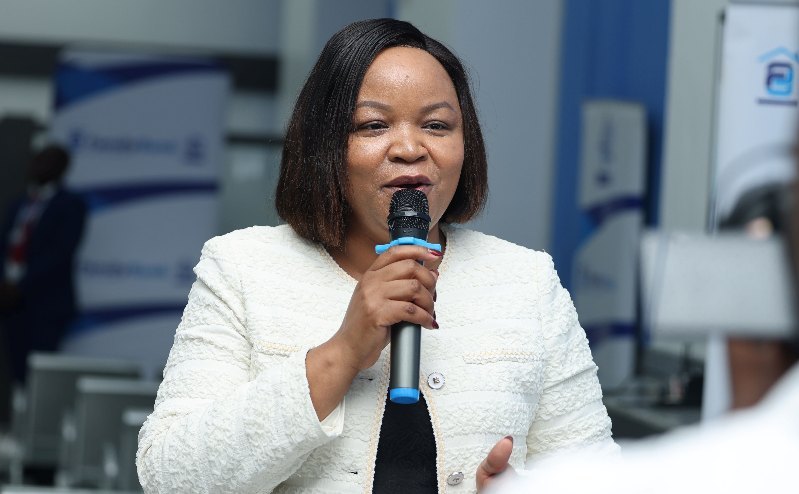
"Our vision to positively transform people's lives in Africa has remained unchanged and this listing will accelerate the realization of that vision," managing director Nancy Njau said in a statement.
"The decision for the Bank to list follows years of strategic preparation to ensure we list from a position of strength."
Family Bank said its decision to pursue a listing by introduction was underpinned by its strong capital position.
The bank does not intend to raise fresh funds through the transaction, having already bolstered its balance sheet through a private placement in 2025 that raised Sh8 billion, surpassing its initial Sh6.09 billion target.
It traces its origins to Family Finance Building Society, established in 1984, before transitioning into a fully-fledged commercial bank in 2007.
The shareholder register is dominated by institutional and long-term investors. As of December 31, 2025, Kenya Tea Development Agency (Holdings) was the lender's largest shareholder with an 18.98 per cent stake, followed by the estate of Rachael Njeri Muya at 10.05 per cent and Daykio Plantations Limited at 9.53 per cent.
The lender is joining the Nairobi bourse just three months after Kenya Pipeline Company listed as the sixth most valuable stock.
At a listing valuation of Sh163.6 billion, it is the first pure infrastructure company to break into that tier.
The news of the listing did not, however, excite the market.
The NSE reported low activity during the week, with NASI, NSE 25 and NSE 20 share price indices decreasing by 0.17 per cent, and 0.41 per cent and 0.06 per cent.
Market capitalisation, total shares traded and equity turnover also decreased by 0.17 per cent, 23.38 per cent and 26.71 per cent, respectively.
Bond Market Bond turnover in the domestic secondary market increased by 90.53 per cent during the week ending June 12 to close at Sh48.3 billion compared to Sh25.3 billion the previous week.
In the money market, the Treasury bill auction of June 11 received bids totaling Sh39.3 billion against an advertised amount of Sh24.0 billion, representing a performance of 163.9 per cent.
Interest rate on the 91-day, 182-day and 364-day Treasury bills increased marginally for the fifth week in a row as state securities gain popularity amongst investors due to lower lending rates.
In the Treasury bond tap sale auction of June 8, the reopened 15-year and 25-year treasury bonds received bids totaling Sh8.7 billion against an advertised amount of Sh15 billion, representing a performance of 58.4 per cent.