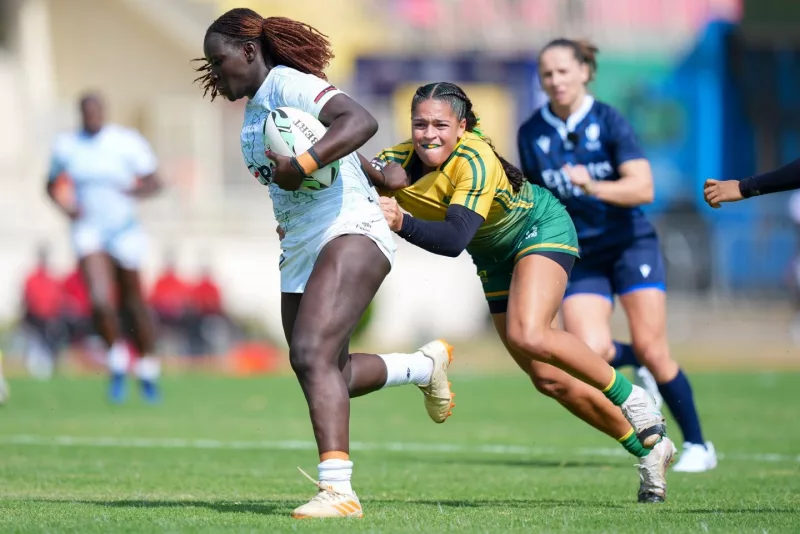
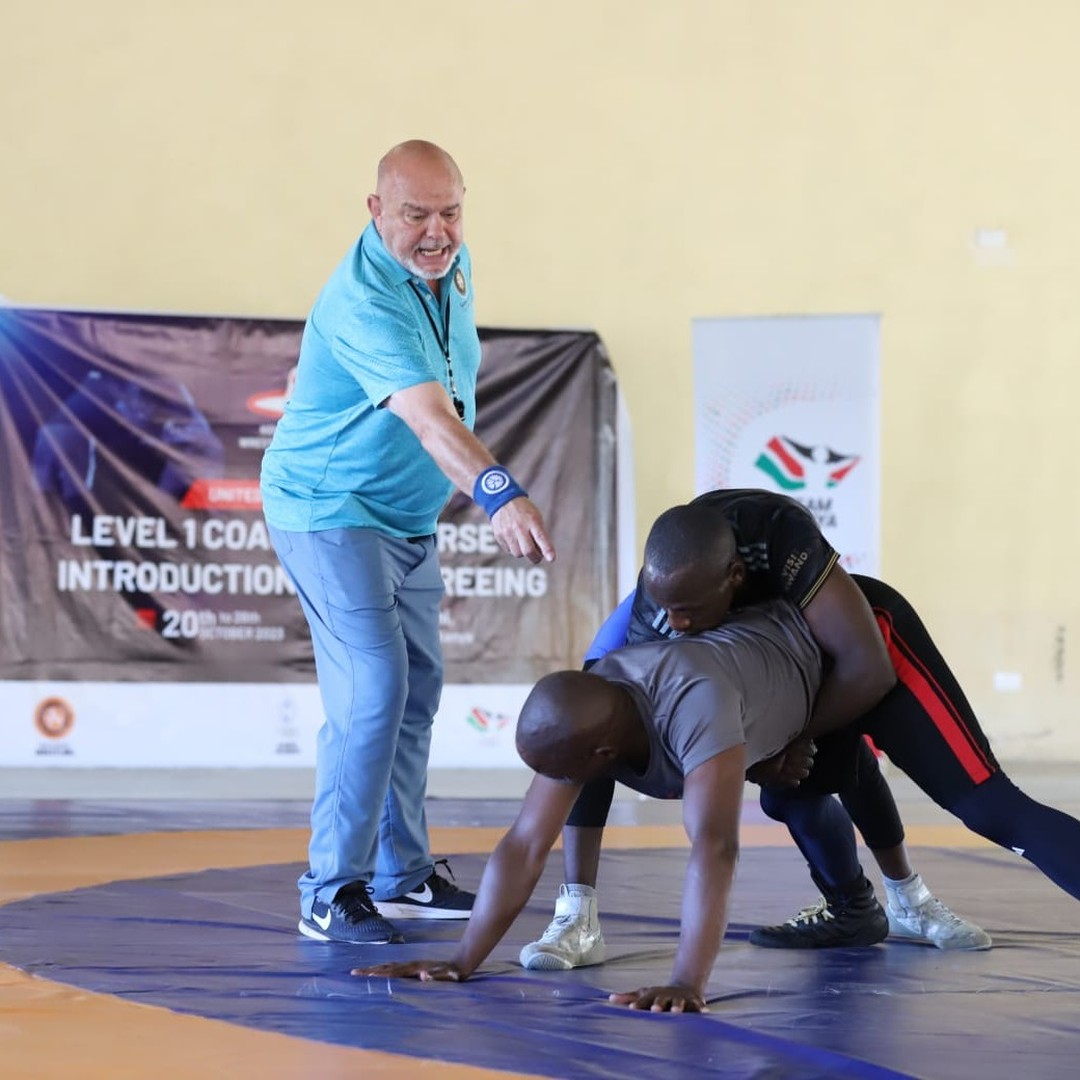
 Athletes during wrestling training/ NOCK
Wrestling brings back a flood of nostalgic memories for many sports fans who grew up in the late 1990s and early 2000s, largely because of the global phenomenon that was World Wrestling Entertainment (WWE).
For many, wrestling is synonymous with dramatic entrances, larger-than-life characters and unforgettable rivalries. However, very few people realise that wrestling is also one of the world's oldest and most prestigious Olympic sports, with a rich history dating back thousands of years.
In today's edition of Know Your Sport, we step away from the bright lights of sports entertainment and onto the mat to explore the fascinating world of amateur wrestling, the genuine, unscripted form of the sport contested at the Olympic Games and other major international championships.
Wrestling is one of the oldest and most physically demanding combat sports known to mankind. It involves two unarmed athletes grappling in a contest of strength, technique, agility and tactical awareness. The primary objective is to gain control of an opponent through holds, takedowns and throws, ultimately aiming to pin both of their shoulders flat against the mat.
Often referred to as "physical chess", wrestling demands far more than brute force. Success requires explosive power, cardiovascular endurance, balance, flexibility and exceptional mental toughness. Unlike many sports that feature frequent stoppages or rely on teamwork, wrestling is a relentless one-on-one battle in which every movement, decision and adjustment can determine the outcome.
A crucial distinction exists between amateur wrestling and professional wrestling. While professional wrestling, popularised worldwide by WWE, combines athleticism with scripted storylines and predetermined outcomes designed to entertain audiences, amateur wrestling is a genuine competitive sport governed by strict rules and decided solely by performance on the mat.
It is this amateur version of wrestling that forms part of the Olympic programme and serves as the foundation of the sport worldwide.
Wrestling is contested in several different styles, each with its own unique characteristics and rules. Freestyle wrestling, one of the two Olympic disciplines, allows competitors to use their entire bodies, including their legs, to attack, defend and execute takedowns and throws. This creates a dynamic and fast-paced style in which athletes can score from a wide range of positions.
The second Olympic discipline is Greco-Roman wrestling, a style that prohibits attacks below the waist. Wrestlers may only use their upper bodies and arms to execute holds and throws, resulting in spectacular displays of strength and some of the most dramatic high-amplitude techniques in the sport.
There is also Folkstyle wrestling, which is predominantly practised in the United States, particularly in middle schools, high schools and the National Collegiate Athletic Association (NCAA). Unlike the international styles, Folkstyle places greater emphasis on controlling opponents while on the mat and is widely regarded as a developmental pathway for many American wrestlers.
Regardless of the style, the ultimate goal remains the same: pinning an opponent by holding both of their shoulders to the mat. A successful pin immediately ends the contest and secures victory.
If neither wrestler manages to secure a pin, the winner is determined by points accumulated throughout the bout. Wrestlers earn points through various actions, including takedowns, which are awarded when an athlete brings an opponent from a standing position to the mat and establishes control. Additional points are earned through exposure, where a wrestler forces an opponent's back towards the mat, placing them in a vulnerable scoring position.
In freestyle and Greco-Roman wrestling, competitors can also score a point when an opponent steps completely outside the competition area without being engaged in an active hold. Referees may also award points for passivity when a wrestler consistently avoids attacking or engaging, encouraging continuous action and aggression. Penalty points can also be awarded if a competitor commits illegal moves, deliberately avoids wrestling exchanges or attempts to flee the mat to escape scoring situations.
A standard wrestling bout typically lasts between six and seven minutes, depending on the style and level of competition. International Freestyle and Greco-Roman matches follow a standardised format, while Folkstyle contests are divided into three periods, with regulations varying between high school and collegiate competition.
As one of the world's oldest combat sports, wrestling boasts a remarkable heritage that stretches back to the earliest human civilisations. Historical records and ancient artwork indicate that forms of wrestling existed thousands of years ago in societies across Africa, Asia and Europe, where grappling skills were often linked to warfare, survival and physical prowess.
The sport later gained widespread popularity in the early 20th century as both a competitive athletic contest and a travelling carnival attraction. Its entertainment counterpart would go on to captivate television audiences during several boom periods, including the Golden Age of the 1940s and 1950s, the expansion era of the 1980s and the hugely popular Attitude Era of the late 1990s.
Wrestling also occupies a special place in Olympic history. It was one of the sports featured at the inaugural modern Olympic Games in Athens in 1896, where Greco-Roman wrestling was contested as one of the original events. Today, the sport is governed globally by the United World Wrestling (UWW), which oversees international competitions and the Olympic wrestling programme.
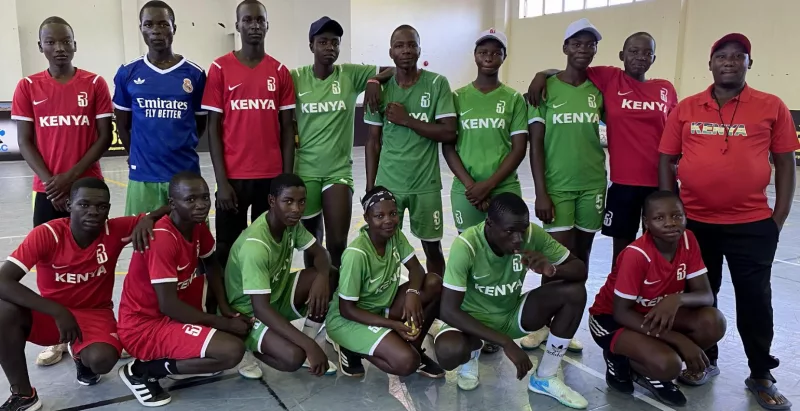
In Kenya, wrestling has continued to gain traction over the years as more athletes embrace the sport and opportunities for competition expand. The discipline is overseen by the Kenya Amateur Wrestling Association (KAWA), which also operates as the Kenya Wrestling Federation (KWF).