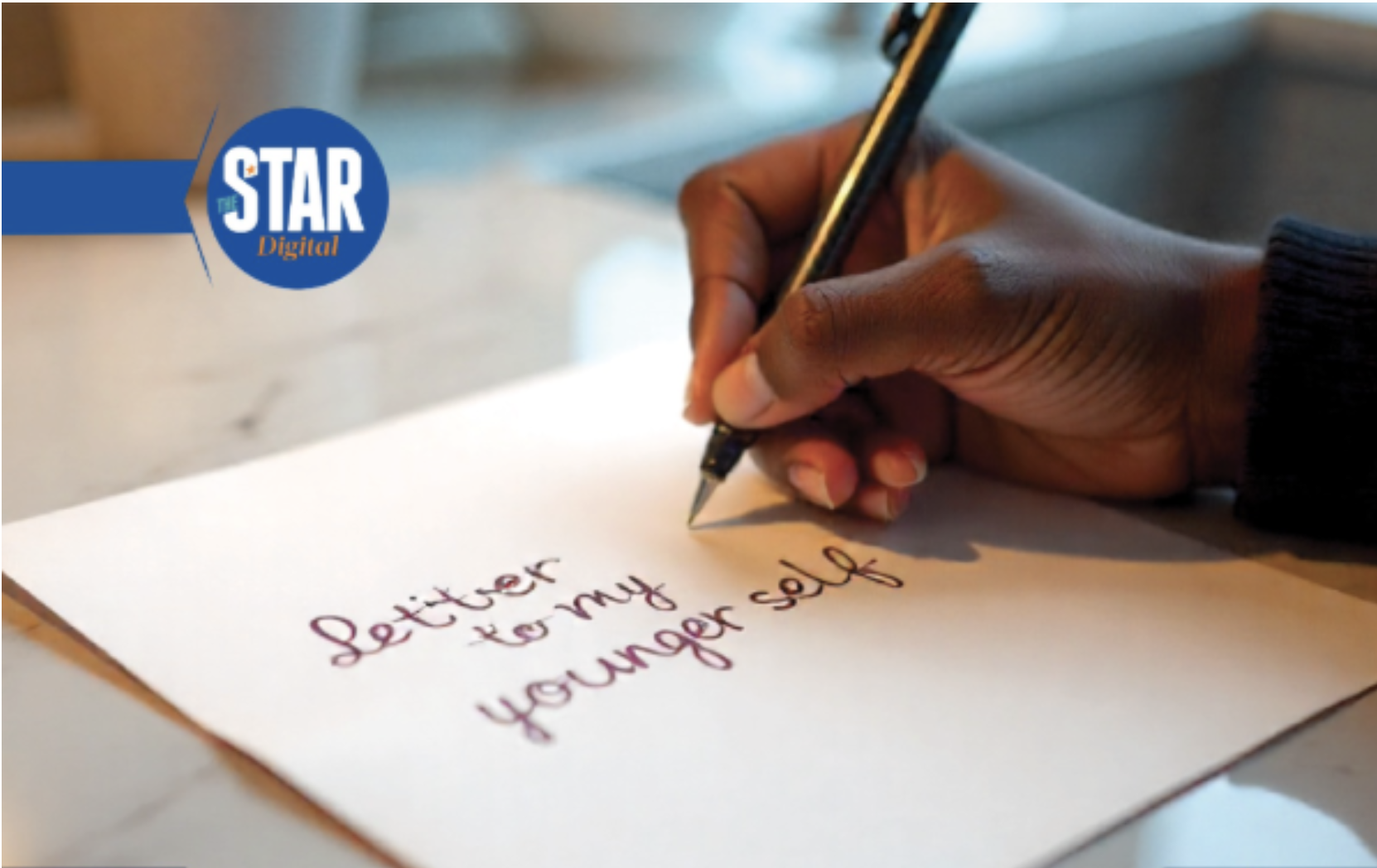
Every scar has a story. “Letter to My Younger Self” invites you into the reflective hearts of people who've walked winding roads—offering gentle truths, bold lessons, and encouragement for anyone still figuring it out. These weekly letters are full of grace and grit, showing how setbacks shape wisdom and how the past still holds power to teach. From nurturing curiosity to embracing mentorship, each piece is a tribute to growth through lived experience.
Wawira Gathoni (Not her real name) pens this week’s heartfelt Letter to My Younger Self. Here is part two of the series:
Dear Younger Self
“For a long time, I thought intelligence was ordinary because it came naturally to me.”
You spent so much of your childhood being called smart that eventually, the word lost meaning.
That is the strange thing about gifted children.
When something comes naturally to you, you assume it comes naturally to everyone else too.
So while adults praised your grades and teachers spoke proudly about your performance, you simply thought you were doing what you were supposed to do. Excellence did not feel exceptional. It felt normal.
And maybe that is why you never fully learned how to value your own mind.
You learned discipline. You learned hard work. You learned obedience.
But nobody really taught you confidence.
Nobody taught you that intelligence is not just about passing exams. Nobody taught you that being intellectually gifted also shapes how you experience the world emotionally. Nobody warned you that sometimes, highly aware children become highly self-critical adults.
You were curious from the beginning.
You cried to start school before you were even five years old because learning excited you. You loved understanding things. You loved words. You loved observing people. Even as a child, your mind was always moving, always asking questions, always trying to make sense of the world around you.
But in many African homes, intelligence is celebrated practically, not emotionally.
Adults celebrate results. Marks. Report forms. Positions.
But very few people stop to ask intelligent children how they are coping internally.
So you grew up learning that your value was tied to performance.
And because you performed well consistently, people assumed you were fine.
You were not unhappy.
But you were carrying pressures you did not yet have language for.
The pressure to always do well. The pressure to remain “the smart one.” The pressure of disappointing people if you failed. The pressure of constantly proving yourself worthy of praise.
And quietly, without noticing, you started attaching your self-worth to achievement.
I wish somebody had told you earlier that intelligence is a gift, but it is not identity.
Because one day life would humble you in ways exams never did.
One day you would discover that emotional intelligence matters too. Relationships matter. Healing matters. Self-awareness matters. Rest matters. Character matters.
But before life taught you those lessons, there was KCPE.
And for many Kenyan children, KCPE is not just an exam. It is treated like prophecy. Families, schools, and entire communities attach enormous meaning to those results. Children quickly learn that performance can determine opportunity, dignity, and sometimes even how people speak to you.
That pressure is too heavy for children.
But at that age, you did not yet know how unfair that was. You only knew you wanted to do well. And you did.
I think that was the first moment you truly realised your intelligence could open doors.
Not just academically. Socially too.
People began speaking to you differently. Teachers noticed you differently. Expectations became bigger. Suddenly, your future no longer felt abstract.
It felt possible. But there is something else nobody tells smart girls.
People admire intelligent girls when they are young. But as women grow older, the world sometimes becomes less comfortable with women who are deeply aware, deeply opinionated, deeply ambitious, or intellectually confident.
So many girls learn to shrink themselves early.
To sound softer than they are. To pretend not to know too much. To become less intimidating. To choose likability over authenticity. And honestly, you learned some of that too.
You became excellent at minimizing yourself in rooms where you deserved to take up space. You confused humility with invisibility.
You thought being “good” meant becoming smaller.
I wish I could tell you now that there is nothing arrogant about acknowledging your brilliance.
There is nothing shameful about intelligence.
And there is nothing wrong with a woman who knows she is capable.
Still, your intelligence shaped your life in beautiful ways.
It made you observant. It made you thoughtful. It made you curious about systems, inequality, and people. It made you reflective. It made you capable of holding complexity without rushing to simplistic answers. And perhaps most importantly, it gave you options.
Education became your bridge into worlds you may never have accessed otherwise.
A girl from shags found herself navigating universities, boardrooms, conferences, donor spaces, and leadership conversations because education opened those doors. That matters.
Especially in a society where so many brilliant children never receive the opportunities their minds deserve.
And even now, as an adult, you are still learning how to fully own your intelligence without apologising for it.
You are still learning that achievement and worth are not the same thing. You are still learning that being smart does not mean you must carry everything alone.
You are still learning that your mind deserves gentleness too. But you have come far.
The little girl who once thought her brilliance was ordinary grew into a woman who now understands that intelligence is not just about knowing things.
It is about what you choose to do with what you know.
And somehow, despite all your self-doubt, you have used your mind to make the world a little softer, a little fairer, and a little more hopeful for other people.
That is something to be proud of.
Everyone has a story worth sharing. If you’ve ever wished you could talk to your younger self—with wisdom, forgiveness, or clarity—we invite you to write to us. Your real, heartfelt letter might just be the encouragement someone else needs today. You may remain anonymous if preferred, but your truth matters. We don’t pay contributors, but we believe in the power of shared experience. Join us in building a collection of life’s hard-earned lessons and gentle reminders.
Be part of this movement. Send your Letter to My Younger Self to: [email protected]
Watch out for part four of her series next week.