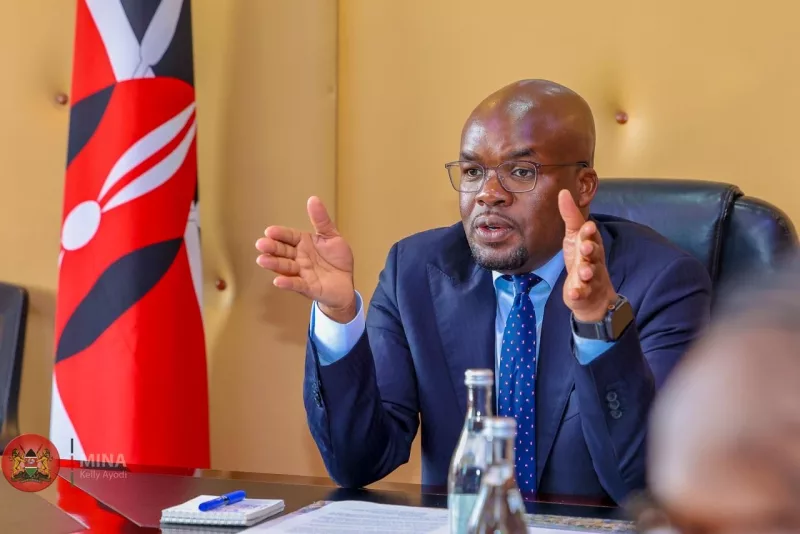
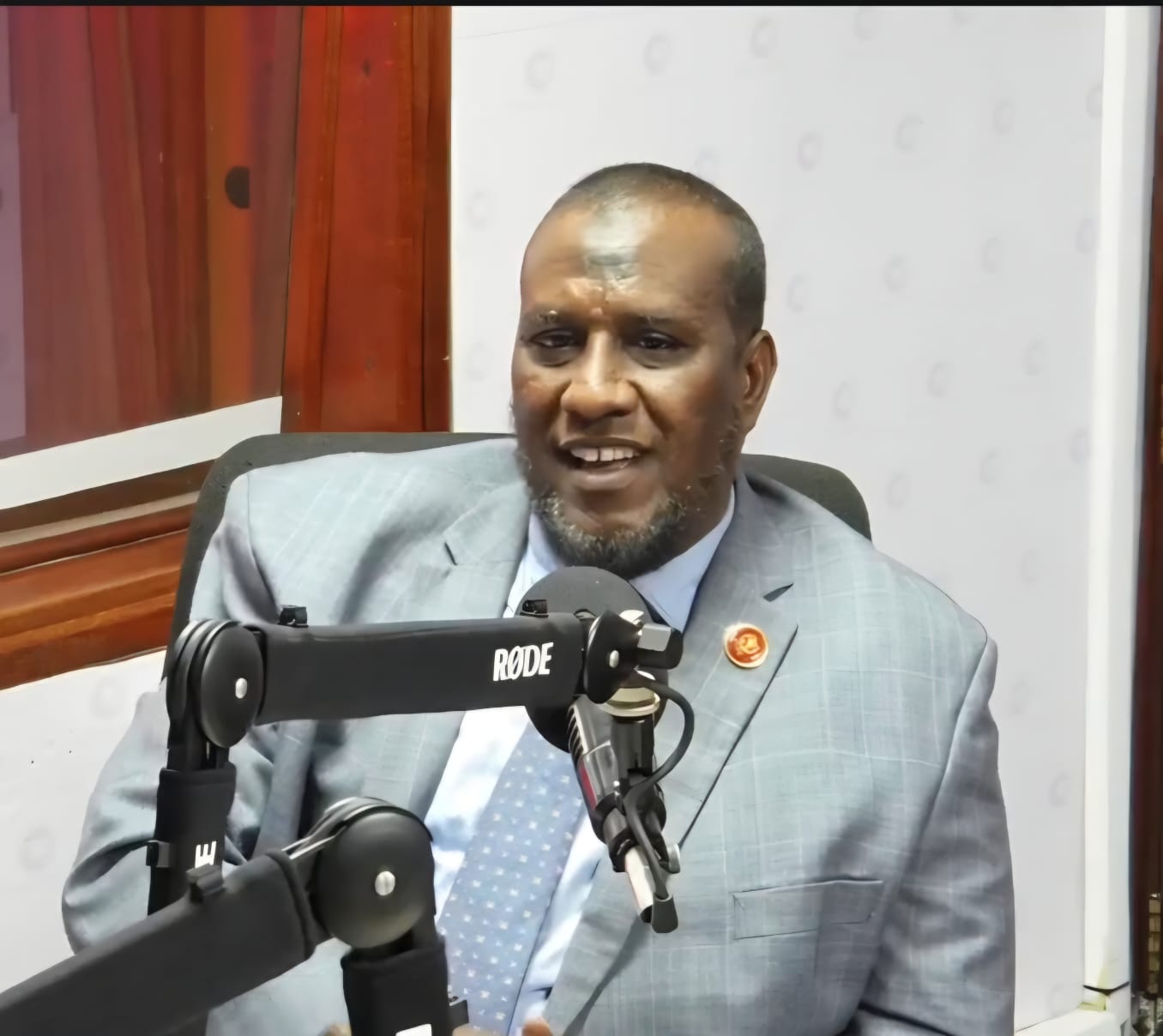
 Abdullahı Maalim, a governance and policy expert with 25+ years of experience in public administration, devolution, and institutional reform. /HANDOUT
Old African wisdom says roads connect destinies, not just places.
There are moments in a nation’s journey when one project stops being just a project. It becomes a statement of intent. The Madogashe–Mandera Road is one such project. For decades, Northern Kenya has lived with the burden of distance — from markets, from opportunity, from investment, and at times, even from the full promise of nationhood itself. Yet today, for the first time in many years, there is a visible sense that the story may finally be changing.
The completion and operationalisation of the Garissa–Madogashe road has already begun to reshape the region’s economic rhythm. The transformation is not theoretical; it is happening in real time. Travel that once consumed exhausting hours is becoming manageable. Transport of goods is faster and cheaper. Commercial activity is slowly returning to trading centres that had long stagnated under the weight of poor infrastructure. Public transport operators, livestock traders, small-scale businesses, and ordinary wananchi are beginning to feel the relief that good roads bring.
Equally encouraging is the steady progress on the Isiolo–Madogashe corridor. Bit by bit, kilometre by kilometre, another gateway into Northern Kenya is opening. These roads are doing more than connecting places; they are reconnecting hope.
But the true economic breakthrough lies ahead. If the remaining stretch from Madogashe to Mandera is completed seamlessly and without interruption, Northern Kenya could witness one of the fastest economic turnarounds in modern Kenyan history. The impact would not take decades to be felt. It would be immediate.
Roads are not simply transport infrastructure. Roads determine the speed of development itself. They influence the cost of food, the movement of medicine, the efficiency of trade, the flow of investment, and the accessibility of education and healthcare. Where roads are poor, economies crawl. Where roads are reliable, economies breathe.
For far too long, the North-Eastern region has paid the price of isolation. Investors hesitated because access was difficult. Transporters charged exorbitantly because journeys were risky and slow. Livestock farmers —custodians of one of Kenya’s most valuable economic resources —struggled to reach competitive markets efficiently. Entire communities became trapped in cycles where poverty was reinforced by geography.
A complete Madogashe–Mandera road would shatter that barrier. Trade with neighbouring Somalia and Ethiopia would expand significantly. Livestock commerce would flourish at an entirely different scale. New businesses would emerge along the corridor. Towns would grow. Land values would rise. Employment opportunities would expand. Even government service delivery would improve because accessibility itself would improve.
And perhaps the most overlooked impact would be social stability. A connected economy creates engaged citizens. When young people can move, trade, work, study, and dream within a functioning economy, they become less vulnerable to hopelessness and destructive influences. Economic inclusion naturally weakens the grip of drug abuse, criminal networks, radicalisation, and the frustrations that often thrive where neglect and exclusion persist. Roads carry more than vehicles; they carry dignity, integration, and possibility.
This is why the Madogashe–Mandera Road should not be treated as an ordinary infrastructure project buried in procurement files and political timelines. It is a national economic corridor. It is a strategic investment in security. It is a declaration that no part of Kenya should remain permanently peripheral to the country’s prosperity.
Other developments can follow later — industries, digital infrastructure, tourism, manufacturing, modern markets, and urban growth — but none of them can thrive sustainably without roads. History has consistently shown that development follows infrastructure, not the other way around.
As Kenya prepares to celebrate the 63rdMadaraka Day in Wajir County, the symbolism could not be more profound. We warmly welcome the President of the Republic of Kenya, H.E William Samoei Ruto, to a venue whose selection sends a powerful national message: that Kenya’s development story must include every region and every people. Madaraka was about freedom, dignity, and self-determination. But true liberation is incomplete when parts of a country remain disconnected from opportunity. In many ways, the road from Madogashe to Mandera is no longer just a road project. It has become a test of whether Kenya is ready to fully equalise itself —economically, socially, and psychologically.
And perhaps there could be no better time to make that commitment than during Madaraka celebrations in Wajir, where the promise of inclusion is no longer being asked for in words alone, but in tarmac, access, and opportunity.
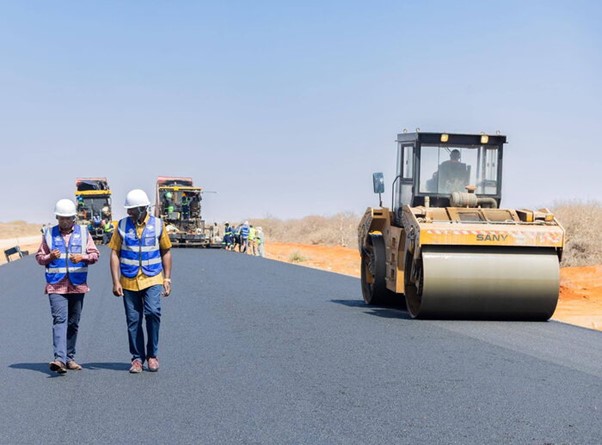 President William Ruto (right) and Deputy President Kithure
Kindiki inspecting the ongoing construction of the Isiolo-Mandera highway.
President William Ruto (right) and Deputy President Kithure
Kindiki inspecting the ongoing construction of the Isiolo-Mandera highway.
The writer is a governance and policy expert with 25+ years of experience in public administration, devolution, and institutional reform