An officer from the Independent Policing Oversight Authority (IPOA) has told the court investigating the death of protester Rex Masai that several police officers gave misleading, contradictory and incomplete information during investigations into the anti-Finance Bill 2024 demonstrations.
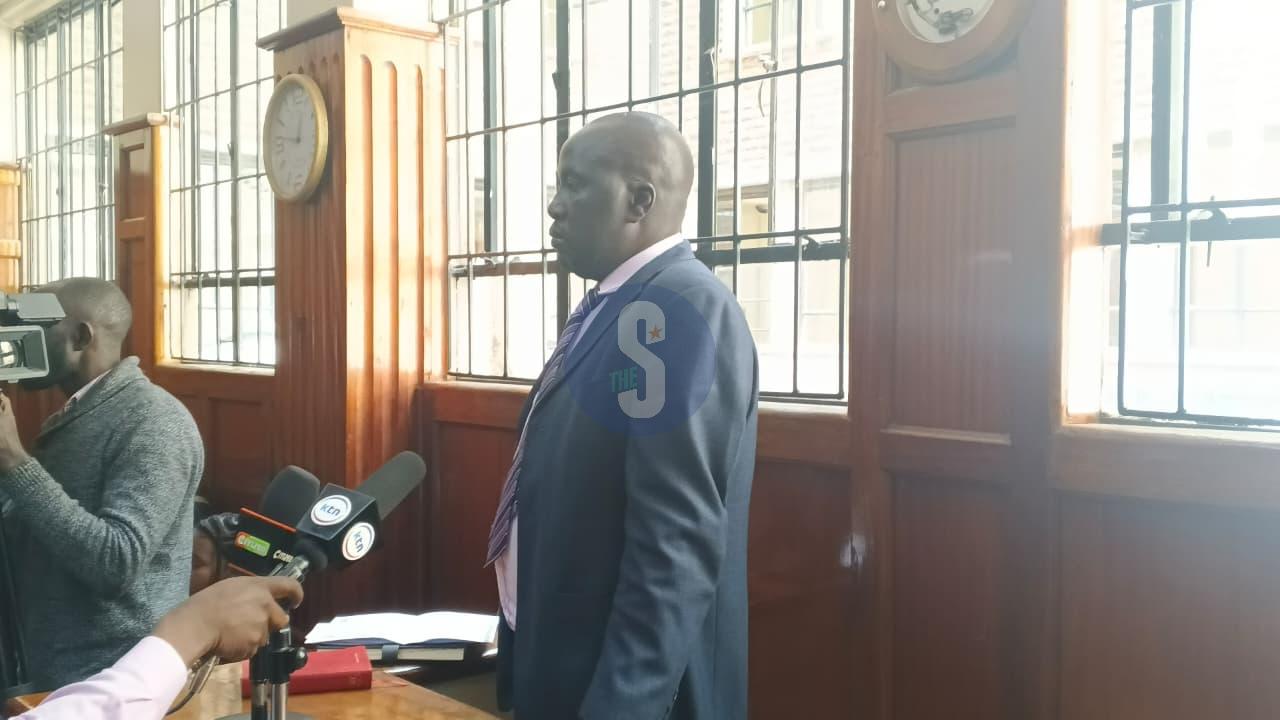
Justin Nyatete, the 18th and final prosecution witness in the inquest, said the conduct of some senior police officers made it difficult for IPOA to establish who exactly was deployed during the protests and who fatally shot Masai.
While testifying on Thursday, Nyatete told the court that IPOA encountered inconsistencies from the very beginning of the probe.
In particular, he cited discrepancies on officers' deployment records and the identity of officers who pursued protesters in civilian clothing.
According to the officer, investigations established that demonstrations held on June 18 and June 20, 2024 were largely peaceful, with protesters carrying water bottles and Kenyan flags while chanting anti-Finance Bill slogans.
However, he said police mounted a large-scale operation involving uniformed and non-uniformed officers drawn from several units, including the General Service Unit (GSU), Rapid Deployment Unit (RDU) and Administration Police Service (APS).
Nyatete said upon being tasked with the investigations, he requested operational records to establish how the deployment had been organised.
He, however, says several police commanders failed to provide them.
"During our investigations, we summoned other officers; the GSU commandant, commandant from RDU, Nairobi regional commandant who failed to come to ipoa offices," he testified.
He told the court that then Nairobi Regional Police Commander Adamson Bungei declined to produce an operation order even after IPOA obtained a court order compelling police to provide the documents.
“Because of our encounter with him (Bungei), we felt it was prudent to seek a court order. I personally took the order to the regional commander’s office, but he declined and referred me to police headquarters,” Nyetete testified.
The investigator added that Kamukunji Sub-County Police Commander Doris Mugambi also declined to provide the records and similarly referred IPOA officers to police headquarters.
Nyatete said IPOA later received a letter from the Deputy Inspector General Eliud Lagat, stating that there had been no operation order because the demonstrations were “spontaneous” and had escalated into a national security concern.
But the IPOA officer questioned that explanation, saying it contradicted statements earlier recorded from Mugambi.
“Madam Doris stated they had a briefing at 5am and officers were dispatched to various duties,” Nyatete testified.
“I wonder why they would have a briefing if the demonstrations were spontaneous. It does not add up.”
He further told the court that the explanation given by police raised doubts about the credibility of information supplied to investigators.
“The officers are not honest in the information they are giving,” he said.
Nyatete maintained that it was inconceivable for such a huge police deployment involving multiple security formations to occur without an operation order, deployment schedule or any documentation showing where officers had been assigned.
“How they could account for their officers remains a puzzle,” he testified.
The officer further revealed that several senior officers summoned by IPOA either failed to appear or did not cooperate with investigations.
He said IPOA also relied on CCTV footage and evidence from protected witnesses who captured photographs and videos during the protests.
According to Nyatete, CCTV footage obtained from an Absa Bank branch showed demonstrators running after gunshots were heard, while about five men in civilian clothes chased after them.
“One of them shot directly at those running away,” he told the court.
Witnesses, according to the investigator, described one of the armed men as wearing white sports shoes, dark blue trousers, a dark shirt and a black cape-like jacket.
Nyetete said the description matched images later obtained by investigators from a protected witness who had photographed officers during the demonstrations.
The IPOA officer particularly singled out police officer Isaiah Murangiri, whose account, he said, was contradicted by Safaricom mobile data.
According to Nyatete, Murangiri had recorded a statement claiming that on June 20 he had been deployed at KICC after being issued with a teargas launcher.
However, he says Safaricom analysis allegedly placed him in several other locations across the city, including Windsor House, Development House, Wakulima Market area and Wambéra Street, where witnesses reported seeing armed men chase protesters.
“The officer misled investigations by giving misleading information,” Nyetete testified.
Nyatete also questioned why an undercover officer would carry a launcher during covert operations.
“It defeats the purpose of being undercover,” he said.
The investigator further revealed that IPOA established that some officers deployed during the protests were operating in civilian clothes, making it difficult to identify and account for them.
He said officers who testified before the court earlier attempted to describe the armed men seen chasing protesters as criminals.
But Nyatete questioned why police failed to arrest or identify any of the alleged criminals despite claiming they were present during the demonstrations.
“We are left to believe those chasing demonstrators were officers,” he told the court.
Although IPOA conducted ballistic examinations and analysed firearms surrendered by officers, the investigator said they were unable to identify the gun that fatally injured Rex Masai.
Nyatete maintained that the failure by police to provide deployment records and full cooperation significantly undermined investigations into the shooting.
“We have demonstrated the steps we took as an authority but found non-cooperation from the National Police Service,” he said.