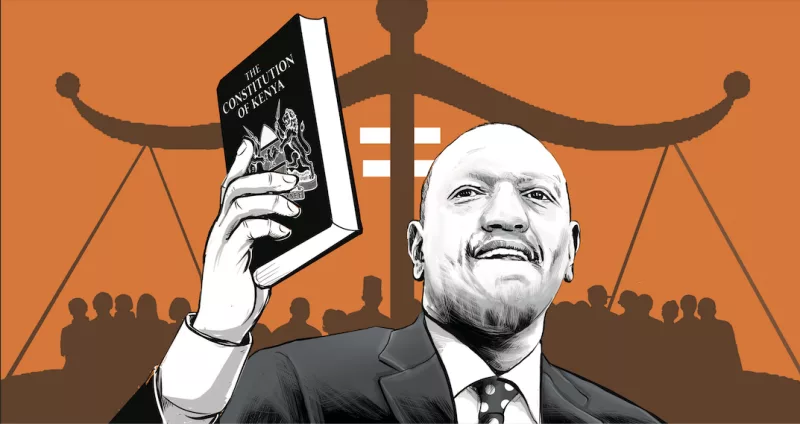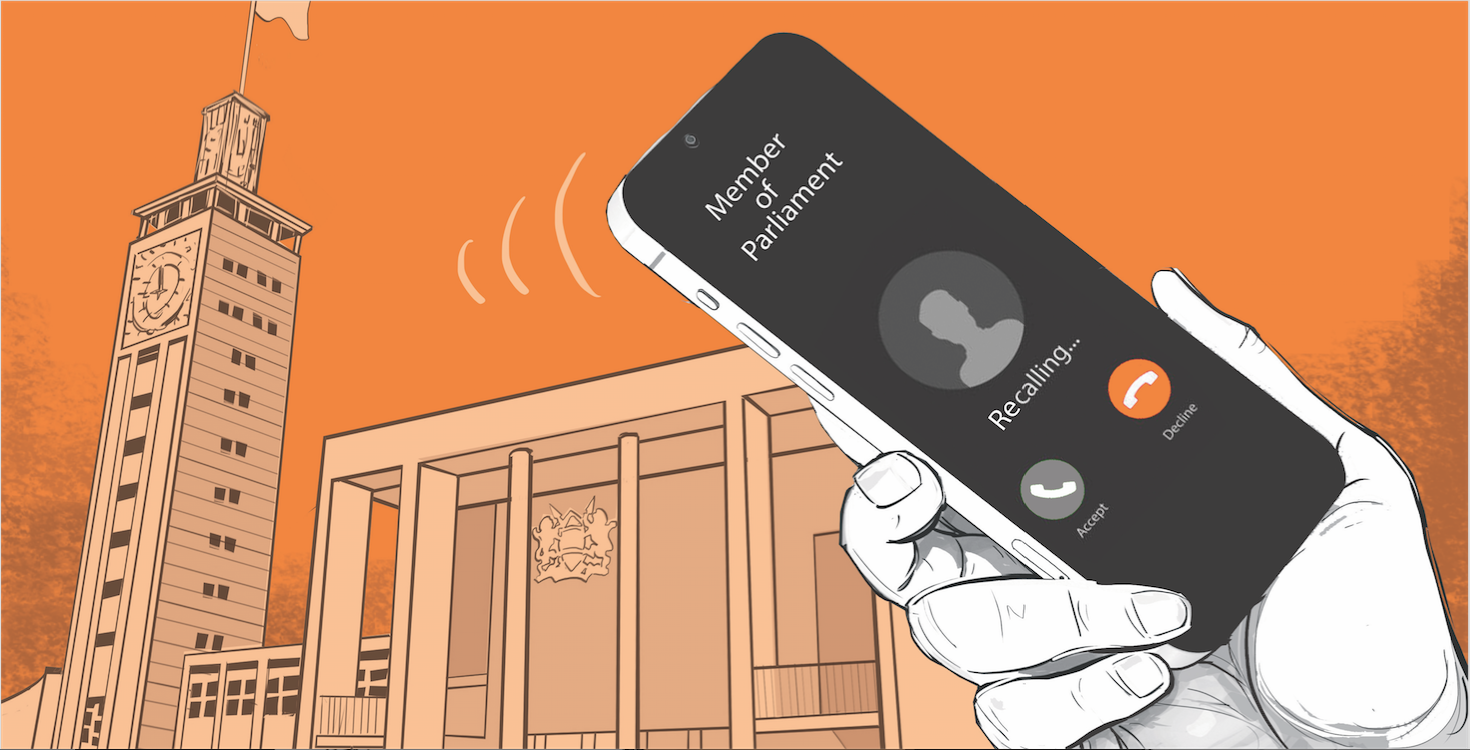
In just four days, from First Reading on August 23, 2011, to presidential assent on August 27, 2011, Parliament bulldozed the Elections Act, No 24 of 2011 into law. Buried inside that hurried package was Section 45, the provision that was supposed to operationalise Article 104 of the constitution: the people’s right to recall an errant MP.
But 96 hours were never enough for meaningful public participation. It was never meant to be.
Here is the unvarnished timeline. On August 23, the Elections Bill was read a first time and immediately referred to the Constitutional Implementation Oversight Committee (CIOC). On August 24, the Bill went through Second Reading debate. The same day, the CIOC, composed of 27 MPs, dissolved itself into three sub‑committees to scrutinise five bills simultaneously.
Their amendments, including the untouched Section 45, were adopted without a single public hearing. No notice in the press. No invitation to civil society. No space for the sovereign people of Kenya to be heard. On August 27, President Mwai Kibaki assented.
That is not lawmaking. That is a legislative coup against the sovereign will of the people of Kenya.
The betrayal is even more galling because Kenyans had already, through the Constitution of Kenya Review Commission (CKRC), demanded exactly the opposite. The CKRC’s Final Report, published in February 2005 after a nationwide civic engagement that began in 2001, recorded the people’s demand for full involvement in the running of public affairs and in making decisions on issues that affect them, such as spending public money, managing natural resources, dispute‑resolution, making laws, including amending the constitution, policy‑formulation and planning of development programmes.
Based on what Kenyans told them, the CKRC recommended that the constitution should give the people the right to participate in solving state matters, directly or through democratically elected representatives.
Crucially, the commission recommended that the constitution should create a mechanism to enable people to monitor the performance of elected representatives and to recall them if their performance is wanting. That was the constitutional promise.
Section 45 was supposed to deliver it. Instead, Parliament delivered a sham; a truncated version of the general will of the people aimed at securing their selfish political interests.
The Commission on Implementation of the Constitution (CIC) later boasted about its commitment to public participation. In its First Annual Report (January 2011 – June 2012), the chair of the CIC stated: “In the discharge of its mandate, CIC continues to place a high premium on the constitutional principle of Public Participation.”
Yet when that high premium was tested, the CIC’s own records are conspicuously silent on any specific public participation for the Elections Bill. The report acknowledges that the CIC facilitated the enactment of the Elections Act, but nowhere does it describe a single public forum, notice or consultation on Section 45. That silence is a confession: there was none.
The CIOC’s own report, tabled on August 25, 2011, lists dozens of amendments that were read clause by clause and then passed in Parliament. Section 45 was untouched, indicating the MPs were content with it or, worse, they had been co-opted into a conspiracy of silence.
Nowhere does the report mention public consultation. Nowhere does it state that Kenyans were given a chance to shape the recall mechanism. The conclusion is inescapable: Parliament legislated in a vacuum, deliberately excluding the very people the law was meant to serve.
Who presided over this opaque process? A 27‑member committee that included some of the most prominent names in Kenyan politics, chaired by Abdikadir Hussein, with Millie Odhiambo-Mabona as his vice chair, among others. They were tasked with overseeing the implementation of the new constitution. Instead, they oversaw its subversion. They reduced the people’s right to participate to a footnote in a rushed parliamentary schedule.
Only one of those 27 MPs remains in the National Assembly today: Millie Odhiambo‑Mabona. The rest have either retired, been defeated or moved on. But they signed off on amendments to the recall provisions without a single constituent ever being asked: “What do you think?” That silence is complicity. A self-serving piece of legislation.
The result is a recall law so crippled that no MP has ever been recalled. Section 45 required a High Court order before a petition could even be filed—a barrier so skewed that the High Court on July 14, 2017, rightly struck down parts of it as discriminatory.
But that judgment created a loophole being exploited today, one of res judicata. The judgment did not address the deeper rot: the law was stillborn because the process was unconstitutional for lack of public participation.
We do not need a court to tell us that laws made in darkness lack democratic legitimacy. The 27 CIOC MPs owe Kenyans an apology. Why did they allow the people’s right to recall to be written in a backroom, in 96 hours, without their voice?
The constitution belongs to the Kenyan people. The Right of Recall was stolen from you through Section 45 of the Elections Act No 24 of 2011.
Social impact adviser, a social consciousness theorist, trainer and speaker, agronomist consultant for golf courses and sportsfields, and author of 'The Gigantomachy of Samaismela' and 'The Trouble with Kenya: McKenzian Blueprint'