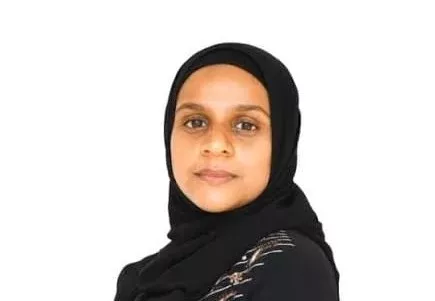
Dr Phyllis Kimani works in community pharmacy in the UK and is running research studies across Kenya and Zimbabwe.
Dr Phyllis Kimani, a community pharmacist in the UK and a researcher running studies across Kenya and Zimbabwe is among the growing number of Kenyan-connected voices pushing for epilepsy to be considered as a public health priority. We caught up with her shortly after Epilepsy Week and the 79th World Health Assembly to talk about what she sees, what she’s learning and what she hopes Kenya can do differently.
Q: Most readers will know what a pharmacist does, but they may not know how much of what you see relates to neurology. Does epilepsy actually come up often at the counter?
More than you’d expect. The conversations are usually quiet. A parent collecting medication for a child, an older patient asking whether they can keep their driving licence, a young woman wanting to know if her medicines are safe in pregnancy. Most patients don’t volunteer the word “epilepsy.” They ask about the tablets. Part of my job is to read between those lines and open the door to the conversation they actually wanted to have.
Q: What kinds of questions do patients ask you that surprise you?
They will ask me whether their medicine causes the seizures, whether they will be on it forever, whether their children might inherit it, whether they can have a beer at a wedding. These are the questions that matter. These are the conversations that don’t always fit into a short clinic visit, but they’re the ones patients carry home with them. That’s often where pharmacists can help most.
Q: You’ve worked in Kenya and the UK. What stands out when you compare them?
In the UK, the pharmacy is often the most accessible part of the health system. You walk in without an appointment, you ask your question, you leave with information. In many parts of Kenya, the pharmacy plays an even bigger role. For some patients, the pharmacist or pharmaceutical technologist is the first and sometimes only health professional they will see all year. It puts a lot on our colleagues back home, and it also means continued investment in our pharmacy workforce could make a real difference for epilepsy patients.
Q: Speaking of training, you have just launched a research study looking at this very issue, haven’t you?
Yes. I am leading a study in Kenya looking at how healthcare workers (pharmacists, nurses, doctors, clinical officers) understand and feel about the newer epilepsy treatments now available globally. Things like ketogenic dietary therapy and medical cannabidiol. For people whose seizures haven’t responded to standard medication, these treatments can be life-changing for some families. We need to map what’s already known, what would be useful to add, and what kind of training would best support our healthcare workers. It is one of three studies I am leading across Kenya and Zimbabwe.
Q: Cannabis-based treatment for epilepsy is something a lot of Kenyans might raise an eyebrow at. How do you respond to that?
I understand why people react that way. But the cannabidiol used in epilepsy is very different from what most people picture when they hear “cannabis.” It is a pharmaceutical-grade, purified compound. It’s licensed and prescribed in countries across Europe and parts of North America for specific conditions, including some severe childhood epilepsies. For me, the bigger question is whether our systems are ready for those conversations, and whether pharmacists and doctors have the information they need to discuss them confidently when families ask.
Q: What about the personal side? What made you decide this would be the work you focus your life on?
I am a mother of four. Two of my daughters live with a seizure disorder. Any parent who has watched their child have a seizure and not known what to do, even me with all my training, knows that feeling. I found myself constantly coming back to the gap between what we know is possible in epilepsy care and what families across Africa are actually receiving.
Q: A Kenyan family hearing your story might say, “But she is in the UK now. What does she know about us?” What’s your response?
A fair question. I trained and registered to practise pharmacy in both Kenya and the UK. I have worked in the public sector hospital pharmacy in Kenya. I know what it feels like for a family in a Level 4 facility to be told they need to see a neurologist, only to learn that the nearest specialist is at the county referral hospital, or all the way at Kenyatta National Hospital. The work I do is not me speaking on behalf of Kenya. It is me trying to make sure the global resources and partnerships actually reach the places that need them.
Q: The 79th World Health Assembly was last week. What would you like Kenya’s health leadership to take from it?
That neurological conditions can no longer be treated as secondary issues in public health. Epilepsy alone affects somewhere between five and ten in every thousand Kenyans, depending on which estimate you trust. Most are not yet receiving the consistent care that’s possible. The medicines aren’t exotic, and the science isn’t the obstacle. Epilepsy needs to be in our public health planning, our workforce needs ongoing training opportunities, and our medicine supply needs to be steady. These are difficult problems, but they are not impossible ones.
Q: And the caregivers, the mothers, the grandmothers, the spouses holding the home together. What would you want them to hear?
That you matter. That what you are doing every single day, the medication, the watchful nights, the silent grief, is the reason your loved one is still doing as well as they are. The focus tends to go to the patient, and the person holding the whole thing together can be overlooked. Kenya’s epilepsy story cannot be told without you, and the work I am doing has you at its centre. You are seen.
Q: What is your hope for Kenya five years from now?
That an epilepsy diagnosis in Kenya is no longer a sentence to silence and stigma. That a child diagnosed today can grow up in school, in church, in the workforce, in love, with proper treatment, support, and the chance to live a full life without shame.
Dr Phyllis Kimani is reachable at [email protected] and on social media as @phyllisthepharmacist.
![Hamisi Mwaguya [in coulored baseball cap] at the Kings Arena at Khadija estate in Nyali subcounty on Tuesday / BRIAN OTIENO](https://cdn.radioafrica.digital/image/2026/10/340e650a-21d8-475b-b658-a429e82e9367.jfif)