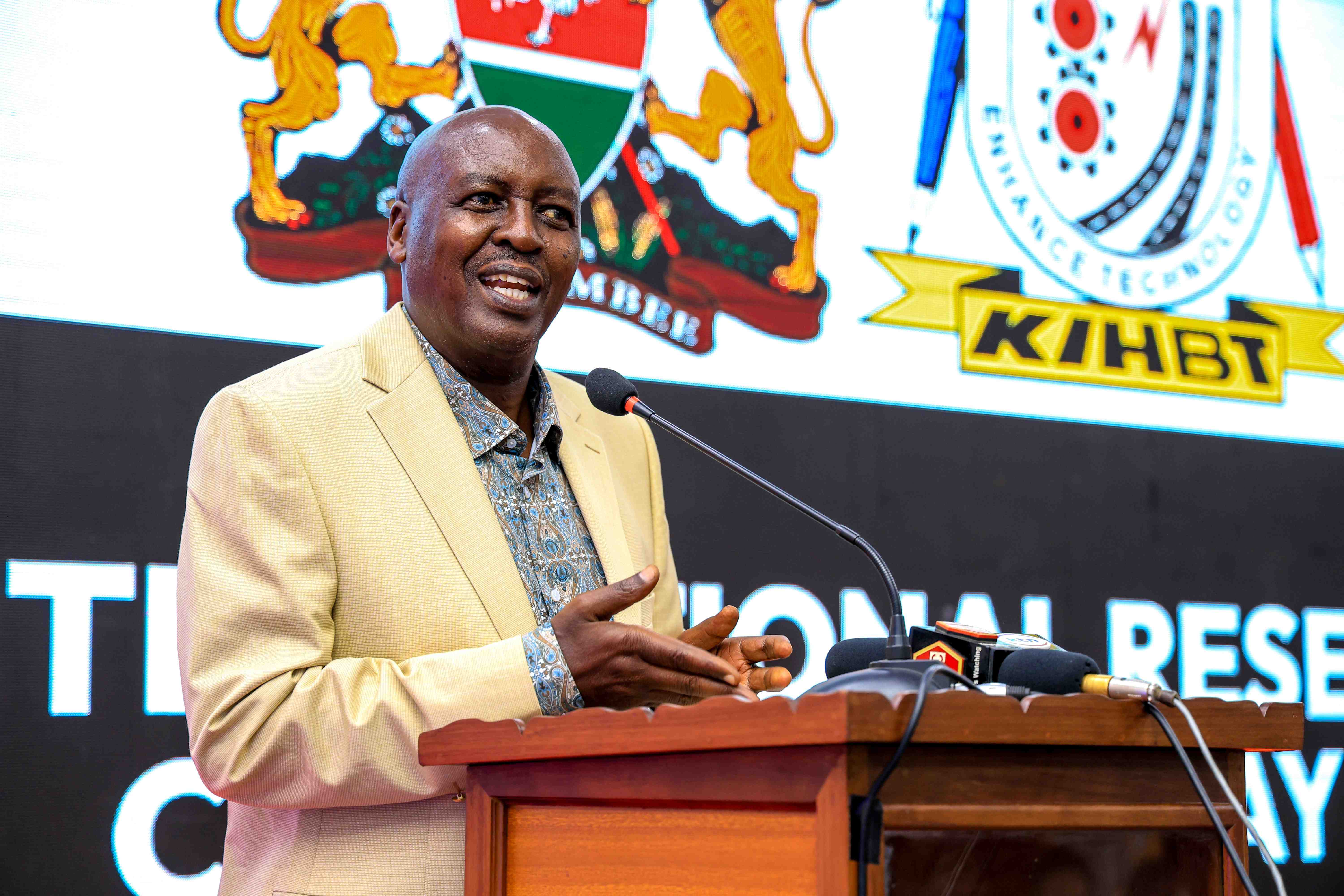
 Roads PS Joseph Mbugua at the inaugural international
conference on sustainable road transport in Mombasa on Wednesday / BRIAN OTIENO
Roads PS Joseph Mbugua at the inaugural international
conference on sustainable road transport in Mombasa on Wednesday / BRIAN OTIENO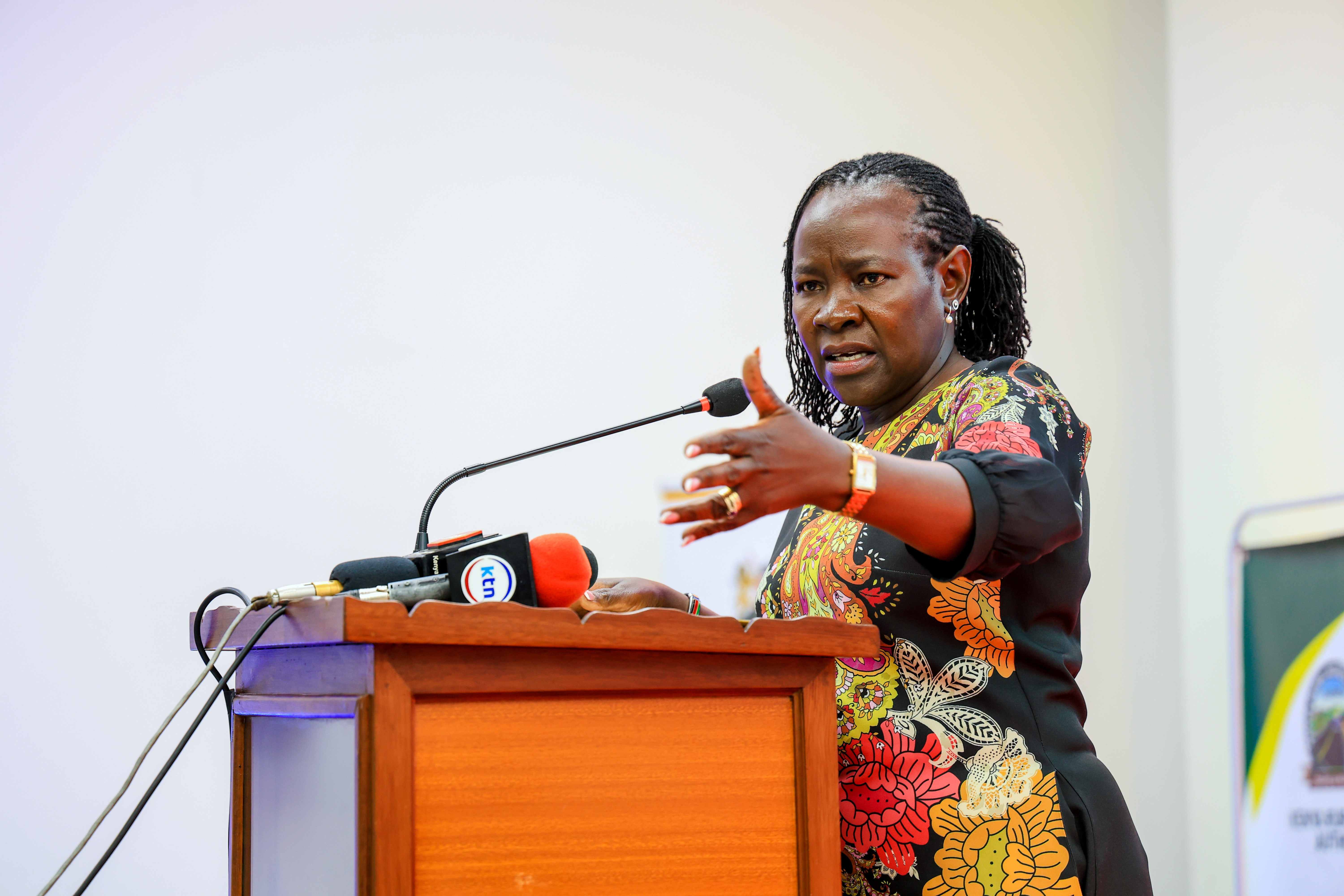 TVET PS Esther Mworia at the inaugural international
conference on sustainable road transport in Mombasa on Wednesday / BRIAN OTIENO
TVET PS Esther Mworia at the inaugural international
conference on sustainable road transport in Mombasa on Wednesday / BRIAN OTIENOSome Kenyan roads are not up to the required standard because they were built by incompetent people.
Technical and Vocational and Education and Training (TVET) PS Esther Mworia on Wednesday told her Roads counterpart Joseph Mbugua to ensure only competent people are contracted to build roads.
She said some of the engineers contracted to build Kenyan roads do substandard work, thereby wasting Kenyan taxpayers' money.
“Eng Mbugua, some of the roads that you build for us require more competence. So, that is why this conference is very important,” she said.
“And for your information and record, Eng Mbugua is my friend. So, I can tell him the truth and nothing but the truth. And there is nothing he can do because by evening he will be looking for me so that we can have a cup of tea. We are tea people.”
The PS spoke during the inaugural international conference on sustainable road transport in Mombasa. Mworia said Kenya requires excellence in the skills that are trained to build roads.
“This thing of doing things for the sake of finishing must stop. Building a road for the sake of finishing can no longer have space in this country,” Mworia said. “We have to do things with the excellence that they require.”
She said young people must be trained with Kenya’s future in mind.
The PS noted that it is extremely maddening to churn out graduates who go to the field only for the industry to advise them to go back to school and relearn.
The conference, organised by the Kenya Institute of Highways and Building Technology, brought together policymakers, implementers, researchers, consultants, students, among others, from across the continent.
She said she is looking forward to the day a bridge or any other infrastructural development will be undertaken to address the corner around Nithi Bridge in Tharaka Nithi county.
The PS said stakeholders must now get out of board rooms and move to the ground.
“I think we have enough policy and policy papers....Our research questions and our statement of the problem must translate into something that we will leave this conference and go to implement,” she said.
She noted that Kenya has enough research materials on the shelves.
Roads PS Mbugua however said Mworia spoke passionately about roads in the country because she comes from a family of engineers.
“If you marry a nurse in your house, you become a pharmacist,” Mbugua said. “She means well.”
Mbugua said Mworia’s sentiments are nothing but the truth indicating there are weaknesses in the engineering sector in the country.
“The era of guesswork in infrastructure is over, and the era of evidence-based solutions is on course,” he said.
He said road infrastructure faces a myriad of challenges including safety concerns, drainage failures, technological and performance gaps, and the growing impact of climate change.
These, he said, require research-driven responses.
Mbugua said climate change has brought new realities, and engineers and technicians must act fast to address them with precision.
Collaboration, he said, is the only way to deal with the complexity of modern infrastructure demands.
KIHBT acting director Geoffrey Githiri said the research conference was convened to address issues pertaining to capacity building and skills development for sustainable transport, which accounts for over 80 per cent of the total movement of people and goods.
He said like many other countries in the region, the Kenyan road transport sector faces a myriad of challenges which can best be addressed through research and exchange of ideas by all stakeholders.
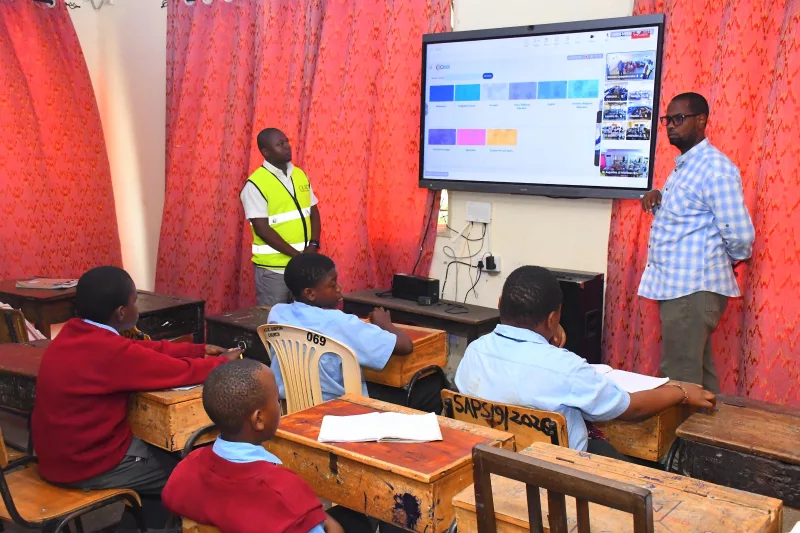
KIHBT has been undergoing digital transformation.
KIHBT chair Nicholas Musuni said they are keen to develop programmes relevant to the industry's needs.
“We are working with all stakeholders, including road agencies, academia, professional regulators, and related institutions both locally and regionally to ensure we churn out the best in the sector,” Musuni said.
Mworia said Kenya is now a construction site, which requires more than machinery, materials and finances.
“It requires skilled people, practical research, innovation, strong institutions and technical competence. That is why KIHBT remains central to Kenya’s transformation agenda,” Mworia said.
The conference, she said, positions KIHBT as a regional centre for excellence in roads, highways and infrastructure skills.
“No country can build world-class infrastructure without world-class skills. Every road, bridge, corridor and transport system depends on competent technicians, technologists, engineers, artisans, researchers and innovators,” she said.
The quality of infrastructure is directly linked to the quality of skills behind it, she said.