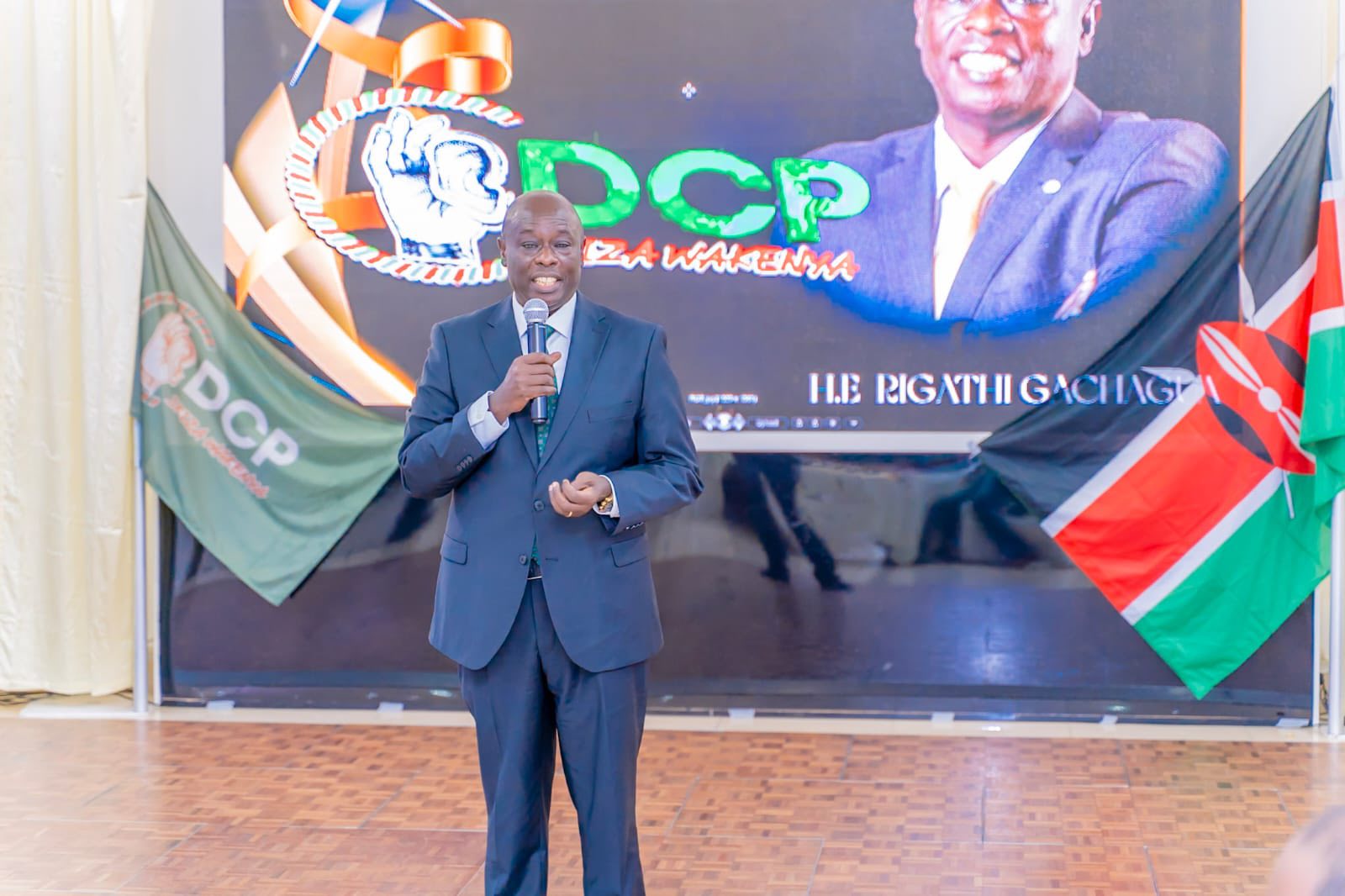
Impeached Deputy President Rigathi Gachagua and his allies have stirred fresh anxiety within the opposition after demanding that coalition co-principals back his presidential bid, arguing Mt Kenya holds decisive electoral numbers.
The move rekindles memories of how Wiper leader Kalonzo Musyoka fell out with Uhuru Kenyatta and William Ruto ahead of the 2013 general election.
At the time, Uhuru and Ruto sidelined Kalonzo from the presidential ticket, arguing that his Ukambani backyard lacked the “tyranny of numbers”.
Gachagua, seen as the fulcrum of the opposition, has mounted a massive court battle to overturn his impeachment.
Nyandarua Senator John Methu stirred the tensions during Gachagua’s ongoing meetings in the UK, saying it’s only fair for principals with small bases to back Gachagua.
“Even mathematically, we know those who speak like me gave Ruto 3.5 million votes and gave his rival 1.5 million votes, so Gachagua has five million votes. Now that we are eyeing eight million votes, isn’t it logical for the person with five million to be the one to be added three million?” Methu posed.
Recent opinion polls have ranked Kalonzo and former Interior Cabinet Secretary Fred Matiangi as the strongest opposition pair.
However, Gachagua’s stand could turn the tables.
According to Methu, Gachagua is the engine of the opposition, and his absence is clear in the opposition every time he is away from the country.
The senator argues that those claiming Gachagua cannot run on the basis of his impeachment are aware he is the strongest candidate against Ruto.
“His Excellency has a very good vision, but we have been told he was impeached, so he cannot run. It is something that has been peddled by people who know that the only one who can send Ruto home is Rigathi Gachagua.”
Methu argued that Gachagua’s impeachment battle could drag through the courts for years, allowing him to remain politically active ahead of the election.
“I don’t want to badmouth the ones we are with, but he is the engine of the opposition. If he is the engine that drives the opposition, he is the one who can drive Kenya forward,” he said.
Gachagua himself put a strong pitch for his bid, saying he hopes to be picked to challenge Ruto, whom he described as ‘easy to beat’.
“Of all the people we are working with, I am the one who knows him (Ruto) well. I made him president, and as the builder, I know the strength of his house,” the ex-DP said.
The remarks have now exposed simmering tensions within the opposition coalition, which has publicly projected unity while privately battling over the question of who should carry the presidential flag.
Already, the opposition has a crowded field featuring Kalonzo, Matiang’i, former Public Service CS Justin Muturi and DAP-K leader Eugene Wamalwa.
Then there is the Linda Mwananchi team led by Nairobi Senator Edwin Sifuna and Siaya Governor James Orengo.
But it is Gachagua’s growing influence in Mt Kenya that is increasingly rattling both the ruling Kenya Kwanza camp and sections of the opposition.
His allies claim he controls a significant chunk of the nearly 5.8 million votes from the Mt Kenya bloc, which has traditionally voted as a bloc.
The argument points to long-held political calculations where voting blocs are aligned along ethnic arithmetic and where regional kingpins often determine coalition negotiations long before the ballot.
Makueni Senator Dan Maanzo, a staunch Kalonzo ally, warned that any attempt by Gachagua to break ranks with the united opposition would hurt both sides.
“The one-term issue is beyond the leaders. It is about Kenyans. We know Ruto wishes that Gachagua run, but this will finish him completely. He risks being isolated,” Maanzo said.
The senator argued that the opposition’s main strength lies in presenting a united front against Ruto, whose incumbency still gives him a major advantage despite growing economic frustrations across the country.
Analysts say a divided opposition could hand Ruto an easy re-election path similar to the fragmented contests witnessed in previous elections.
Political analyst Herman Manyora says Gachagua’s posture is partly meant to increase his bargaining power within the opposition coalition.
“Gachagua understands the strategic importance of Mt Kenya in 2027. Whether he eventually runs or not, he wants to enter coalition talks from a position of strength. The danger for the opposition is if personal ambitions override the larger anti-Ruto agenda,” he said.
Another layer complicating the matter is Gachagua’s impeachment case.
While some legal experts argue that impeachment could lock him out of holding public office if upheld conclusively, his allies insist the matter is far from settled and could still be overturned on appeal.
For Kalonzo’s allies, the hope had been that Gachagua would emerge as the undisputed Mt Kenya kingpin and eventually rally behind another opposition candidate, most likely Kalonzo, in exchange for a powerful post-sharing arrangement.
Instead, the DCP leader appears to be testing the waters for his own presidential bid, a development that has unsettled sections of the opposition who fear the coalition could descend into the same succession wrangles that have historically weakened such formations.
In private, some opposition strategists worry that Gachagua’s hardline supporters may resist backing another candidate, especially after the bitter fallout with Ruto.
“There is anger in Mt Kenya, and many of his supporters feel betrayed. Convincing them to support another candidate may not be easy unless they feel adequately recognised,” said an opposition insider familiar with the coalition talks.
The crisis for the opposition is getting a substantive slot for the Mt Kenya populace, a situation Maanzo says would be easier if Gachagua is cleared by the courts.
“We must offer something substantive to all our supporters. We cannot rubbish that, and winning the case would give us an easy time, and present a good opportunity for the region to bargain better,” the senator said.
The debate has also revived questions over Kalonzo’s own presidential ambitions.
The Wiper leader has unsuccessfully contested for the presidency before and has twice played running mate to Raila.
His allies have argued that 2027 presents his best and perhaps final realistic opportunity to clinch the top seat.
However, critics within the opposition quietly question whether Kalonzo commands sufficient national momentum to face Ruto head-on.
That has opened the door for alternative calculations involving Matiang’i or even a consensus candidate, of which Sifuna has been touted as a possible pick.
For now, opposition leaders continue to publicly insist that talks remain cordial and that the coalition will eventually settle on one candidate.
But beneath the surface, the battle for supremacy has already begun in earnest and is gathering momentum amid fears of infiltration by the ruling regime.
With Gachagua increasingly projecting himself not merely as a regional kingpin but a potential presidential contender, the road to a united opposition ticket is argued to be proving bumpier than initially anticipated.
For President Ruto’s allies, the unfolding rivalry could offer a political opening. A recent poll showed that a united opposition would seal Ruto's fate.
“A fractured opposition would allow the President to consolidate his base while benefiting from divided anti-government votes, especially if Mt Kenya and Ukambani fail to unite behind one challenger,” Baringo North MP Joseph Makilap said.
Some pundits, however, hold that the stakes are equally high for Gachagua, should he insist on the presidential ticket and fail to secure national backing.
INSTANT ANALYSIS
The emerging power struggle within the opposition exposes a familiar weakness in Kenyan coalition politics: the battle for numbers often begins long before the battle for votes. Rigathi Gachagua is leveraging Mt Kenya’s voting bloc to position himself as indispensable, but his assertiveness risks unsettling a coalition that has survived largely on anti-William Ruto sentiment rather than a shared succession formula. The standoff mirrors the 2013 fallout involving Kalonzo Musyoka, showing how “tyranny of numbers” continues shaping coalition negotiations. If unmanaged, the contest between regional arithmetic and collective strategy could fracture opposition unity and hand Ruto a major political advantage heading into 2027.