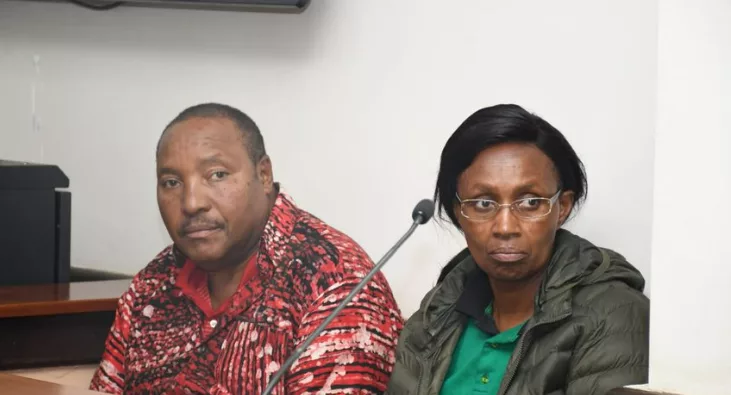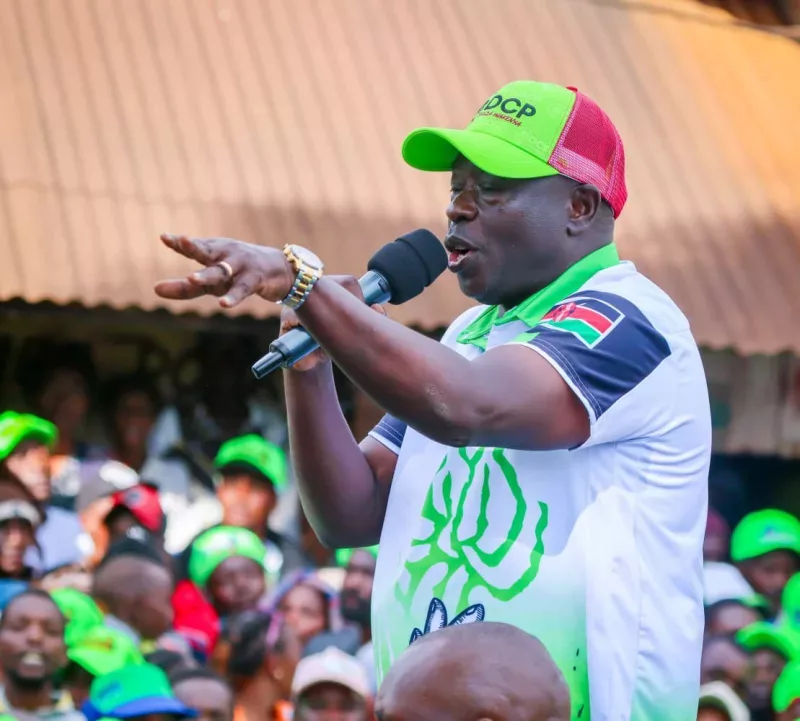
The nationwide strike over rising fuel prices will continue after transport stakeholders rejected a government proposal to reduce fuel prices by Sh8, according to Rig Owners Association chair Cornelius Chepsoi.
Chepsoi said stakeholders declined the offer because it fell far below their demand for the reversal of the entire Sh46 fuel increase introduced in the latest pricing cycle.
“The minister came back with an offer from the state of Sh8 and something which our members refused. The original proposal is that they take out the entire Sh46 that they increased in the last cycle.”
Chepsoi insisted the demonstrations and industrial action were not limited to the matatu sector, saying the crisis had affected multiple industries and ordinary Kenyans across the country.
“There is a lot of talk that this is a matatu strike, it is not a matatu strike. This is a nationwide strike by Kenyans. We drill boreholes and foundations. We are not matatu owners, but when the matatu strikes, the nation comes to a standstill," he said.
According to the association chair, stakeholders and government representatives failed to reach a consensus during negotiations and instead agreed to suspend discussions temporarily to allow further consultations.
“We were not reading from different scripts. We agreed to disagree and postpone the meeting until a later time to allow everyone to consult and come up with numbers.”
Chepsoi said one of the proposals tabled by stakeholders was for the government to use funds from the petroleum levy to cushion consumers against the sharp rise in diesel prices.
“One of the solutions was to use the petroleum levy, as per government statistics, which they have Sh5 billion. We agreed to rescue the diesel because most people are affected by the diesel.”
However, he said the government maintained its Sh8 reduction proposal, which stakeholders considered insufficient given the impact of fuel prices on transport and the broader economy.
“The state stuck with Sh8, and we said it is not tenable after everything that has happened,” Chepsoi said.
He added that stakeholders had resolved to maintain the strike until a more acceptable agreement is reached with the government.
“The agreement was that we maintain the strike until the solution is found,” he said.
On Monday, the Energy and Petroleum Regulatory Authority (EPRA) revised maximum retail pump prices for petroleum products, following a recalculation that will take effect from May 19, 2026, to June 14, 2026.
EPRA said the adjustment was made after a petition by public transport sector operators. The operators had raised concerns over pricing disparities that could encourage fuel adulteration.
“The Energy and Petroleum Regulatory Authority (EPRA) has recalculated the maximum retail pump prices that will be in force from 19th May 2026 to 14th June 2026 following a petition by public transport sector operators on the need to minimize the risk of motor fuel adulteration that may arise due to the big price differential between Diesel and Kerosene.”
Under the new review, diesel prices in Nairobi will decrease by Sh10.06 per litre. At the same time, kerosene prices will increase significantly by Sh38.60 per litre. Super petrol prices remain unchanged in the latest adjustment.
The announcement comes at a time when parts of the country have experienced protests over fuel prices, with motorists and public transport operators expressing concern over the cost of living and transport expenses.