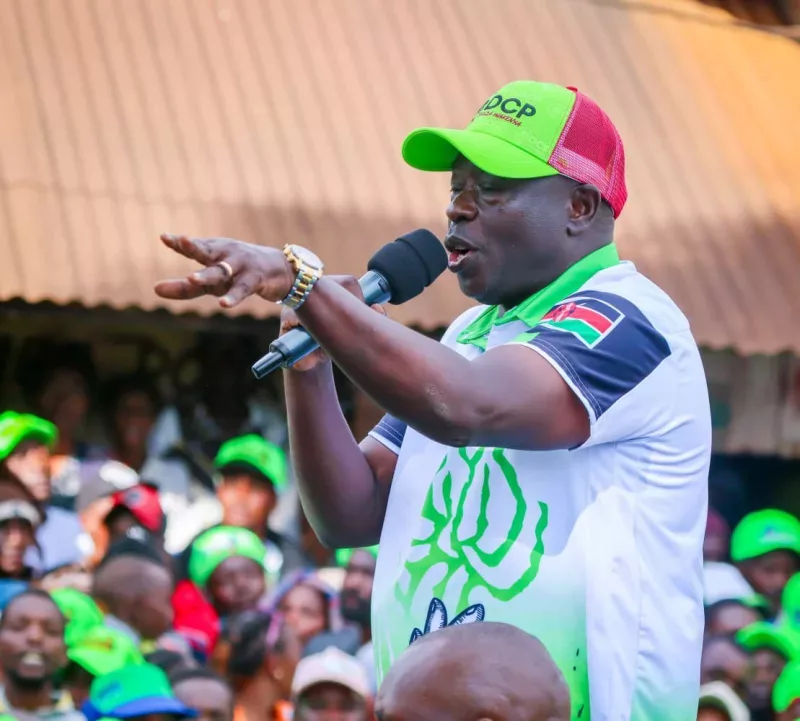
 Nairobi Governor Johnson Sakaja/NCCG
Nairobi Governor Johnson Sakaja has urged Kenyans to return to work and allow dialogue to continue between the government and transport operators following disruptions caused by the nationwide fuel price protests and strike.
Sakaja acknowledged the widespread impact the strike had on ordinary Kenyans, saying multiple sectors had been affected beyond public transport.
The Nairobi governor said the parties had agreed to pursue dialogue instead of confrontation, stressing that both the government and operators share a common responsibility to protect livelihoods and the economy.
“Not only the transport sector, because we have many businesses Kenyans are engaging in all sectors. Children have not gone to school. There are sick people who need to go to hospital. There’s farm produce that needs to be transported,” he said.
“That is why we chose to get out of the way and just come together to listen to each other,” he said. “We have operators and we have government, but ultimately we are Kenyans.”
Sakaja assured the public that discussions were ongoing and expressed optimism that a solution would be reached through high-level consultations.
He appealed to Kenyans to resume normal activities as negotiations continue, warning that prolonged disruptions could further hurt the economy.
“I want to assure the people of Nairobi, the people of Kenya, that we have found a way forward together. We’ll have very high-level deliberations.People should go back to work and farms. Let us build our economy even as we resolve this issue,” he said.
The governor also called on financial institutions to consider temporary relief measures for struggling Kenyans, noting that the current fuel crisis is partly driven by global economic pressures.
Sakaja acknowledged public concerns over the sharp increase in fuel prices and said the government was aware of the burden facing citizens.
“We are in extraordinary times. The crisis we are in is global. Let us not take it out on our people.It’s good for you to know the government actually realizes that the increase is extremely high. There are certain limitations of what we can do, but in the next few days you will see.”
He pledged to support continued engagement between the government and transport operators to find a lasting solution to the crisis.
“I promise them as their friend and their guarantor that we shall sit at the highest level to resolve this pain that Kenyans are feeling,” Sakaja said.
The governor also thanked Interior Cabinet Secretary Kipchumba Murkomen, Energy Cabinet Secretary Opiyo Wandayi and other leaders for supporting dialogue during the crisis.
He urged continued engagement between government and industry players beyond moments of national crisis.
Matatu operators have suspended their ongoing strike for one week to allow high-level consultations between government and transport sector stakeholders aimed at resolving the dispute over fuel prices and related concerns.
Interior CS Murkomen said the decision followed agreement on the need for urgent dialogue to address the grievances raised by operators.
“There was need for negotiations with the stakeholders at a high level and they will take place within the next one week,” Murkomen said.
He added that the suspension of the strike was necessary to create room for consultations and reduce further disruption to transport and economic activities.
“The strike is to be suspended for one week to provide an avenue for consultations,” he said.