Kenya’s bid to secure a seat at the ICC faces an uphill task, as the race shapes up as highly competitive and tightly structured against Supreme Court judge Njoki Ndung’u.
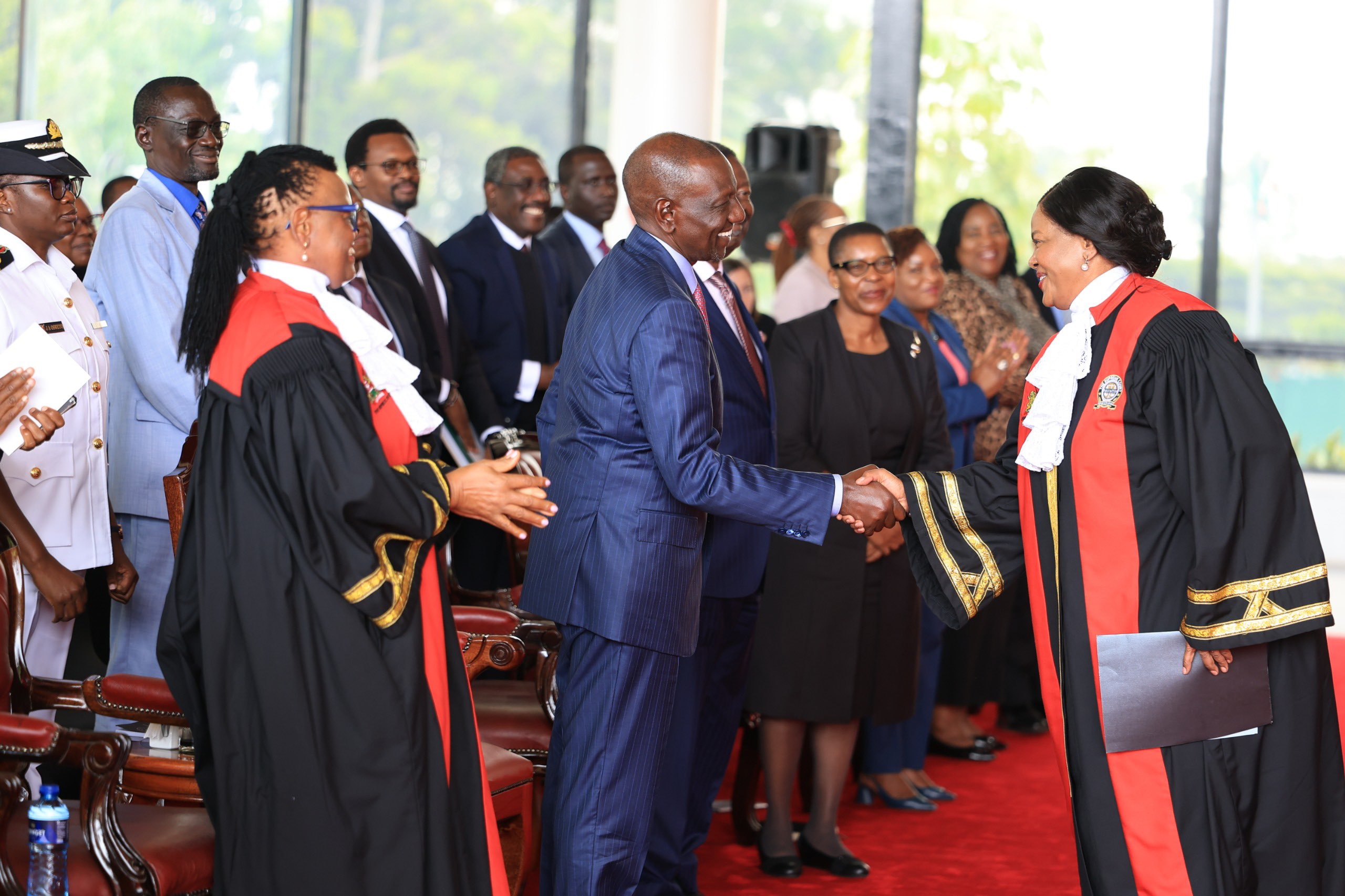
Justice Njoki’s candidature for judge of the International Criminal Court was officially launched on Wednesday by President William Ruto.
Ruto praised her legal career and described her as a strong representative of Kenya on the global stage.
He backed her experience at the apex court and expressed confidence in her ability to serve at The Hague.
The December 2026 elections will see six judges elected to the ICC bench, but the process is not a straightforward vote.
Instead, it is governed by strict requirements on regional balance, legal expertise and representation, effectively narrowing the path for many candidates before ballots are even cast.
At least one judge must come from Africa, alongside mandatory slots for Asia-Pacific and Western Europe and Other States.
In addition, a minimum number of judges must have strong backgrounds in criminal law and procedure, classified as ‘List A’, a category under which Ndung’u has been nominated.
List B is largely comprised of international law specialists, rather than courtroom criminal trial lawyers.
While Africa is guaranteed at least one seat, the reality is more complex. Two African judges are retiring, and there is a strong expectation, though not a binding rule, that both will be replaced by candidates from the continent. This creates space for two African winners, but also intensifies competition within the region.
Eight candidates have been nominated from Africa, turning the contest into one of the most crowded.
These are Abdoulaye Seye (Senegal, List B), Deo Nangela (Tanzania, List A), Evelyn Ankumah (Ghana, List B), Ezéchiel Cirimwami (DRC, List B), Njoki (Kenya/List A), Rosette Muzigo-Morrison (Uganda, List B), Tujilane Chizumila (Malawi, List A) and Veronic Wright (The Gambia/List A).
One of the key factors is linguistic balance between Anglophone and Francophone Africa, which is likely to play a decisive role, effectively splitting the contest into two tracks.
Candidates from French-speaking countries, notably Senegal and the DRC, are expected to compete for one slot.
On the other hand, six candidates from English-speaking countries, including Justice Njoki, will battle it out for the remaining seat.
Additionally, the EAC factor kicks in. Justice Njoki will also be racing against candidates from Uganda and Tanzania, which will split the EAC bloc vote.
The candidates are Rosette Muzigo-Morrison (Uganda), who worked at the office of the Prosecutor at the ICC in The Hague and Court of Appeal judge Deo John Nangela (Tanzania).
These dynamics significantly affect Kenya’s chances, placing Noki in a crowded field where only one candidate is likely to emerge.
International law experts aware of the workings at the ICC have also raised concerns about Justice Njoki’s experience and how it aligns with the court’s requirements, especially List A.
While she brings extensive appellate experience as a Supreme Court judge since 2011, the ICC places strong emphasis on hands-on criminal trial experience for candidates under List A, which she is limited in.
Her career record shows limited exposure to criminal proceedings at trial level, with her direct experience dating back to her early years as a state counsel between 1989 and 1993.
She has not served as a trial judge, a factor that could weigh against her when compared to rivals with more extensive backgrounds in criminal litigation and international justice.
The Advisory Committee on Nominations, which vets candidates ahead of elections, is expected to play a key role in shaping perceptions.
Justice Njoki risks, therefore, being rated as only “formally qualified” — the lowest acceptable grade — or, in a worst-case scenario, found not to meet the required threshold.
Such an assessment would significantly dent her prospects in a race where technical expertise is closely scrutinised.
Her candidacy also faces external pressures linked to Kenya’s broader diplomatic strategy. Nairobi’s parallel push for Phoebe Okowa at the ICJ for a full term could dilute its lobbying strength, particularly in a year when two judicial positions are up for grabs.
In diplomatic circles, states often balance reciprocal support, making it harder to secure backing on two fronts at once.
In contrast, several of Njoki’s competitors are seen as better aligned with the ICC’s core mandate.
Candidates such as The Gambia’s Veronic Wright and Uganda’s Rosette Muzigo-Morrison bring decades of experience in international tribunals, including the ICC itself and the International Criminal Tribunal for Rwanda.
Others, like DRC’s Ezéchiel Cirimwami, combine international legal practice with judicial and prosecutorial experience.
Outside Africa, however, the race appears more predictable. In the Asia-Pacific category, Japan’s Yoshimitsu Yamauchi is currently the sole nominee, placing him in a strong position.
Similarly, Colombia’s Diana Olarte is the only candidate from Latin America and the Caribbean, making her a likely beneficiary of regional balancing considerations.
With gender balance already satisfied on the court, the elections are expected to hinge primarily on qualifications, regional politics and diplomatic negotiations.
With stiff competition, structural constraints and questions over qualifications, Njoki faces a tough race in what is shaping up to be one of the most closely contested ICC judicial elections in recent years.
However, Kenya is building a lobbying machinery that will be led by the Foreign Affairs ministry, with support from other judicial and legal institutions.
On Wednesday, Foreign Affairs CS Musalia Mudavadi did not disclose the amount the campaign will use, but he confirmed that Treasury was aligned.
Senior Counsel Bar chairperson Senior Counsel Philip Murgoh said as he endorsed Njoki that they expect the administration will throw everything to the campaign