The IEBC is once again under scrutiny following allegations of voter register manipulation, setting the stage for what could become a defining integrity test ahead of the 2027 polls.
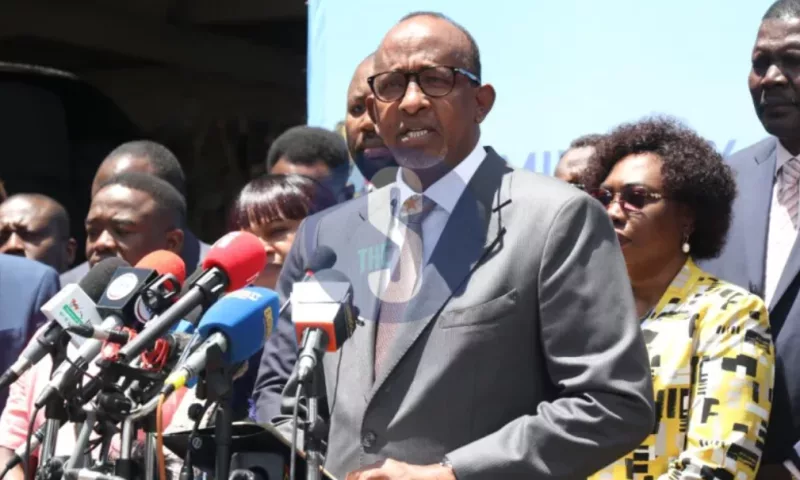
Wiper leader Kalonzo Musyoka has sustained accusations against the electoral commission, criticising it for failing to respond to remarks suggesting possible voter manipulation.
Kalonzo told Kameme TV that despite various pro-government leaders making claims about rigging in 2027, no action has been taken.
“Kama jamaa anaweza sema uchaguzi unaokuja hata kama kura hazitatosha tutaongeza, huyo ni mtu wa aina gani?” he asked.
“Hajashikwa, na hatujasikia IEBC ikimkemea mtu kama huyo. And he has not been taken to write a statement.”
The Wiper leader was alluding to remarks by Kapseret MP Oscar Sudi, who appeared to suggest that votes could be manipulated in 2027.
“Nataka nikwambie wewe Wamunyoro[Gachagua], hakuna mtu anaongoza Kenya hii kwa miaka tano. Hiyo kura isipojaa tutajaza na tutajaza na hawa wananchi hawa,” Sudi said.
The former Vice President said it was worrying that despite the seriousness of such remarks, the IEBC had neither condemned the statements nor summoned those involved for questioning.
Other leaders have also made similar controversial remarks. Wajir Woman Representative Fatuma Jehow in July 2025 publicly claimed leaders from Northeastern would rig the 2027 election for President William Ruto.
During a homecoming event, Jehow stated in Kiswahili that it was “no secret” that even if the region did not have enough votes for the President’s re-election, they would “steal” them for him.
In August, Tiaty MP William Kamket said Kenya Kwanza leaders and supporters would ensure Ruto secures a second term, even if it means “adding votes”.
“Sometimes, MP Sudi and I are harsh, and I always hear him say we are going to add votes,” Kamket said during a dowry ceremony on August 3.
“I’m also saying the same. If the votes are not enough, we’ll ensure they are enough, whatever comes may.”
Beyond the remarks, Kalonzo has also alleged that the government is orchestrating a covert scheme to influence the next election by facilitating the registration of foreigners as Kenyan voters. The claims have renewed concerns about the credibility of the voter register.
He alleged that Somali nationals are being issued with Kenyan IDs and passports before being added to the voter roll.
According to him, the exercise targets border regions, particularly in Northeastern counties, where recent policy changes, including the removal of mandatory vetting requirements, have made documentation processes easier.
The opposition has further expanded the claims to include nationals from Ethiopia, Uganda and Tanzania, suggesting a wider regional dimension to the alleged scheme aimed at inflating voter numbers in favour of Ruto.
The allegations have been amplified by concerns raised in Parliament over anomalies in the voter registration process.
On April 21, Embakasi West MP Mark Mwenje asked the Justice and Legal Affairs Committee to look into discrepancies involving newly registered voters in his constituency.
He said some individuals registered in Nairobi were found to have voter details linked to counties in Northeastern Kenya, particularly Garissa and Wajir.
“These concerns raise serious questions over the integrity, accuracy and credibility of the voters’ register,” Mwenje said in the National Assembly.
“Such allegations, if confirmed, have the potential to undermine public confidence in the electoral process and may occasion disenfranchisement of voters who might not be able to access their designated voting stations.”
He added that similar cases had also been identified in neighbouring Embakasi Central, suggesting the issue may not be isolated.
“There is no coincidence here. Where I got these cases, and my colleague from Embakasi Central got the same, it means there is someone deliberately moving these votes to Northeastern,” he said.
The emerging claims sustain pressure on the IEBC to maintain a credible and verifiable voter register, coming on the backdrop of voter trust deficit in past commissions.
As early as February, Justin Muturi’s DP raised concerns over possible tampering with the voter register, citing a reported deal between the IEBC and the National Registration Bureau.
Muturi claimed there was credible information of an arrangement involving data sharing between the IEBC and the bureau under the Office of the President.
“The Democratic Party wishes to express grave concern over credible reports that the IEBC has entered into a secret MoU with the Office of the President under the guise of a Data Sharing Framework,” he said.
“We have further established that the acting CEO of IEBC [Moses] Sunkuli held meetings with officials of the NRB to discuss integration of voter data systems, including collaboration with private vendors, such as Smartmatic. These developments raise serious constitutional, legal and ethical concerns.”
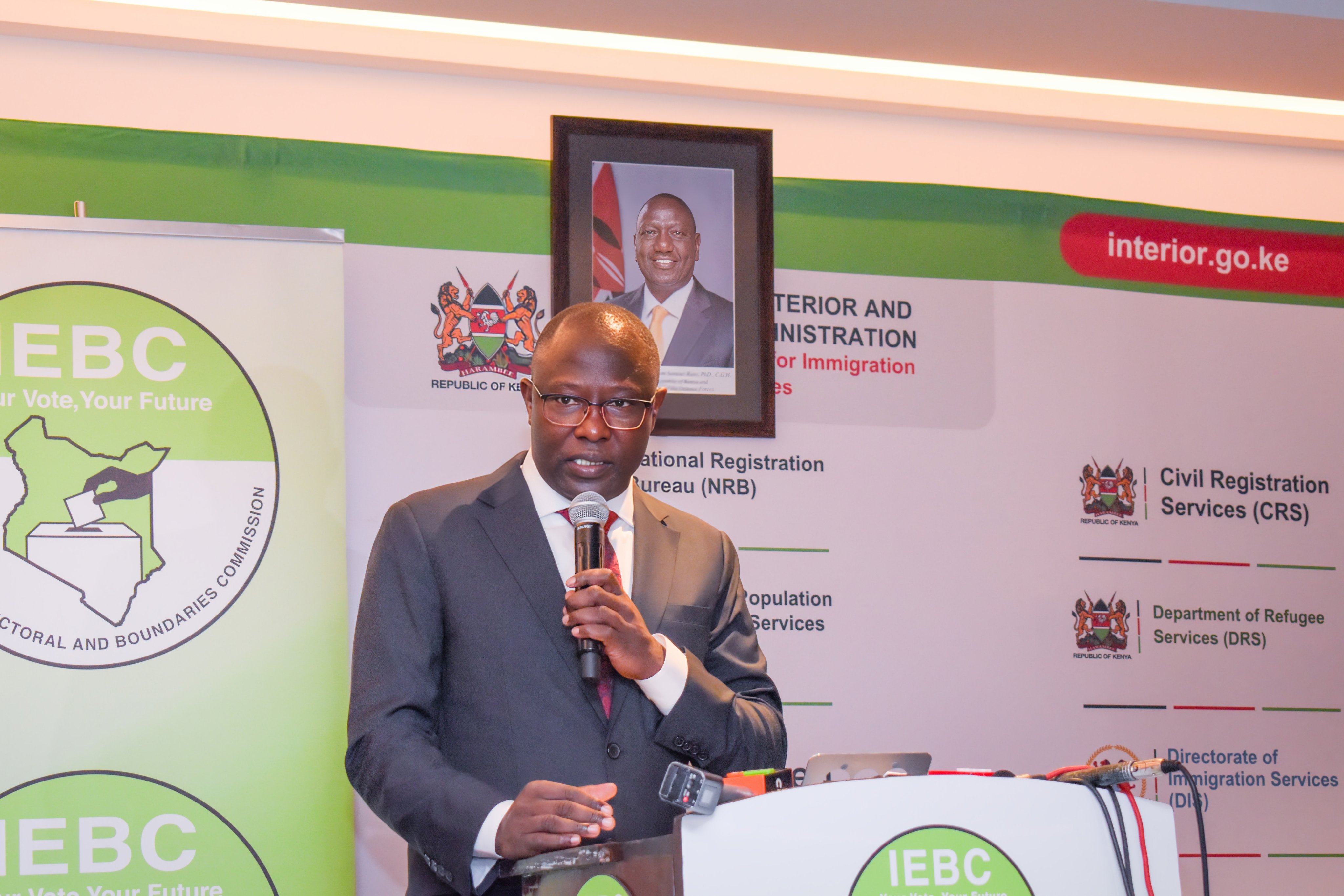
The IEBC dismissed claims of potential voter register manipulation, maintaining that all data handling processes are lawful, secure and strictly guided by the Constitution and electoral laws.
On February 16, the IEBC said its collaboration with state agencies is routine and necessary for accurate voter registration and verification.
Even so, the growing wave of allegations, from political statements to parliamentary queries, now places the electoral body under renewed pressure to demonstrate transparency, accuracy and public trust in the management of the voter register ahead of 2027.