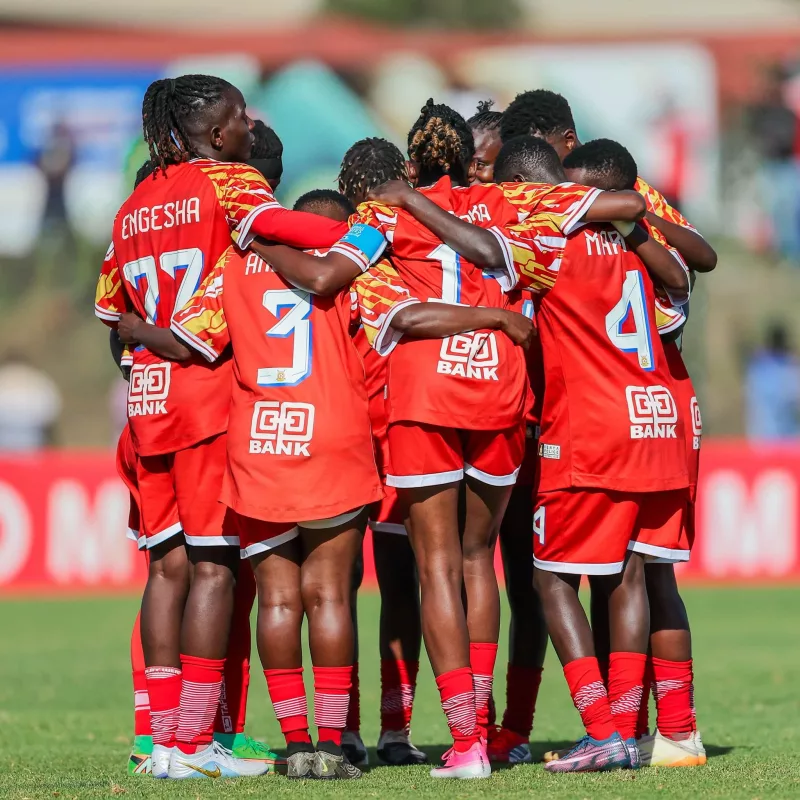
 Murang'a Seal captain Joseph Waithira with a man-of-the-match trophy/ HANDOUT
The afternoon air in Murang’a county feels thick enough to touch, a suffocating wall of heat and humidity that clings stubbornly to the skin and crawls into the lungs with every breath.
Above St. Sebastian Park, the sun hangs like molten iron, pressing down on the pitch with brutal force until the grass glitters beneath waves of rising heat and every movement becomes a test of survival.
The scent of damp red volcanic soil rises heavily into the humid air, mixing with sweat, dust, and the distant chants rolling down from the terraces.
It is the kind of suffocating atmosphere that has broken visiting teams long before kickoff in the SportPesa League. Defenders gasp for oxygen here. Midfielders lose clarity here. Entire tactical plans melt beneath the merciless Murang’a heat.
On the touchline, newly appointed interim head coach Dennis "Dess" Odhiambo prowls like a restless commander preparing for battle.
His arms remain folded tightly across his chest as he barks instructions toward a fragile defensive line that has spent weeks stumbling through uncertainty, searching desperately for its lost pride.
But while Odhiambo orchestrates from the sidelines, the true heartbeat of Murang’a Seal moves inside the white lines. Wearing the captain’s armband with an almost royal calmness is the man the county now worships as "King Joe."
Joseph Waithira does not merely lead Murang’a Seal; he carries the emotional weight of an entire region on his compact shoulders.
With 16 goals blazing beside his name this season, the striker currently sits atop the Golden Boot standings.
Yet the statistics alone cannot explain the magnitude of his rise. To truly understand why Waithira has become the most feared striker in domestic football, one must journey beyond the goals and into the violent emotional storms that have shaped Murang’a Seal’s unforgettable campaign.
It is a season painted with extremes: a breathtaking 10-match unbeaten surge that transformed the club into giant-slayers, a horrifying six-game collapse that nearly destroyed morale, the dramatic downfall of head coach Osborne Monday, and a deeply personal tragedy that transformed a footballer’s hunger into something spiritual.
For much of his decade-long journey through Kenyan football, Waithira existed inside a very specific tactical box.
Coaches viewed him as the classic explosive winger: low centre of gravity, lightning acceleration, quick feet capable of twisting defenders into knots before they even realised danger had arrived.
Those exact weapons helped propel Wazito FC toward their historic promotion to the top flight in 2017, while his brilliance later helped drag Nakumatt FC away from the jaws of relegation in 2018. But in Kenyan football, wingers are often treated as temporary luxuries, players discarded as tactical systems evolve.
By the time Waithira arrived at Murang’a Seal in January 2024 as a free agent following a frustrating spell with coastal giants Bandari FC, whispers had already begun circulating through football circles.
Critics murmured that the once-electric winger had plateaued. Some even claimed his best years had vanished into the shadows of unrealised potential.
"I have waited for a season like this my entire career," Waithira says quietly, adjusting his training jersey as though carrying the memories stitched into its fabric.
His Murang’a rebirth began under veteran tactician Juma Abdallah, who took charge of the club hierarchy in January 2024.
Abdallah immediately recognised the invaluable top-flight experience hidden beneath Waithira’s fading reputation and moved swiftly to bring him into the squad during the mid-season transfer window.
Murang’a Seal were newcomers in the league, inexperienced and vulnerable, desperately searching for stability as they fought to survive among Kenya’s elite.
Under Abdallah’s structure, Waithira initially operated out wide, tasked with injecting maturity, pace, and intelligence into the attacking system. He stretched defences, delivered dangerous crosses, and gave Seal a desperately needed offensive spark.
Yet the transformation into a ruthless central predator had not yet arrived. That evolution required an entirely different mentality, one forged later through tactical reinvention and emotional fire.
"People thought I had reached my limit, but I always believed my best football was still ahead of me," he says with a defiant smile that carries years of silent frustration.
 Joe Waithira during training at St Sebastian Park, Murang'a/ HANDOUT
 The architect of that transformation was Monday. Where others saw a declining winger, Monday saw a predator trapped in the wrong territory. The former coach recognised that Waithira’s upper-body strength, movement intelligence and instinctive understanding of space were being wasted near the touchline.
Monday dragged him into the centre of the battlefield permanently, ordering him to stop thinking like a creator and begin thinking like a scorer.
"Coach Monday challenged me to become more ruthless," Waithira reveals.
The tactical shift detonated with devastating force. Suddenly, defenders who once prepared for a tricky winger found themselves wrestling against a striker who attacked aerial balls with fury, bullied centre-backs physically and moved inside penalty areas with terrifying instinct.
Waithira stopped drifting harmlessly toward the wings. He became the focal point.
"He (Monday) told me, 'Good strikers don't wait for perfect chances. They create fear.' That stayed with me," says Waithira.
The words transformed him completely. Armed with newfound aggression, Waithira exploded into the most lethal version of himself. He no longer floated around matches searching for involvement.
He hunted defenders relentlessly. Every attacking transition now revolved around his movement, his physicality, his hunger. December 2025 became the month that elevated him from respected performer into national phenomenon after he hammered four goals in three matches, claiming the Player of the Month award.
"This recognition followed an impressive period where everything just clicked," Waithira reflects.
But footballing greatness rarely blooms in emotional isolation. At the absolute peak of Murang’a Seal’s rise came an unbearable moment of grief. Among the club’s most beloved supporters was a 71-year-old elder who attended every home fixture at St. Sebastian Park.
He had become more than a fan; he was a spiritual pillar inside the club’s ecosystem, an elderly presence whose encouragement echoed through the dressing room before every battle.
When news spread that the lifelong supporter had passed away during Murang’a Seal’s electrifying winter run, devastation swept through the squad. For Waithira, the pain became deeply personal.
"I want to dedicate this award to our fan who passed away at the age of 71," he announced emotionally during his Player of the Month acceptance speech, a tribute that resonated far beyond Murang’a county and touched football supporters nationwide.
Then came an extraordinary gesture that immortalised the connection forever.
"I even changed my jersey number to 71 in remembrance," Waithira explains softly, touching the chest area of his training top as though the number itself carries spiritual power.
Every sprint now carries memory. Every goal carries mourning. Every celebration carries tribute.
"I hope he is happy and watching," the striker adds quietly, his eyes drifting toward the empty section of grandstand where the elderly supporter once sat faithfully every weekend.
Driven by grief, purpose, and community pride, Waithira entered a frightening run of form. He scored against deep defensive blocks. He scored against high pressing systems.
He scored against physical backlines specifically designed to stop him. Seal surged into a magnificent 10-match unbeaten streak that transformed the once-humble club into genuine contenders capable of rattling Kenyan football’s established powers.
"The team always comes first," he insists whenever conversation drifts toward his astonishing individual numbers.
Yet football remains brutally unforgiving. By late March 2026, Murang’a Seal’s dream season began collapsing violently. Defensive discipline vanished. Confidence evaporated.
The flowing attacking football that once electrified St. Sebastian Park disappeared into panic and hesitation.
One defeat became two. Two became four. Soon the club found itself drowning inside a horrifying six-match losing streak that threatened to erase everything they had built.
Then came complete humiliation.
In the Round of 16 of the Mozzart Bet Cup, Murang’a Seal faced lower-division underdogs Mfalme FC in a match they were expected to dominate comfortably. Instead, chaos erupted. Defensive mistakes multiplied uncontrollably.
The midfield collapsed. Confidence shattered publicly. By full-time, Murang’a Seal had suffered a humiliating 5-1 destruction that sent shockwaves across Kenyan football.
The dressing room was broken. Days later, Monday paid the ultimate price. On April 13, the coach who had resurrected Waithira’s career was dismissed.
With Monday gone, Seal handed the reins to recently retired veteran Odhiambo. He inherited a dressing room stripped of confidence and drowning beneath pressure.
"The transfer talks do not distract me; I am focused on delivering my best for the club as long as I am here," Waithira repeats again, emphasising his commitment despite heavy transfer interest from Nairobi giants Gor Mahia and AFC Leopards.
The captain understood the dressing room needed calmness more than panic.
"I am not desperate to leave the club, but if an offer that is good for both the club and myself comes around, we will look at it and decide on the way forward," he admits honestly. For now, I am a Murang'a Seal player."
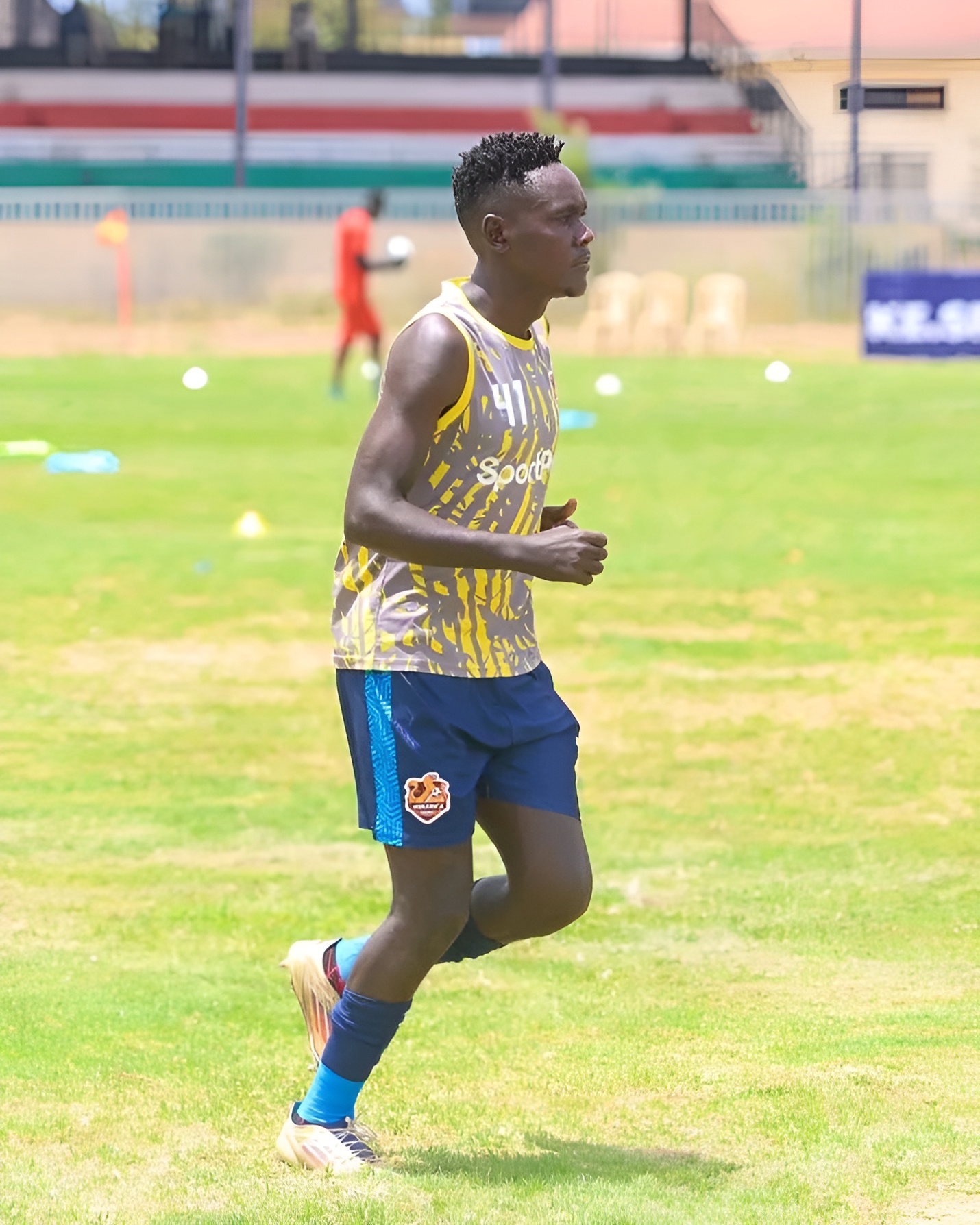 Joe Waithira warms up before a top-flight match/HANDOUT
 Then came May 10. Then came redemption. Under the suffocating heat of St. Sebastian Park, Murang’a Seal hosted Kakamega Homeboyz in what felt less like a football match and more like a desperate survival mission. Tension hung across the stadium from kickoff. Every misplaced pass invited groans. Every defensive clearance carried anxiety.
Then, in the 38th minute, King Joe struck.
Timing his run to absolute perfection, Waithira exploded beyond the defensive line, latched onto a direct through ball, and calmly buried the finish beyond the advancing goalkeeper.
The stadium erupted instantly into thunderous delirium. Flags flew wildly through the air. Plastic vuvuzelas screamed into the afternoon sky. The six-game losing streak was finally dead. Murang’a Seal had survived.
"I'm grateful that I managed to score two goals, but the mood would have been happier if we won," Waithira says while reflecting on an earlier painful 3-2 defeat against Bandari FC, contrasting the bitterness of that collapse with the immense emotional relief of the Homeboyz victory.
"However, I do believe that we have learnt from this defeat and we will take those lessons into our next game. We will not repeat the mistakes that cost us all three points here."
The promises were no longer empty words.
With the losing streak finally shattered and Seal climbing safely toward 11th place with 41 points after 31 matches, Waithira now stands on the brink of history.
No player from a club in Murang’a county has ever captured the Premier League Golden Boot. Astonishingly, the captain now sits just one goal shy of matching last season’s 17-goal winning tally.
"I'm targeting over 20 goals," Waithira warns ominously, sending a chilling message to the remaining defenders standing in his path.
Reaching the 20-goal barrier in Kenyan football is an achievement reserved for legends, a territory occupied only by the most ruthless strikers to ever emerge in the Harambee Stars era.
"Winning the Golden Boot is a dream, but it must serve the team's objective," he insists.
The race remains dangerously alive. Ulinzi Stars' forward Paul Okoth lurks with 14 goals. Yet, the Seal captain appears to thrive under the suffocating intensity. He welcomes the pressure. He embraces the rivalry. He feeds off the fear of failure.
Beyond goals, tactics, and transfer speculation, Waithira understands the symbolic importance of his journey.
Born in 1996 and educated at St. Mary's Primary School before attending Koimbi Boys' High School in Murang’a, his rise represents something deeply powerful for local youth. In a football landscape often dominated by Nairobi and western Kenya talent pipelines, Waithira’s emergence has become a homegrown revolution.
During his years at Koimbi Boys, he famously captained the freshman class to a historic inter-class tournament triumph.
Away from the brutal league pressure, Waithira protects his mental balance. He studies international football documentaries obsessively, consuming biographies of elite global athletes to sharpen his leadership mentality.
He listens to contemporary African music, spends evenings battling teammates on video game consoles to strengthen dressing-room chemistry, and frequently returns to Murang’a villages to support grassroots youth football initiatives.
"Every young player in Murang'a needs to see that it is possible to reach the top from here," Waithira says. "Representing your country remains every player's dream," he adds, addressing his controversial omission from recent Harambee Stars squads despite his explosive domestic numbers.
"I will keep scoring goals, and the national team selectors will have to look my way eventually."
There is no bitterness in his tone. Only belief. As evening shadows slowly stretch across St. Sebastian Park and the final rays of sunlight begin disappearing behind Murang’a’s rolling hills, attention turns toward the next colossal battle awaiting Murang’a Seal on May 17: a fiery home showdown against league leaders Gor Mahia.
It is the perfect stage. The perfect storm. The perfect opportunity for King Joe to carve his name permanently into Murang’a football folklore.
"We are ready for the giants," Waithira declares.
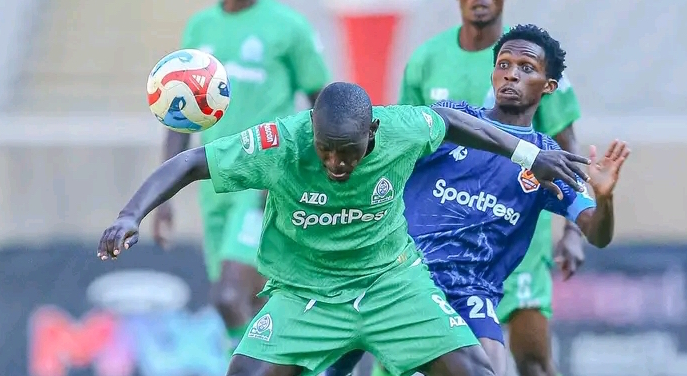
 Joe Waithira in action during a league match/HANDOUT